
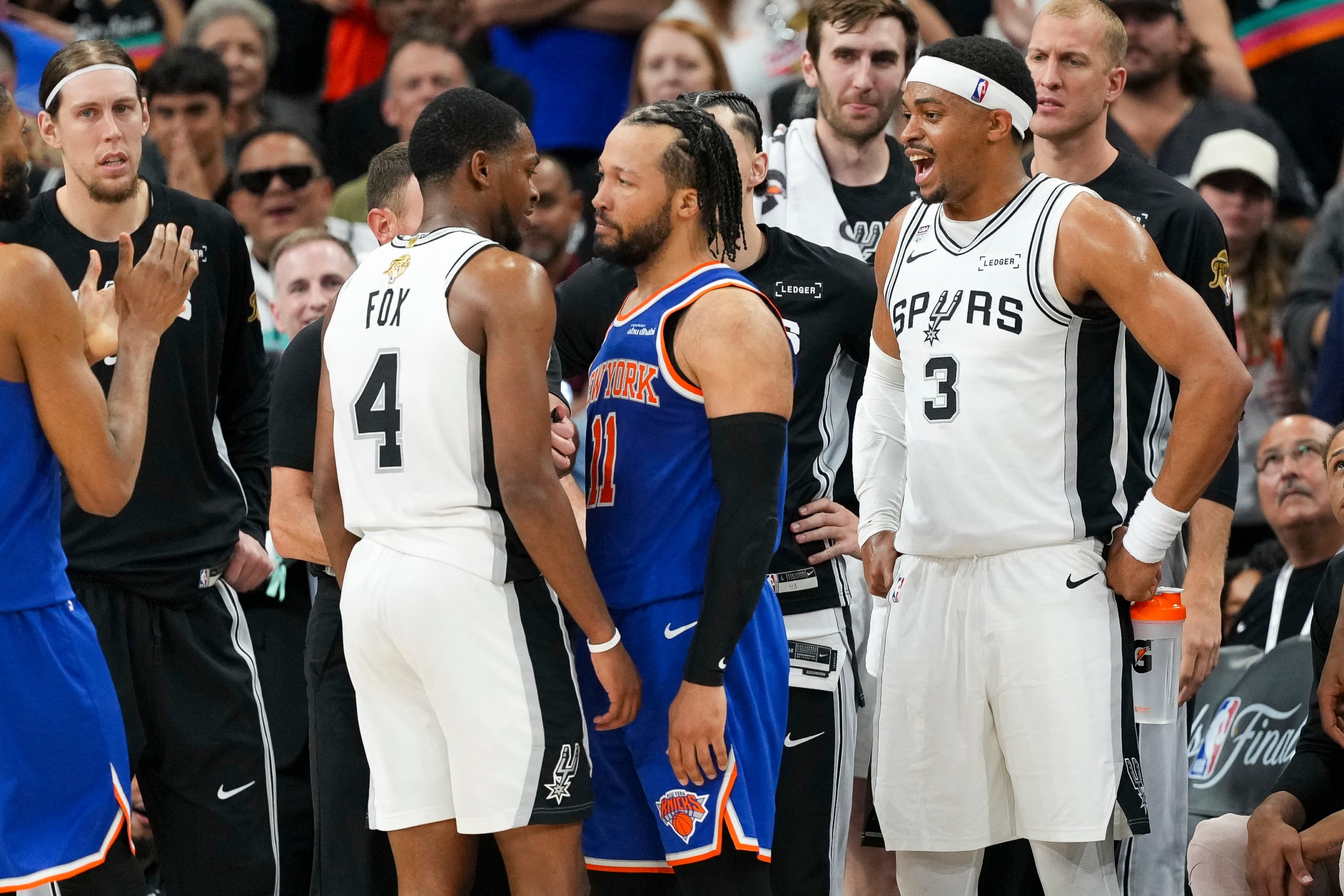
Image: courtesy of Sportsnaut
The Wembanyama Effect Meets New York: Why the Knicks-Spurs NBA Finals Just Broke the TV Ratings Machine
The 2026 NBA Finals between the New York Knicks and the San Antonio Spurs have generated historic television ratings and social media engagement. Driven by Victor Wembanyama's global appeal and New York's massive, starved fanbase, the series is proving that live sports remain the ultimate prize for media giants.
What to Expect
Television executives are celebrating some of the largest audience numbers seen in years. On June 4, 2026, Game 1 of the NBA Finals drew an average of 14.8 million viewers on ABC. Game 2, which took place on June 7, 2026, saw those numbers climb even higher to 15.3 million viewers. These figures represent a massive 35% jump compared to the previous year's finals.
Advertisers are scrambling to buy remaining commercial slots, with 30-second ad spots now trading for over $900,000. On social media, the impact is even larger. The NBA reported that across TikTok, Instagram, and YouTube, videos from the first two games generated over 1.2 billion views in just four days. Fans are sharing clips of spectacular plays at a rate never seen before in basketball history.
Cities are feeling the economic boost directly. In New York, bars and restaurants near Madison Square Garden report that sales have doubled on game nights. In San Antonio, outdoor watch parties are drawing tens of thousands of fans who cannot get tickets to the arena. The excitement is visible on every street corner, and the high television ratings show that this energy is spreading across the entire country.
Key Context
To understand why these numbers are so large, you have to look at the two teams involved. The New York Knicks are one of the oldest and most famous teams in basketball, but they have not won an NBA championship since 1973. For over fifty years, their passionate fans in America's largest city have waited for a team that could bring them back to glory. Now, led by their hard-working star guard Jalen Brunson, the Knicks have finally made it back to the biggest stage.
On the other side stand the San Antonio Spurs, home to Victor Wembanyama. Standing 7-foot-4, the young French player can run, dribble, and shoot like a player much smaller than him. He is a global phenomenon. People who do not normally watch basketball tune in just to see him do things that seem physically impossible.
When you mix the massive, basketball-hungry city of New York with a once-in-a-generation global star like Wembanyama, you get the perfect television product. It is a clash of styles and cultures that appeals to both traditional sports fans and casual viewers who just want to be part of a major cultural moment. The NBA has spent years trying to build this kind of excitement, and this matchup has delivered it all at once.
Related Coverage
Historical Patterns
This matchup is a modern replay of history. The Knicks and Spurs previously met in the NBA Finals in 1999. Back then, a young Tim Duncan led the Spurs to victory over a gritty Knicks team. But the media world was very different twenty-seven years ago. In 1999, almost everyone watched television through traditional cable boxes, and social media did not exist.
Over the last ten years, traditional television ratings have steadily declined as people shifted to streaming services like Netflix and YouTube. Many industry experts believed that the days of tens of millions of people watching a single sporting event together were gone forever. The high ratings for this series prove that theory wrong.
When compared to other famous Finals matchups, like the Boston Celtics against the Los Angeles Lakers in 2010, or the Cleveland Cavaliers against the Golden State Warriors in 2016, this series is holding its own. It shows that while how we watch has changed, our desire to watch great stories and great players has not changed at all.
The Real Stakes
Potential Outcomes
AnalysisThis ratings surge will likely lead to several major shifts in the sports and media worlds. First, the NBA will easily justify its new $76 billion media rights deal with Disney, NBC, and Amazon. Some business experts thought the networks paid too much money for those rights, but these audience numbers show that live sports are still the most valuable property on television.
Second, Victor Wembanyama will become the undisputed face of global sports marketing. Companies from Europe, Asia, and America are already preparing massive endorsement deals that could make him the highest-earning basketball player in history, surpassing even LeBron James in commercial value.
Third, traditional television networks will change how they schedule games. Seeing how much New York's presence boosts ratings, leagues will likely face pressure to ensure big-market teams are featured as often as possible in prime-time slots, which could make it harder for smaller-market teams to get national television exposure.
Timeline
Frequently Asked Questions
Discussion
Be the first to share your thoughts.