Veridact
TechSportsFinanceGaming🎯 Predictions⭐ OpportunitiesAbout
Sign InSign Up
Veridact

Analysis before the headline. Veridact examines technology, finance, sports, and gaming events before they unfold through forecasting, probability modeling, historical precedent, and public prediction tracking.

Stay ahead of what's next

Forecasts, analysis, and prediction updates delivered to your inbox.

Coverage

  • Tech
  • Sports
  • Finance
  • Gaming

Company

  • About Us
  • Privacy Policy

© 2026 Veridact. Forecasting & analysis platform.

Content may include AI-assisted research and analysis. Predictions and opinions should not be considered financial, legal, medical, or investment advice.

sports
F1 considering Malaysian GP return as 2026 replacement race

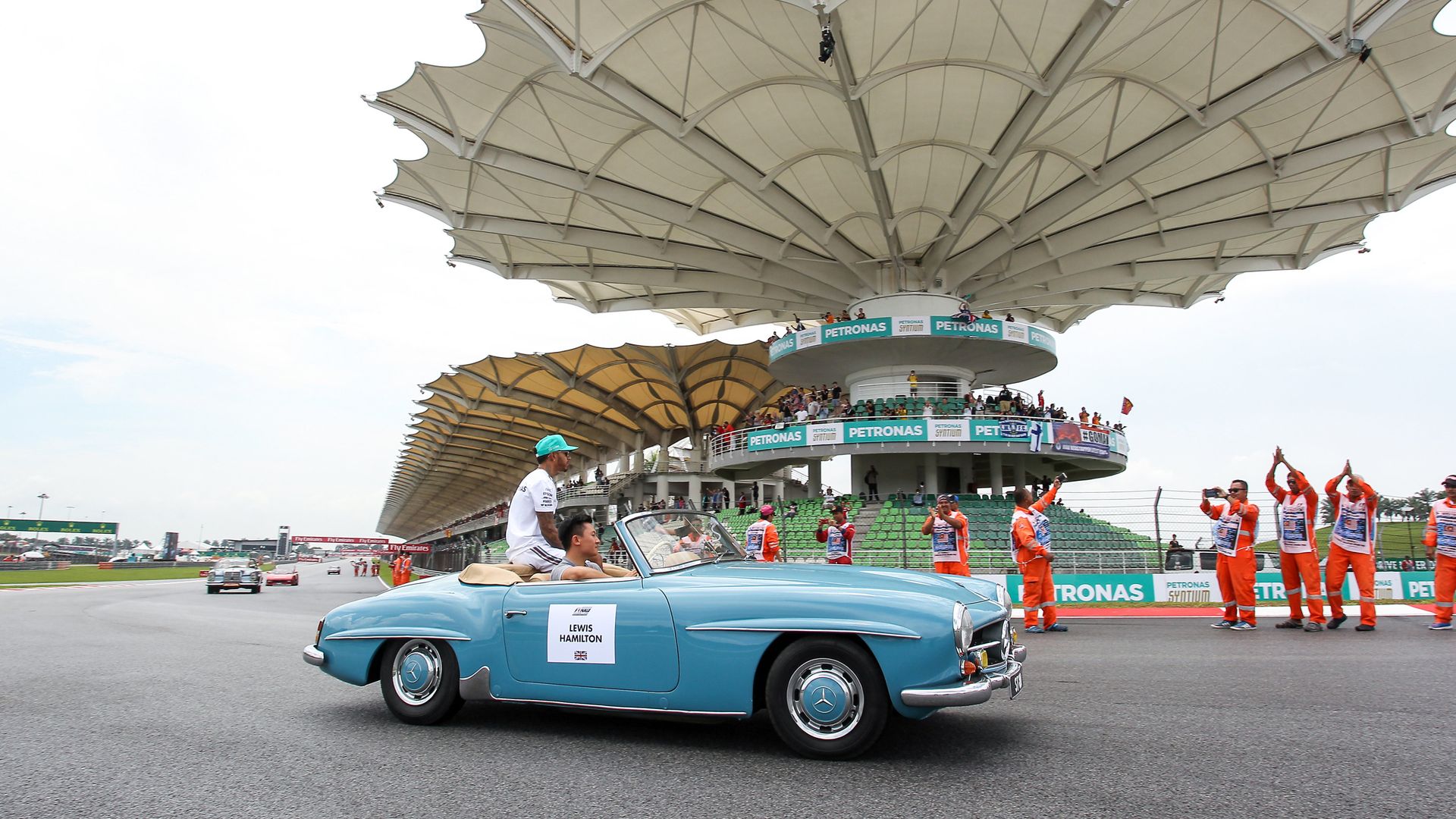
Image: courtesy of Sky sports

sportsJuly 24, 2026By Veridact EditorialUpdated Jul 24

The $71 Million Question: Can F1 and Malaysia Bridge the Cost Gap for a 2026 Sepang Return?

Formula 1 is actively considering the return of the Malaysian Grand Prix to its 2026 calendar, with the Sepang International Circuit emerging as a strong contender. This move is driven by F1's need for replacement venues amidst geopolitical uncertainties, particularly in the Middle East. However, the potential comeback faces significant financial hurdles, with Sepang's CEO citing a $71 million hosting fee as a major obstacle. While Malaysian state oil company Petronas has expressed a desire to bring the race back, the Malaysian government has historically been reluctant to provide the necessary financial support, setting up a complex negotiation for the future of F1 in Southeast Asia.

Outlook

Formula 1’s 2026 season calendar could see a significant shake-up, and the Sepang International Circuit in Malaysia is in the mix for a surprise return. As of July 2026, the sport is looking for alternative venues, partly due to unspecified uncertainties impacting races planned for the Middle East. Sepang, a circuit with a rich F1 history, offers several advantages, including its modern facilities and logistical proximity to the popular Singapore Grand Prix.

However, the path to a return is far from clear. The chief executive of Sepang International Circuit has openly stated that the high cost of hosting an F1 race, estimated at around $71 million, makes a comeback challenging. This fee represents a substantial financial commitment that would likely require significant government backing, which has not been forthcoming in the past. Despite this, Malaysian state oil company Petronas, a major F1 sponsor with a long-standing partnership with the Mercedes team beyond 2026, has voiced its interest in seeing the Grand Prix return. This corporate desire could be a crucial factor in bridging the financial gap, but it remains to be seen if it will be enough to sway government policy and overcome the economic realities of F1 hosting.

Background

The Malaysian Grand Prix first joined the Formula 1 calendar in 1999, quickly establishing Sepang as one of the sport's premier venues. Known for its challenging layout, high-speed corners, and unpredictable weather, the circuit hosted the race for 19 consecutive years before its last event in 2017. The decision to cease hosting was primarily driven by financial reasons, with the Malaysian government withdrawing its funding due to the escalating costs of the hosting fee and declining ticket sales.

Fast forward to July 2026, and the landscape has changed. Formula 1's commercial rights holder, Liberty Media, has expanded the sport's global reach, leading to increased demand and, consequently, higher hosting fees. The current push for a Malaysian return is largely a reactive measure, as F1 seeks to secure its 2026 calendar against potential disruptions from existing races, particularly those in the Middle East, where geopolitical stability can be a factor. Sepang's operational readiness and its strategic location in Southeast Asia, close to the highly successful Singapore night race, make it an attractive logistical option for F1.

While the Sepang circuit's CEO has publicly highlighted the difficulty of securing the necessary funds, the involvement of Petronas adds a new dimension. Petronas's long history with F1, not just as a sponsor but as a technical partner to one of the sport's most dominant teams, gives them significant leverage and a vested interest in the sport's presence in their home country. Their desire to 'bring back' F1 could unlock private sector funding or influence government reconsideration. Sepang's current contract with Dorna Sports for MotoGP also expires after 2026, which could free up resources or calendar slots, should F1 return.

See also

NY Knicks Return to NBA Finals is So BIG President Trump Wants To See It In Person?→

Precedents

Formula 1's calendar has always been a dynamic entity, shaped by a complex interplay of commercial interests, geopolitical realities, and the economic capacity of host nations. The Malaysian Grand Prix's departure in 2017 fits a familiar pattern: circuits often struggle with the escalating hosting fees demanded by F1, especially as the sport's global popularity grows. Countries like Germany, for instance, have seen their Grand Prix fall off the calendar due to similar financial pressures, despite a rich motorsport heritage.

However, there is also a precedent for circuits returning to the calendar. The sport has a history of revisiting venues that offer a combination of strong fan bases, strategic market access, and suitable infrastructure, provided the financial equation can be balanced. Imola in Italy, for example, returned to the calendar during the COVID-19 pandemic and has since secured a longer-term deal, demonstrating F1's willingness to re-engage with established tracks when conditions align. The surge in F1's global appeal, particularly in new markets, has driven up hosting fees, making it harder for some traditional venues to compete. Yet, Sepang's modern facilities, designed specifically for F1, give it an edge over some newer, purpose-built tracks or street circuits that require significant annual investment to construct and dismantle.

The current situation, where F1 is seeking alternatives due to 'uncertainties,' mirrors past instances where political or economic instability in one region has forced the sport to look elsewhere. This reactive approach suggests a pragmatic need to ensure a full calendar, rather than a long-term strategic pivot. The entry of state-backed entities or national oil companies, like Petronas, to support hosting bids is also not new, often providing the financial muscle required to meet F1's demands. This institutional support can be a critical differentiator, especially when competing against other nations like Thailand, Rwanda, and Argentina, which are also vying for a spot, some with substantial government funding proposals.

The potential return of the Malaysian Grand Prix holds significant implications for several stakeholders, reaching beyond the immediate thrill of racing.

For Formula 1, re-establishing a presence in Malaysia would offer greater calendar stability and a crucial foothold in the Southeast Asian market. With uncertainties affecting existing races, securing a reliable, high-quality venue like Sepang mitigates risk and ensures a robust schedule. It also reinforces F1's global footprint, especially in a region that has shown strong fan engagement and economic growth.

For Malaysia, a Grand Prix return could be a substantial economic and tourism booster. The event would attract international visitors, generating revenue for local businesses, hotels, and the broader service industry. It would also provide a global platform for Malaysia's brand, enhancing its image as a destination for major international events. For Petronas, a state-owned enterprise, bringing F1 back aligns with national pride and offers unparalleled marketing exposure on a global stage, reinforcing its brand association with cutting-edge technology and performance through its Mercedes partnership.

For F1 fans, particularly in Asia, a Malaysian Grand Prix would mean access to a challenging and popular circuit, known for producing exciting races. It would also reduce the travel burden for many who currently journey to Singapore or other distant venues to experience F1 live. The competition from other countries like Thailand, with its ambitious $1.2 billion street race proposal for Bangkok, highlights the intense global demand for F1 hosting rights. Malaysia's decision, therefore, could set a precedent for how F1 balances its commercial interests with regional strategic importance and the financial realities faced by host nations.

Scenarios

Analysis

The discussions around the Malaysian Grand Prix's return to Formula 1 in 2026 present a few distinct possibilities, each with its own set of catalysts and consequences.

Outcome 1: The Malaysian Grand Prix Makes a Comeback

This scenario would likely hinge on a successful negotiation that addresses the significant financial demands of F1. The strong interest from Petronas, coupled with F1's immediate need for calendar stability due to Middle East uncertainties, could create the necessary momentum. If the Malaysian government, perhaps influenced by Petronas's lobbying and the potential economic benefits, agrees to provide substantial funding or guarantees, a deal could be struck. The logistical advantages of Sepang, particularly its proximity to the Singapore Grand Prix, would also make it an attractive option for F1. A return could initially be for a short term, perhaps a three-year deal, allowing both parties to assess the long-term viability and fan engagement, especially as Sepang's MotoGP contract expires after 2026, potentially freeing up resources.

Outcome 2: The Return Fails to Materialize

This outcome remains highly probable given the historical context and the current financial hurdles. The $71 million hosting fee is a considerable sum, and if the Malaysian government maintains its stance of not supporting the race financially, or if a viable private funding model cannot be established, the deal will likely collapse. F1's commercial demands are stringent, and without a clear commitment to meet these costs, the sport will look elsewhere. In this case, Sepang would continue to focus on its existing motorsport events, like MotoGP, and F1 would pursue other potential host countries such as Thailand, Rwanda, or Argentina, which are actively seeking to join the calendar and may offer more compelling financial packages or government backing.

Outcome 3: A Conditional or Shared Hosting Arrangement

One possible outcome, though less common for F1, could involve a more flexible agreement. This might include a reduced hosting fee in exchange for a short-term commitment, or a unique funding model involving a consortium of private entities and Petronas, with limited government financial exposure. F1 has shown some flexibility in the past, for example, with rotational contracts for certain European races like Spa-Francorchamps. However, F1 typically prefers stable, long-term deals. Such an arrangement could serve as a stop-gap for F1's 2026 calendar needs while allowing Malaysia to test the waters for a full-fledged return without immediately committing to the full financial burden. This would represent a compromise, balancing F1's need for a slot with Malaysia's financial caution.

Timeline

2017
Last Malaysian Grand Prix
The Sepang International Circuit hosted its final Formula 1 race, with the Malaysian government withdrawing funding due to high costs and declining returns.
2024-01-31
Petronas Expresses Interest
Malaysian state oil company Petronas publicly stated its desire to 'bring back' F1 to Malaysia in 2026, highlighting its ongoing partnership with Mercedes beyond that year.
2026-07-24
F1 Considers Sepang for 2026
Formula 1 is actively considering the Malaysian Grand Prix for a return to the 2026 calendar, driven by uncertainties related to Middle Eastern races. Sepang's CEO cites a $71 million fee as a major hurdle, and past government support has been absent.
Post-2026
Sepang's MotoGP Contract Expires
Sepang International Circuit's current contract with Dorna Sports for hosting MotoGP races is set to expire after the 2026 season. This could free up calendar space or resources for other major motorsport events.

Frequently Asked Questions

The Malaysian Grand Prix was removed from the F1 calendar after 2017 primarily due to escalating hosting fees demanded by Formula 1 and a lack of sustained financial support from the Malaysian government, which deemed the event no longer cost-effective given falling ticket sales.

Discussion

0/100
0/1000

Be the first to share your thoughts.

Related Coverage

sports

Beyond the Billions: What a Jeff Bezos Minority Stake Actually Means for Liverpool FC

Jul 25
sports

Diomande's £85m Rejection: Why Real Madrid's Bid Marks The Start, Not The End, of a Multi-Club War

Jul 25
sports

Mercedes' 2026 Engine Fight: Russell's Immediate Boost Can't Obscure the Looming Regulatory War

Jul 24
sports

What Garnacho's Loan to Aston Villa Reveals About Chelsea's Strategy and Villa's European Push

Jul 23

Stay ahead of the story

AI analysis delivered before events unfold. No spam.

ⓘ

Methodology: Veridact combines public data, historical precedent, and analytical models to evaluate the likelihood of future outcomes.