
The upcoming 2026 NFL offseason is shaping up to be a critical period for the Houston Texans, as lingering questions about their quarterback position could lead to unexpected moves. While C.J. Stroud's fifth-year option was picked up, a decision usually signaling long-term commitment, an NFL insider has suggested the team might still explore trading him. This scenario opens the door for the Texans to pursue established quarterbacks from other teams, with Kyler Murray of the Arizona Cardinals being mentioned as a notable possibility. Fans and analysts should anticipate a period of intense speculation and evaluation as the Texans weigh their options, balancing Stroud's potential with the allure of a more experienced, albeit potentially more expensive, alternative.
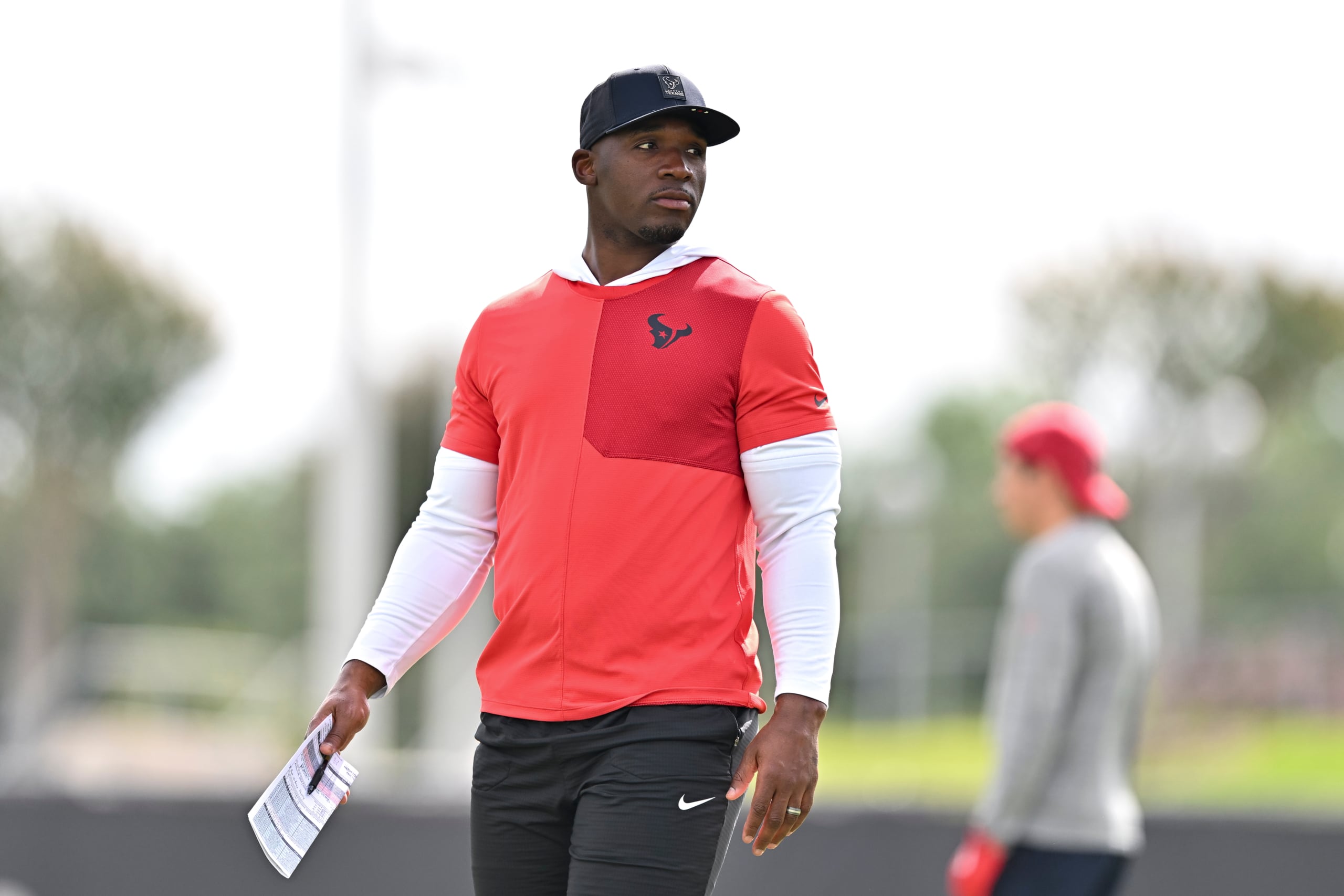
Image: courtesy of Sportsnaut
Stroud's Future in Houston Under Scrutiny as Texans Weigh 2026 Quarterback Options
Despite exercising quarterback C.J. Stroud's fifth-year option, the Houston Texans are reportedly considering alternative signal-callers for the 2026 offseason, with Kyler Murray emerging as a potential target. The surprising speculation, fueled by an NFL insider, suggests a significant shift could be brewing for a franchise that appeared to have found its long-term answer under center.
Outlook
Background
The discussion around C.J. Stroud's future with the Houston Texans comes at a curious juncture. The team's general manager, Nick Caserio, recently characterized the decision to exercise Stroud's fifth-year option as a 'no-brainer,' a standard procedural move that typically locks in a high-draft pick for an additional season beyond their initial rookie contract. This action usually signals confidence and a long-term plan for the player.
However, former Texans quarterback Ryan Fitzpatrick, now an NFL insider, has introduced a layer of uncertainty. Fitzpatrick suggested that the Texans should 'ponder trading C.J. Stroud' during the 2026 offseason. His reasoning hinges on two main points: the possibility of a 'potential holdout' by Stroud, and the performance of backup quarterback Davis Mills during the 2025 season. Mills reportedly stepped in for Stroud when he was sidelined with a concussion and, according to Fitzpatrick, performed adequately enough that the team did not experience a 'huge drop off' in play. This assessment implies that, from an insider's perspective, Mills could be a more viable stop-gap or even a long-term option than many might assume.
The broader context includes the fact that Stroud himself has reportedly 'downplayed' discussions about a potential contract extension, which, while not a direct indication of dissatisfaction, could be interpreted as a sign of cautiousness or a desire to maximize future earnings. This could, in turn, contribute to the 'potential holdout' scenario Fitzpatrick alluded to.
Separately, the Arizona Cardinals' Kyler Murray has been identified as a 'notable option' if the Texans decide to pursue a new quarterback. Murray, a former No. 1 overall pick, has a strong resume, including leading the Cardinals to their first playoff berth since 2015. His availability, or potential availability, on the trade market would represent a significant opportunity for any team looking to upgrade at quarterback. The Texans are also reportedly evaluating other backup options, indicating a thorough review of their quarterback room is underway, regardless of Stroud's status.
Precedents
The NFL has a history of teams making surprising moves at the quarterback position, even with highly drafted players. While exercising a fifth-year option often precedes a long-term extension, it does not guarantee one. Teams have, in the past, used the option as a placeholder, either to evaluate a player for another season before committing fully or to increase their trade value.
For example, teams like the Miami Dolphins with Tua Tagovailoa or the New York Giants with Daniel Jones have picked up fifth-year options, only to then enter complex contract negotiations or face continued scrutiny over performance. The decision to move on from a young, promising quarterback, even one with significant draft capital invested, is not entirely without precedent, though it is rare. The Arizona Cardinals themselves traded Josh Rosen, a first-round pick, after just one season to draft Kyler Murray, demonstrating a willingness to cut bait quickly if a perceived upgrade is available.
Similarly, holdouts, or even the threat of them, have historically complicated contract negotiations and occasionally pushed teams to consider trades. Players seeking new deals often use their leverage, particularly after strong seasons, to secure long-term financial security. If a team and player are far apart on contract terms, and the team believes it has a viable alternative or an opportunity to acquire a more established player, a trade becomes a more realistic, albeit drastic, consideration.
When a team like the Texans, who have invested heavily in Stroud, considers a move of this magnitude, it typically signals a complex set of internal calculations involving contract projections, on-field performance, leadership qualities, and the overall trajectory of the franchise.
The prospect of the Houston Texans potentially moving on from C.J. Stroud in the 2026 offseason carries significant implications, not just for the Texans, but for the wider NFL quarterback market and the careers of the players involved. For Stroud, a trade would upend his early career trajectory, forcing him to adapt to a new franchise after showing flashes of brilliance in Houston. It also raises questions about the long-term stability for quarterbacks drafted high, even when they perform well.
For the Texans, this decision would represent a massive strategic shift. Moving a young, high-potential quarterback after exercising his option suggests a level of dissatisfaction or a perceived ceiling that management is unwilling to accept. Acquiring a player like Kyler Murray, while potentially bringing a more established talent, also comes with a significant contract and a history of injuries, adding its own layer of risk. Such a move would reshape the team's cap space, draft capital, and offensive identity for years to come.
Beyond Houston, a major quarterback trade involving Stroud or Murray would ripple through the league. It could create a domino effect, influencing other teams with unsettled quarterback situations or those looking to acquire talent. The availability of a player like Murray would immediately become a top storyline, potentially altering the competitive balance in the AFC or NFC, depending on his destination. This kind of quarterback movement is often the catalyst for significant shifts in power within the NFL.
Scenarios
AnalysisThere are several plausible outcomes for the Houston Texans' quarterback situation heading into the 2026 offseason, each with its own set of consequences:
One possibility is that the Texans ultimately decide to retain C.J. Stroud. Despite the insider speculation, the team's decision to pick up his fifth-year option indicates a baseline level of commitment. If Stroud performs strongly through the 2025 season and contract negotiations progress positively, the trade rumors could dissipate, leading to a long-term extension. This would solidify Stroud as the franchise quarterback and allow the team to build around him without further uncertainty.
Alternatively, the Texans could actively pursue a trade for C.J. Stroud. This scenario would likely unfold if Stroud's performance in 2025 does not meet expectations, if contract talks stall significantly, or if the team identifies a veteran quarterback they believe offers a higher ceiling or more immediate stability. If this occurs, a player like Kyler Murray could become a primary target, requiring the Texans to send significant draft capital and absorb a large contract. Such a trade would reset the Texans' quarterback situation entirely, bringing in a new leader for the offense.
A third outcome could see the Texans maintain Stroud for the 2026 season under his fifth-year option, while simultaneously evaluating other options more cautiously. This approach would allow them to keep Stroud while monitoring the market for quarterbacks who might become available in free agency or through the draft in 2027. It would also give them more time to assess Stroud's long-term fit and avoid making a rushed decision, particularly if the 'potential holdout' does not materialize or proves manageable.
Finally, the team might simply be using the 'potential holdout' and 'trade' discussions as leverage in future contract negotiations with Stroud, or to gauge market interest for both Stroud and potential replacements. This strategic posturing is not uncommon in the NFL, where information can be selectively leaked to influence public perception or player demands. The ultimate goal in this scenario would be to secure Stroud on team-friendly terms.
Timeline
Frequently Asked Questions
Discussion
Be the first to share your thoughts.