
The immediate next steps involve Rodri undergoing a medical examination with Barcelona and the formal signing of his four-year contract. Once these administrative and medical hurdles are cleared, both clubs will issue official statements confirming the transfer. This is expected to happen within the next few days, formalizing one of the most significant midfield moves of the summer transfer window. Following the official announcement, Rodri will likely join Barcelona for their pre-season preparations, integrating with his new teammates ahead of the upcoming La Liga and Champions League campaigns.
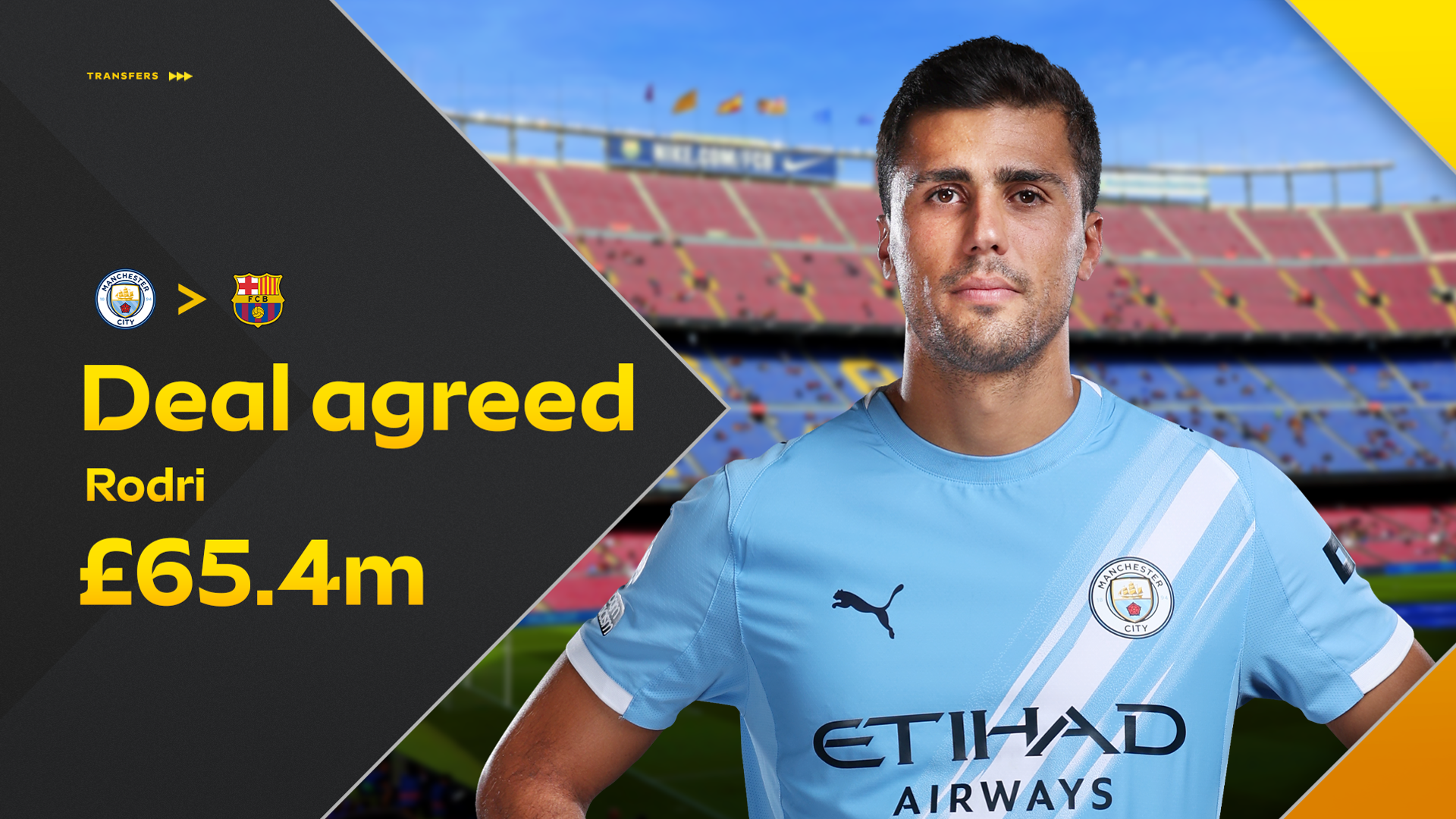
Image: courtesy of Sky sports
The Rodri Deal: What Barcelona Gains, What Manchester City Must Rebuild
Barcelona and Manchester City have reached an agreement in principle for the transfer of midfielder Rodri, with a confirmed fee of €76.5 million. The deal, which includes €60 million upfront and achievable add-ons, will see Rodri move to the Catalan club on a four-year contract after seven seasons with City. Multiple reports, including those from David Ornstein and Fabrizio Romano, confirmed the agreement late on Monday, August 16th, with an official announcement expected in the coming days.
Outlook
Background
Rodri has been an anchor in Manchester City's midfield since joining the club. His departure comes after a highly successful seven-season spell where he cemented his reputation as one of the world's premier defensive midfielders, crucial to City's tactical control under Pep Guardiola. Barcelona's pursuit of Rodri has been persistent, with the Spanish champions reportedly submitting two previous bids that were rejected before the €76.5 million offer was accepted. This aggressive move by Barcelona suggests a clear intent to strengthen their central midfield, a position of strategic importance for their style of play. For City, Rodri's sale represents a substantial capital infusion, though it also creates a significant void in a critical area of the squad. The club has historically been adept at navigating high-profile departures, often reinvesting transfer fees into new talent. However, replacing a player of Rodri's unique blend of defensive acumen, passing range, and tactical intelligence will present a considerable challenge for Guardiola and City's recruitment team.
Precedents
High-value transfers for established central midfielders are not uncommon in European football, especially for players who combine defensive solidity with playmaking ability. Clubs like Manchester City have a track record of both acquiring and selling top talent at peak market value, often using the funds to refresh or rebalance their squad. Historically, when a player of Rodri's stature moves, it often signals a strategic shift for both the buying and selling clubs. For the acquiring club, it is typically a move to solidify a key position or to replace an outgoing star. For the selling club, it can be driven by financial incentives, the player's desire for a new challenge or a return home, or a strategic decision to evolve the squad. Barcelona, despite recent financial constraints, has consistently invested in marquee signings, particularly for positions that define their identity, such as central midfield. The fee agreed upon for Rodri reflects the market premium for elite performers in a pivotal role.
Rodri's transfer reshapes the tactical landscape for two of Europe's biggest clubs. For Manchester City, the departure of their deep-lying playmaker and defensive shield means Pep Guardiola will need to re-evaluate his midfield structure. Rodri's ability to break up play, dictate tempo, and initiate attacks from deep was central to City's dominance. His absence will expose a gap in squad depth and tactical continuity that few players globally can fill. The club's response in the transfer market will be closely watched, as their ability to find a suitable replacement will directly impact their competitiveness in the Premier League and Champions League. For Barcelona, acquiring Rodri is a major statement of intent. It provides their midfield with a proven, world-class operator who can offer both defensive stability and exceptional ball progression. This increased control in the center of the park could be instrumental in Xavi's plans to restore Barcelona to the pinnacle of European football, addressing a critical need for a player who can control games and protect the backline. The move also signals Barcelona's continued financial maneuvering to attract top talent, even amid ongoing economic pressures, underscoring their commitment to building a competitive squad.
Scenarios
Analysis1. Manchester City's Midfield Reimagination: City's immediate challenge is to identify and secure a suitable replacement for Rodri before the transfer window closes. This could involve either promoting existing talent within their academy, such as Kalvin Phillips (if he returns from loan and fits the system), or making a significant investment in another top-tier defensive midfielder. The latter would likely involve a substantial fee, potentially consuming a large portion of the funds received from Rodri's sale. Without a like-for-like replacement, Guardiola may need to adjust his tactical approach, potentially relying more on a double pivot or adapting the roles of other midfielders. This could lead to a period of tactical experimentation and potentially affect their early season form.
2. Barcelona's Enhanced Control and Stability: Rodri's arrival could immediately elevate Barcelona's midfield capabilities. His presence offers a significant upgrade in defensive solidity, allowing other creative midfielders like Frenkie de Jong or Gavi more freedom to push forward. This increased control in the center of the park could translate into more consistent performances in La Liga, helping Barcelona mount a stronger title challenge against Real Madrid. Furthermore, his experience in the Champions League could prove invaluable as Barcelona aims to progress deeper into the competition.
3. Shifting Power Dynamics in European Football: The transfer of a player of Rodri's caliber between two European giants could subtly alter the competitive balance. While City has deep squad resources, losing a player of his influence is a blow. Conversely, Barcelona gains a crucial piece for their long-term strategy. This move might intensify the rivalry between English and Spanish clubs in the Champions League, as both teams adjust to their new realities. The transfer market itself could see a ripple effect, with other clubs potentially looking to offload or acquire midfielders as a consequence of this high-profile move.
Timeline
2026-08-16
Agreement in Principle Reached
Multiple reports, including from David Ornstein and Fabrizio Romano, confirm Manchester City and Barcelona have agreed to a €76.5 million fee for Rodri.
2026-08-16
Fee Structure Details Emerge
The Athletic confirms the fee structure: €60 million upfront with achievable add-ons for the transfer.
2026-08-17
Widespread Confirmation
News outlets widely report on the confirmed agreement, detailing Rodri's impending four-year contract with Barcelona.
Late August 2026 (INFERRED)
Formalities and Official Announcement
Rodri is expected to undergo a medical examination and formally sign his contract with Barcelona, followed by official announcements from both clubs.
Frequently Asked Questions
Rodri, whose full name is Rodrigo Hernández Cascante, is a Spanish professional footballer who plays as a defensive midfielder. He is known for his exceptional passing, tactical intelligence, and defensive screening abilities.
Discussion
Be the first to share your thoughts.