
The immediate aftermath of the Belgian Grand Prix has seen Mercedes launch an investigation into the power issues reported by George Russell. This inquiry will likely scrutinize telemetry data, engine performance logs, and battery management system readouts from Russell's car. The team's findings, or lack thereof, will be critical in shaping the narrative around the collision and could influence future car development. Expect public statements from Mercedes management in the coming days or weeks, potentially offering more detail on the nature of the power problem and any remedial actions planned.
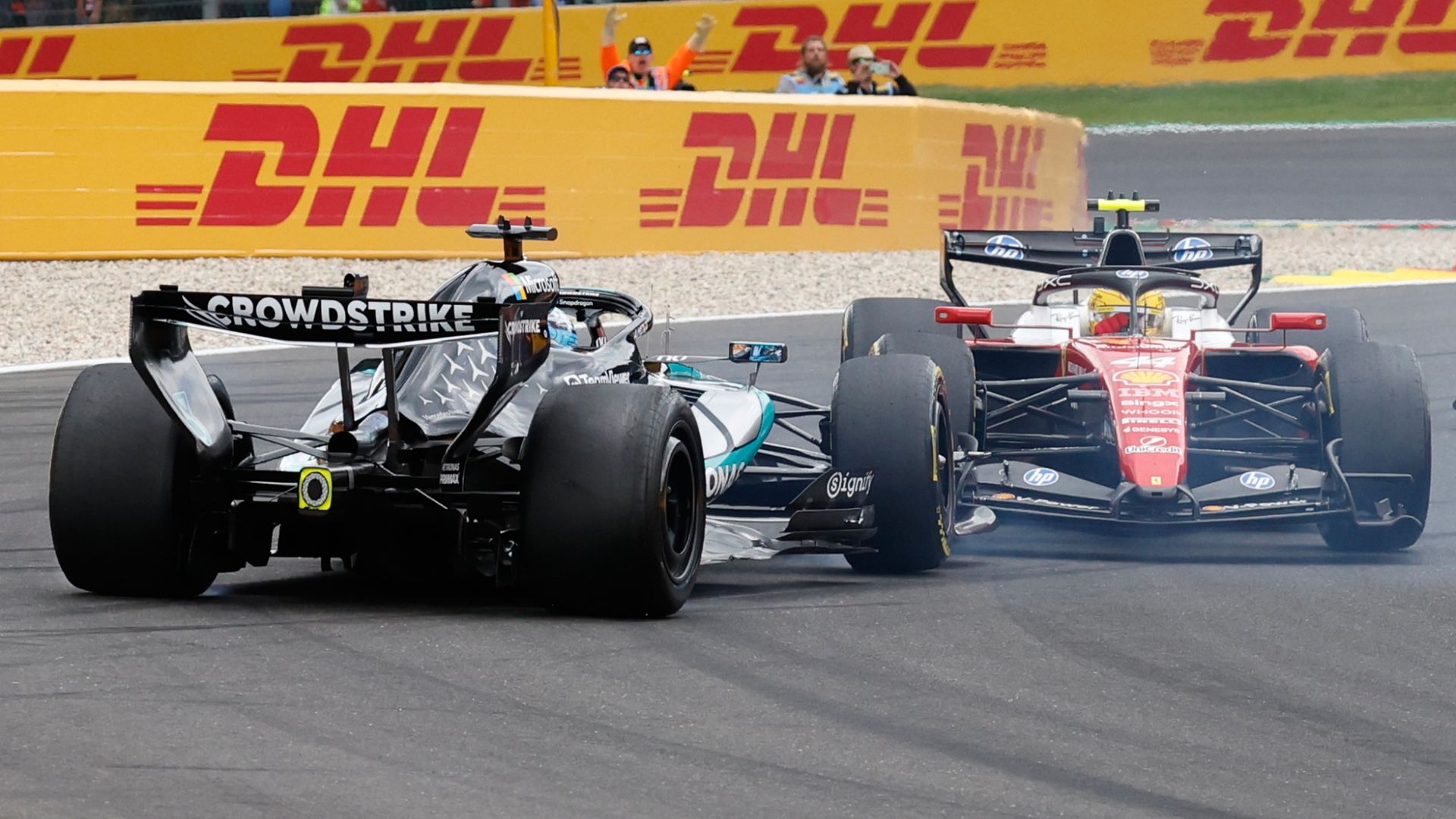
Image: courtesy of Sky sports
Mercedes' Growing Technical Strain: Russell Blames 'Dangerous' Power Issue for Hamilton Collision at Spa
George Russell has openly attributed his collision with teammate Lewis Hamilton at the 2026 Belgian Grand Prix to a serious Mercedes power unit issue, describing the situation as "dangerous." While Hamilton received a five-second penalty for his role in the incident, Russell's claims shift the focus from a simple driver error to potential underlying technical vulnerabilities within the Mercedes F1 car. This raises questions about the team's engineering challenges and how they might impact the rest of the season and the internal dynamic between its two star drivers.
Outlook
Background
The 2026 Belgian Grand Prix delivered a chaotic race at the iconic Circuit de Spa-Francorchamps, culminating in a high-profile collision between Mercedes teammates George Russell and Lewis Hamilton. The incident, which ultimately ended Russell's race, occurred as the two drivers battled for position. Russell, speaking after the event, was clear in his assessment: a significant power unit problem, specifically his battery running out too soon on the Kemmel Straight, left his car dangerously slow.
"There has been a serious issue Mercedes is looking into regarding straight-line speed on his car," Russell explained. He recounted falling several places along the Kemmel Straight because his battery failed to provide the expected power, creating a scenario where he was "going slower than an F2 car." This, he argued, put him in a compromised position as he braked late into Les Combes, where he was on the outside of Hamilton.
Hamilton, for his part, experienced a "snap of oversteer" and made contact with Russell's car. Race stewards reviewed the incident and ultimately handed Hamilton a five-second penalty, indicating their view that his actions were a primary contributing factor to the collision. This official ruling contrasts sharply with Russell's emphasis on the technical fault.
Mercedes team principal Toto Wolff has previously addressed intra-team collisions, notably one during qualifying for the Spanish Grand Prix earlier in the season, which he attributed to miscommunication. However, Russell's current explanation points to a mechanical or electrical failure rather than a communicative one, raising different concerns for the team. The Belgian GP itself saw Kimi Antonelli claim victory, while other incidents, including a clash between Charles Leclerc and Oscar Piastri, further underscored the challenging conditions and intense competition on track.
Precedents
Inter-team rivalries, particularly between top drivers in the same competitive car, are a recurring theme in Formula 1 history. The dynamic between George Russell and Lewis Hamilton, while generally respectful, has shown flashes of tension, especially when results are on the line. This is not the first time the two have made contact; Hamilton took "100 per cent" of the blame for a first-corner crash with Russell at the Qatar Grand Prix in 2025. These incidents, while distinct, collectively highlight the inherent pressure within a team striving for championships.
Historically, Mercedes has navigated intense driver rivalries, most notably between Hamilton and Nico Rosberg during their dominant years. In those instances, while contact was rare, strategic and psychological battles were constant. What differentiates the current situation is the introduction of a potential technical fault as a direct cause for a collision. When a car's performance is not optimal, or when drivers perceive a technical disadvantage, it can amplify frustration and increase the likelihood of on-track errors or misjudgments.
The Kemmel Straight, where Russell reported his power loss, is one of F1's longest full-throttle sections. Battery deployment, a critical component of the hybrid power unit's Energy Recovery System (ERS), is carefully managed to maximize speed and efficiency over a lap. A failure in this system, especially at such a high-speed zone, can leave a driver vulnerable and dramatically alter their braking points and racing lines. This kind of technical hiccup can have a cascade effect, transforming a controlled racing maneuver into a dangerous, unpredictable situation. For a team like Mercedes, which built its modern dynasty on engineering excellence and reliability, any reported 'serious issue' with the power unit demands immediate and thorough investigation, recalling past reliability woes that have plagued other manufacturers at critical moments in their seasons.
The collision between George Russell and Lewis Hamilton at the Belgian Grand Prix is more than just another racing incident; it cuts to the core of Mercedes' technical capabilities and internal team management. Russell's public blaming of a power issue suggests a deeper, systemic problem within the W17 car, rather than a simple misjudgment by either driver. If a 'dangerous' power deficit truly led to Russell's compromised position, it means Mercedes is facing significant engineering challenges that could undermine their entire 2026 season.
For the drivers, the stakes are equally high. Hamilton's penalty, even with Russell's explanation, places official blame on him, potentially affecting his championship standing and his reputation. For Russell, his direct attribution to a technical fault could be seen as an attempt to clear his name, but it also publicly exposes Mercedes' struggles. The team, once the undisputed benchmark for hybrid-era performance, now appears to be grappling with fundamental reliability and performance issues. This could impact their ability to attract and retain top talent, including future driver contracts.
Beyond the immediate race, the incident raises questions about Mercedes' development direction. Are they pushing the limits of the power unit too far, sacrificing reliability for performance? Or is this an isolated bug? The answers will dictate their approach to the remaining races and potentially influence rule interpretations or technical directives from the FIA regarding power unit safety and performance. For fans and competitors alike, this incident is a stark reminder that even the most sophisticated machinery can falter, and that human and mechanical factors are always intertwined in the high-octane world of Formula 1.
Scenarios
AnalysisThe fallout from the Belgian Grand Prix collision could unfold in several ways, each with distinct implications for Mercedes and the broader F1 grid.
One likely outcome is that Mercedes confirms a specific technical fault with Russell's power unit. If their internal investigation substantiates Russell's claims, the team will likely issue a detailed explanation, emphasizing their commitment to rectifying the issue. This would serve to validate Russell's account, potentially shifting some of the perceived blame from Hamilton's penalty, and would likely lead to immediate technical upgrades or adjustments to prevent recurrence. Such a confirmation could also highlight the inherent risks of pushing F1 technology to its limits, potentially influencing future regulatory discussions around power unit reliability and safety.
Alternatively, Mercedes' investigation might conclude that the power issue, while present, was not the sole or primary cause of the collision. While they may acknowledge a minor battery or ERS anomaly, the findings could suggest that driver judgment or spatial awareness still played a significant role in the incident. This scenario would leave Hamilton's penalty standing more firmly and could lead to internal discussions about driver management and on-track conduct, rather than solely focusing on technical solutions. It might also imply that the 'dangerous' situation described by Russell was an exaggeration or a subjective interpretation under race pressure.
A third possibility is that the incident further strains the relationship between George Russell and Lewis Hamilton. Publicly blaming a technical fault while your teammate receives a penalty can create an awkward dynamic. If the technical issue isn't definitively proven to be the overriding cause, it could foster resentment or a lack of trust between the drivers, especially as they compete for limited team resources and track position. This internal friction could manifest in future races, potentially compromising team strategy or leading to further on-track confrontations.
Finally, the incident could expose deeper, systemic performance or reliability issues within the Mercedes W17 car. If the power problem is not an isolated incident but rather indicative of broader engineering challenges, Mercedes could face a difficult second half of the season. This might force them to divert resources from future car development to address current reliability, potentially impacting their competitiveness in the 2027 season as well. Such a scenario would represent a significant setback for a team accustomed to championship contention, potentially altering their long-term strategic outlook.
Timeline
2026-07-20
Belgian Grand Prix Collision
George Russell and Lewis Hamilton collide during the 2026 Belgian Grand Prix at Circuit de Spa-Francorchamps, ending Russell's race.
2026-07-20
Russell Blames Power Issue
Following the collision, George Russell states that a 'serious issue' with his Mercedes power unit, specifically his battery running out too soon on the Kemmel Straight, caused his car to be 'dangerous' and led to the incident.
2026-07-20
Hamilton Receives Penalty
Race stewards issue Lewis Hamilton a five-second time penalty for his role in the collision with George Russell, citing a 'snap of oversteer' that led to contact.
2026-07-20
Mercedes Launches Investigation
Mercedes-AMG Petronas F1 Team confirms it is investigating the power problems reported by George Russell, acknowledging the severity of his claims regarding straight-line speed.
Frequently Asked Questions
Russell stated his battery ran out too soon on the Kemmel Straight, a long flat-out section of the Spa circuit. This would have caused a significant loss of electrical power from the Energy Recovery System (ERS), making his car much slower than expected and difficult to manage at high speed, especially when approaching braking zones.
Discussion
Be the first to share your thoughts.