
The coming weeks will likely see continued negotiations between Fenway Sports Group, the consortium led by Amit Bhatia, and Jeff Bezos's representatives. While the involvement of a figure like Bezos generates significant headlines, the intricate process of valuing and structuring a minority stake in a major sports franchise is complex and often protracted. Fans should anticipate further updates on the progress of these discussions, but a quick resolution is not guaranteed, and the final terms of any agreement will dictate the practical implications for Liverpool FC.
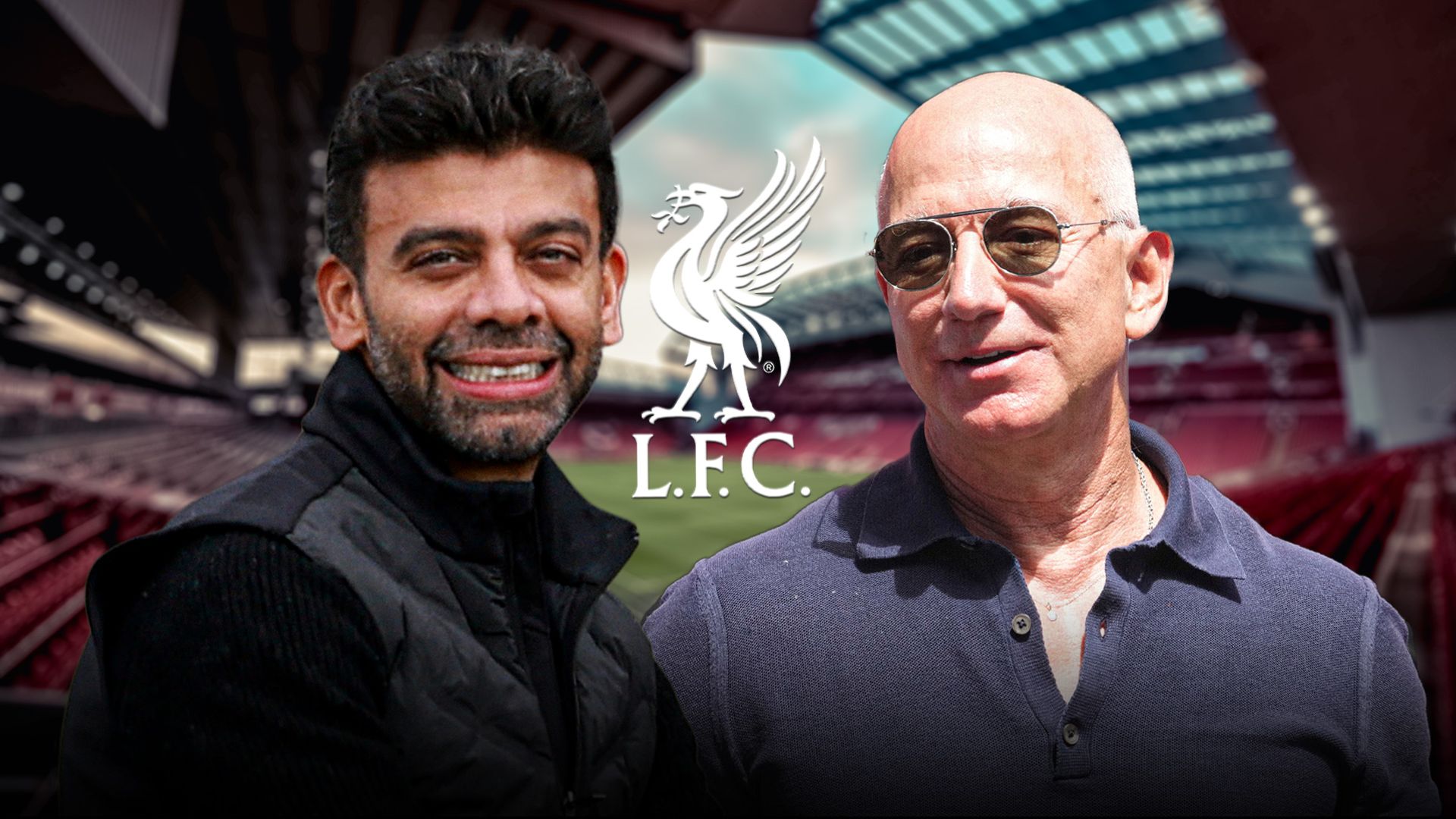
Image: courtesy of Sky sports
Beyond the Billions: What a Jeff Bezos Minority Stake Actually Means for Liverpool FC
Amazon founder Jeff Bezos is reportedly in preliminary talks to join a consortium led by Amit Bhatia, aiming to acquire a strategic minority stake in Liverpool FC. While the sheer scale of Bezos's wealth has sparked widespread excitement among fans, the nature of a minority investment suggests a more nuanced impact on the club's operations and ambitions than a full takeover. Fenway Sports Group (FSG), Liverpool's current owners, have confirmed their openness to such a deal, which could value the club at around $6 billion.
Outlook
Background
The news that Jeff Bezos, one of the world's wealthiest individuals, is considering an investment in Liverpool FC has predictably captured global attention. However, the confirmed details point to a 'strategic minority investment' rather than an outright purchase. Fenway Sports Group (FSG), which has owned Liverpool since 2010, publicly confirmed earlier this week, on July 22, 2026, that it is in discussions with a consortium led by Amit Bhatia. This group has expressed interest in acquiring a portion of the club, not taking full control.
Reports from Liverpool.com suggest this stake could represent as much as 30% of the club, implying a total valuation for Liverpool FC in the region of $6 billion. Sky Sports News understands that any potential investment from Bhatia's group would be structured similarly to the deal FSG struck with Dynasty Equity in 2023, which also involved selling a smaller stake in the club.
Amit Bhatia, a prominent figure in UK football, previously served as a director and co-owner of Queens Park Rangers (QPR) for 18 years, only stepping down earlier this week. He is the son-in-law of Indian billionaire Lakshmi Mittal, whose family wealth is estimated at £23 billion. While substantial, Mittal's fortune is dwarfed by Bezos's, whose personal wealth could theoretically allow him to purchase the club entirely and still retain an estimated $250 billion. This stark difference in individual financial capacity often leads to speculation that a Bezos investment would unlock an entirely new level of spending for Liverpool, a perception that requires careful examination given the minority nature of the proposed deal.
See also
Precedents
The trend of ultra-high-net-worth individuals and institutional investors acquiring stakes in top-tier football clubs has been a defining characteristic of the sport's financial evolution over the past two decades. From Roman Abramovich's transformative ownership of Chelsea to the Saudi Public Investment Fund's acquisition of Newcastle United, and the multi-club ownership models emerging across Europe and beyond, capital injection has fundamentally reshaped the competitive landscape.
Historically, clubs seeking investment often pursue one of two paths: a full takeover that transfers control and strategic direction, or a minority stake sale. The latter is often preferred by existing owners who want to retain operational control while injecting capital for specific projects, debt reduction, or simply to realize some of their investment's value. Fenway Sports Group itself has followed this pattern, notably selling a small stake to Dynasty Equity in 2023.
These minority deals typically provide capital for infrastructure improvements, like stadium expansions or training ground upgrades, or to bolster transfer budgets within existing financial fair play (FFP) parameters. They rarely signal an immediate, radical shift in a club's philosophy or day-to-day management. For investors, a minority stake offers exposure to the growing value of sports franchises without the full operational burden or the intense public scrutiny that comes with majority ownership. It's a way to participate in the burgeoning global appeal of the Premier League, which continues to attract immense broadcasting revenues and a worldwide fanbase, driving up club valuations significantly over time.
The potential involvement of Jeff Bezos, even in a minority capacity, sends a powerful signal about the escalating financial gravitas of elite football. For Liverpool, it represents a potential injection of capital at a crucial time. The club has consistently competed at the highest levels, but maintaining that position requires continuous investment in player talent, stadium infrastructure, and training facilities. FSG has been methodical in its approach, balancing financial prudence with sporting ambition. A strategic minority investment aligns with this philosophy, providing funds without necessarily altering the core management strategy.
What this changes is the scale of available capital. While a minority investor doesn't dictate transfer policy, the additional funds could enhance Liverpool's ability to compete for top-tier players, especially in a market where transfer fees continue to inflate. It could also accelerate plans for further development around Anfield or the training ground, solidifying the club's long-term competitive edge. The association with a global brand like Amazon, through its founder, also offers intangible benefits, potentially opening doors for new commercial partnerships and expanding Liverpool's already vast global reach.
For the broader Premier League and the sports investment world, Bezos's interest validates the perceived value and growth potential of European football. It suggests that despite increasing regulatory scrutiny and the financial fair play rules, top clubs remain attractive assets for the world's wealthiest individuals, signaling sustained high valuations and continued competition for investment opportunities. The real stakes here are not just about a cash injection, but about the symbolic weight and the potential for a new era of commercial and financial sophistication at Anfield.
Scenarios
AnalysisThe discussions around Jeff Bezos potentially joining a consortium to invest in Liverpool FC could unfold in several distinct ways. Each path carries different implications for the club.
Outcome 1: A Strategic Minority Investment Proceeds as Planned.
This is the most likely scenario given FSG's confirmed openness to a 'strategic minority investment' and the advanced nature of the talks with Amit Bhatia's consortium. In this outcome, Bezos would contribute a portion of the funds, alongside other investors, to acquire a stake that likely falls short of 50%. This would provide Liverpool with a significant capital injection, which could be directed towards enhancing the transfer budget, funding further stadium development, or general operational improvements.
However, it is crucial to understand that a minority stake does not typically grant control over the club's day-to-day management, transfer decisions, or overall strategic direction. FSG would remain the dominant force, continuing to operate under its established model of sustainable growth. Bezos's role would primarily be that of a high-profile, financially potent, but non-controlling partner. The main benefit for Liverpool would be enhanced financial stability and an increased capacity to invest, rather than a radical shift in philosophy. This implies that while the club may be more competitive in the transfer market, it would still operate within FSG's financial fair play framework and long-term vision.
Outcome 2: The Deal Encounters Hurdles or Breaks Down.
Despite the high-profile names involved, not all preliminary talks translate into completed deals. Negotiations for significant stakes in major sports clubs are inherently complex, involving intricate valuations, due diligence, and agreement on governance structures. Disagreements could arise over the precise valuation of the club (the reported $6 billion figure is an estimate), the size of the stake, the terms of investment, or the roles and responsibilities of the various consortium members.
If the talks with Bhatia's consortium, including Bezos, do not materialize into a definitive agreement, FSG would likely continue its search for other suitable minority investors. The demand for stakes in top Premier League clubs remains high, and FSG has a clear strategy of seeking 'strategic' partners. A breakdown in these specific talks would not necessarily signal a change in FSG's overall approach to seeking external capital, but it would be a setback in securing a high-profile investor like Bezos.
Outcome 3: The Minority Stake is a Precursor to Future Expansion.
While initially a minority stake, the involvement of an investor with Bezos's resources could, speculatively, lay the groundwork for a more substantial future investment. In some instances, a minority stake can serve as an entry point, allowing an investor to gain familiarity with the club's operations, governance, and market dynamics. If the initial partnership proves successful and aligns with Bezos's broader investment interests, there is a possibility that he, or the consortium, could seek to increase their stake over time. This could eventually lead to a majority ownership position, though such a development would likely be years in the future and would depend on FSG's evolving long-term strategy and willingness to cede control. This outcome is highly speculative and would represent a significant shift from the current confirmed intent of a minority investment.
Timeline
2023
FSG Sells Stake to Dynasty Equity
Fenway Sports Group sells a minority stake in Liverpool FC to Dynasty Equity, setting a precedent for seeking strategic investment without ceding control.
2026-07-21
Jeff Bezos Link Emerges
Reports surface linking Amazon founder Jeff Bezos to a potential investment in Liverpool FC, specifically to join a consortium led by Amit Bhatia.
2026-07-22
FSG Confirms Talks
Fenway Sports Group spokesperson confirms to Sky Sports News that a consortium led by Amit Bhatia has expressed interest in making a 'strategic minority investment' in Liverpool FC.
2026-07-25
Current Status: Ongoing Preliminary Talks
As of today, July 25, 2026, talks are confirmed to be preliminary, with no agreement reached. The proposed deal could value the club at $6 billion, with a potential 30% stake under discussion.
Frequently Asked Questions
Amit Bhatia is a businessman who previously served as a director and co-owner of Queens Park Rangers (QPR) for 18 years, stepping down earlier this week. He is also the son-in-law of Indian billionaire Lakshmi Mittal, and is leading the consortium interested in Liverpool FC.
Discussion
Be the first to share your thoughts.