
Expect chaos, but highly structured chaos. Iraola is a disciple of the high-intensity Basque school of coaching, heavily influenced by Marcelo Bielsa. At Anfield, he will inherit a squad built for physical dominance but one that has occasionally lacked the structural discipline required to sustain a relentless press over ninety minutes. Unlike the patient, possession-heavy build-up favored by some modern coaches, Iraola wants his teams to win the ball high up the pitch and transition into a shot within three seconds. This means players like Luis Díaz, Darwin Núñez, and Dominik Szoboszlai will be asked to run harder and smarter than they have in years. Fans can expect a return to the heavy-metal football that made Anfield a fortress, though this transition will likely bring defensive vulnerability in the opening months of the season as the backline adjusts to a much higher defensive line. The tactical adjustment will be demanding. Players who cannot cope with the intense physical loads of his training sessions may quickly find themselves on the bench. However, those who adapt will find themselves playing in one of the most exciting, forward-thinking systems in world football.
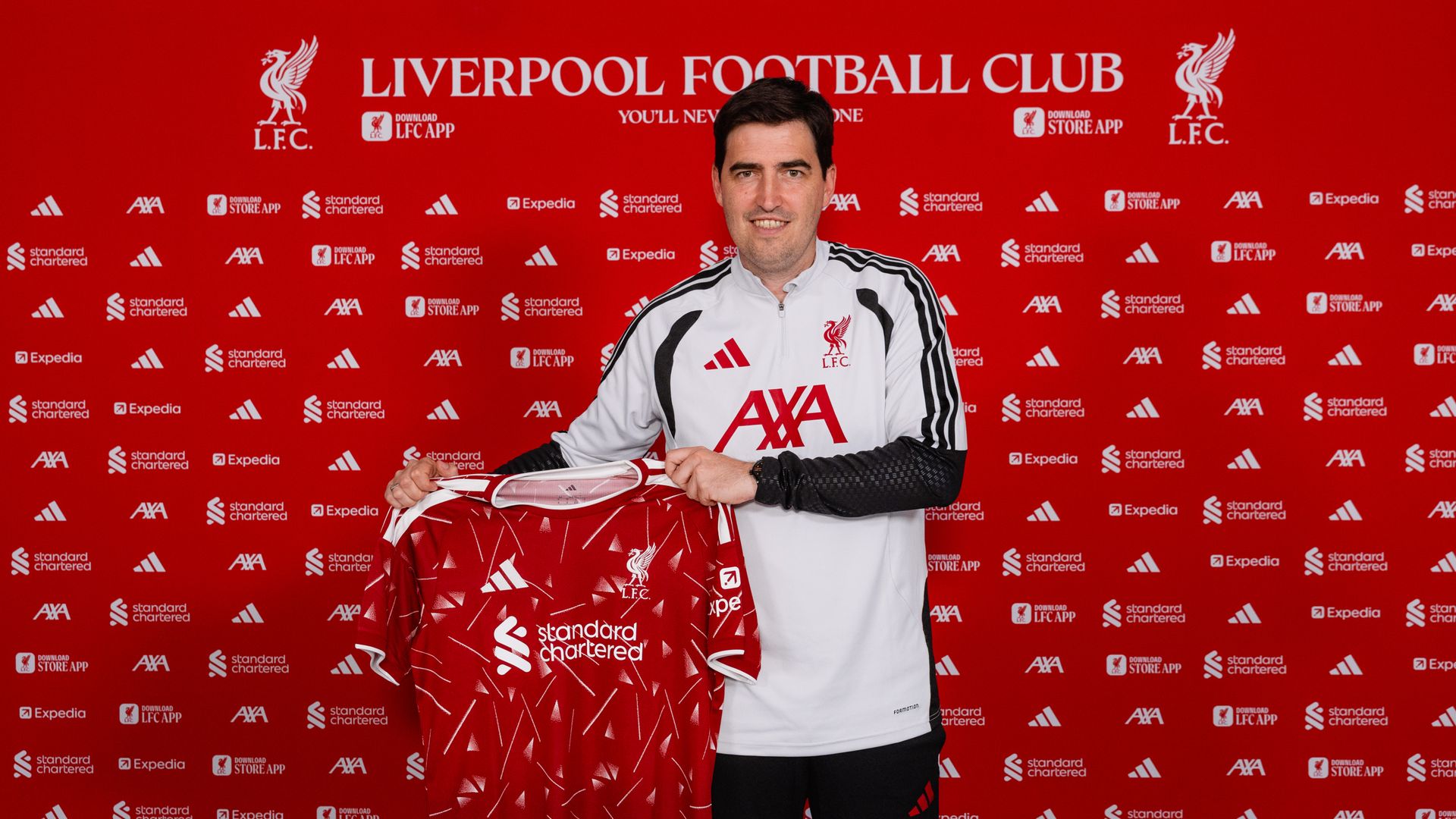
Image: courtesy of Sky sports
The Anfield Press: Why Liverpool Bet on Andoni Iraola to Revive the Klopp Identity
Liverpool has officially appointed Andoni Iraola as their new head coach, marking a significant tactical shift back to high-intensity, vertical football. The Basque manager, who built a formidable reputation at Bournemouth, reunites with Liverpool sporting director Richard Hughes in a move designed to restore the relentless pressing style that defined the club's modern golden era.
Outlook
Background
The driving force behind this appointment is Richard Hughes, Liverpool’s sporting director. Hughes was the man who boldly brought Iraola to Bournemouth in 2023, sacking Gary O'Neil to make room for him—a decision that looked risky at the time but proved to be a masterstroke. When Fenway Sports Group (FSG) restructured their football operations, bringing back Michael Edwards and hiring Hughes, the long-term plan was always to find a coach who aligned with their data-driven recruitment and high-tempo footballing philosophy. When the head coach position became vacant, Iraola’s name sat at the top of the analytical models. He has proven he can overachieve with limited resources, develop young talent, and implement a distinct tactical identity under intense pressure. This is a calculated institutional alignment rather than a panic hire. The relationship between Hughes and Iraola provides a level of trust that is rare in modern football boardrooms. This trust will be vital when the team faces the inevitable bumps in the road during the early stages of his tenure. FSG is betting that this synergy will streamline decision-making across recruitment, academy development, and first-team tactics.
Precedents
Liverpool’s most successful eras have always been defined by managers who possess a clear, uncompromising footballing philosophy rather than just a collection of star players. When Bill Shankly laid the foundations in the 1960s, or when Jürgen Klopp arrived in 2015, they brought a systemic way of playing that unified the entire club. FSG’s ownership model relies heavily on finding managers who can punch above their financial weight by using tactical efficiency. Iraola’s work at Rayo Vallecano, where he took a modest Spanish club to the brink of European qualification, and his subsequent transformation of Bournemouth, fit this exact profile. Historically, when Liverpool hires a manager with a proven track record of tactical overachievement rather than a trophy-laden superstar, the results tend to yield a deeper, more sustainable connection with the Anfield fan base. It is a pattern seen not just at Liverpool, but across clubs that rely on smart scouting over infinite budgets. The transition from a beloved figurehead to a tactical system-builder is never easy, but history suggests that clarity of purpose beats reputation every time.
This appointment represents a definitive choice by Liverpool's leadership to prioritize identity over reputation. In an era where many elite clubs chase celebrity managers with massive wage demands, FSG has doubled down on their belief that the system is the star. By selecting Iraola, Liverpool is signaling that they want to be the most aggressive, hardest-working team in Europe once again. It is a direct challenge to the controlled, possession-based dominance of Manchester City and Arsenal. If Iraola succeeds, it validates the club's entire operational structure, proving that smart data analysis and strong internal relationships can outmaneuver sovereign wealth. If he struggles, it will raise serious questions about whether his demanding style can be sustained at a club playing sixty matches a year across multiple competitions. The decision also reshapes the power dynamics within the Premier League, as Bournemouth loses the architect of their recent rise, and Liverpool establishes a clear, modern direction for their post-Klopp future. It proves that the path to elite management now runs through tactical innovation in the mid-table rather than simply collecting trophies at dominant continental clubs.
Scenarios
AnalysisThere are two distinct paths this appointment could take. In the first scenario, Iraola’s tactical clarity quickly re-energizes the squad, turning Anfield back into an atmospheric pressure cooker where opponents simply cannot breathe. Players like Darwin Núñez flourish under a system that thrives on rapid transition, and Liverpool mounts an immediate, unexpected challenge for the Premier League title while securing silverware in the domestic cups. The squad buys into the physical demands, and Anfield becomes an absolute nightmare for visiting teams once again. In the alternative scenario, the physical demands of Iraola-ball catch up with an aging core. The team suffers a rash of soft-tissue injuries during the congested winter period, leading to dropped points against low-block teams and a frustrating struggle to secure a top-four finish, putting early pressure on the sporting department that hired him. The high defensive line could be exposed by elite counter-attacking sides, leading to heavy defeats that damage team confidence and spark skepticism among supporters who expect immediate defensive stability.
Timeline
Frequently Asked Questions
Discussion
Be the first to share your thoughts.