
Mercedes is expected to bring further incremental updates to its W15 car throughout the current season, building on the recent front wing upgrades seen in Monaco and Canada. The immediate focus will be on maximizing performance for George Russell and Lewis Hamilton in upcoming races like the Hungarian Grand Prix, leveraging the recent resolution of Russell’s energy deployment issues. However, the larger, more complex battle for Mercedes will center on the development and regulatory approval of its 2026 power unit. Discussions and decisions around the new engine regulations, including the contentious fuel supply approval, are likely to intensify between now and the end of the current season, as teams push for clarity and competitive advantage.
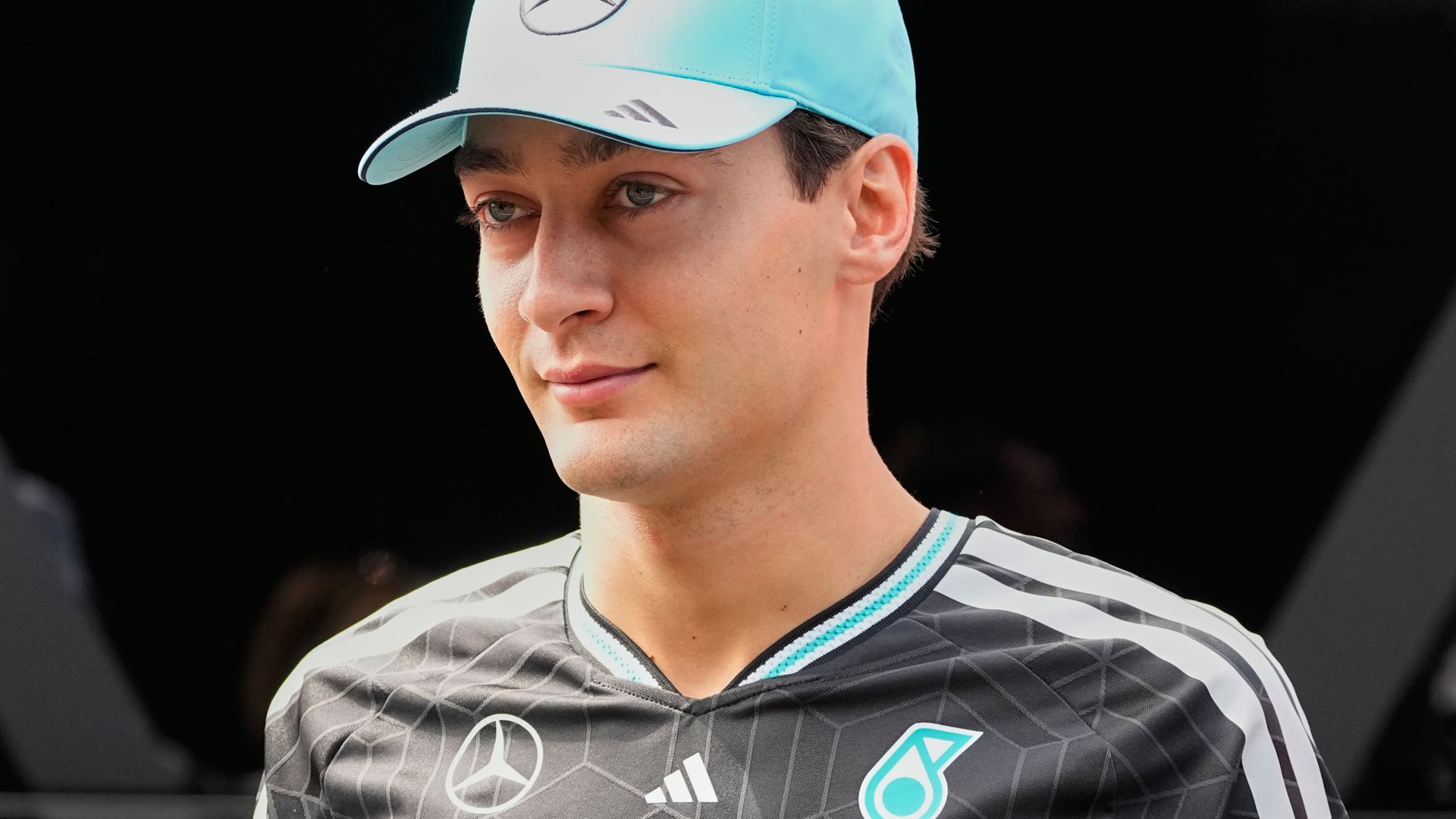
Image: courtesy of Sky sports
Mercedes' 2026 Engine Fight: Russell's Immediate Boost Can't Obscure the Looming Regulatory War
Mercedes-AMG Petronas Formula 1 team has addressed critical energy deployment issues affecting George Russell, bringing a measure of relief ahead of the Hungarian Grand Prix. While this short-term fix offers a boost, the team faces significant, ongoing challenges in developing and securing approval for its 2026 power unit. Rivals have openly challenged Mercedes' engine development, and the team is grappling with a new hurdle regarding its 2026 fuel supply, all while navigating a major overhaul of F1 engine regulations set to reshape the sport's competitive landscape.
Outlook
Background
Formula 1 is on the cusp of a major technical revolution with new engine regulations slated for the 2026 season. These rules are designed to simplify power units, increase electrical power, and mandate the use of 100% sustainable fuels, aiming for a more environmentally conscious and potentially more competitive sport. Mercedes, a dominant force for much of the hybrid era, has been investing heavily in its 2026 power unit, viewing it as a critical opportunity to regain championship-winning form.
However, this transition is proving complex. Mercedes has confirmed George Russell and Kimi Antonelli as its drivers for 2026, signaling a forward-looking strategy. Yet, the team has also been battling persistent engine-related issues, including power unit problems that affected all its cars in a past Belgian Grand Prix. More recently, Russell faced specific energy deployment challenges, which the team has now reportedly resolved ahead of the Hungarian Grand Prix.
Beyond technical hurdles, Mercedes is navigating a politically charged environment. Rival teams have voiced concerns and reportedly voted against certain aspects of Mercedes' 2026 engine development, leading to an FIA statement clarifying that the engines are allowed to be used until at least the summer break. Adding to this regulatory friction is a new issue concerning the approval of Mercedes' specific 2026 fuel supply. These challenges suggest that the path to a competitive 2026 engine is not just an engineering feat but also a regulatory and political negotiation.
Precedents
Mercedes' history in Formula 1's hybrid era, which began in 2014, is one of unprecedented dominance. From 2014 to 2021, the team secured eight consecutive Constructors' Championships, largely thanks to its superior power unit. This era demonstrated Mercedes' exceptional engineering capability in adapting to new regulations and extracting maximum performance.
However, the introduction of new aerodynamic regulations in 2022 saw Mercedes struggle initially, particularly with the 'porpoising' phenomenon. While they eventually addressed these issues to some extent, they have not yet returned to their previous level of absolute dominance. This pattern suggests that while Mercedes possesses deep engineering talent, significant regulatory shifts can temporarily disrupt even the most established teams.
Historically, any team perceived to have an early advantage in developing a new engine, especially ahead of a regulation change, often faces scrutiny and challenges from competitors. This happened in the lead-up to the 2014 regulations, where Red Bull and Ferrari raised concerns about Mercedes' early progress. The current situation with rivals reportedly voting against Mercedes' 2026 engine development echoes this pattern, indicating a familiar competitive dynamic where teams leverage regulatory frameworks to slow down perceived threats.
The outcome of Mercedes' 2026 engine development and the accompanying regulatory battles will profoundly influence the future of Formula 1. For Mercedes, a successful 2026 power unit is crucial for its ambitions to return to championship contention and solidify its brand image as a technological leader. Failure to overcome these hurdles could see the team fall further behind competitors like Red Bull and Ferrari, impacting its long-term viability and appeal to top-tier talent.
For George Russell, and particularly for rookie Kimi Antonelli, their performance in 2026 will be intrinsically linked to the competitiveness of the Mercedes power unit. A strong engine could launch Antonelli's career and cement Russell's status as a future champion; a problematic one could stifle their potential.
More broadly, the debate over 2026 engine regulations and fuel supply impacts the entire sport's competitive balance. If one team gains a significant, unchallengeable advantage through a loophole or early development, it could lead to another era of single-team dominance, which the sport's governing bodies and fans generally seek to avoid. Conversely, a tightly contested engine formula could usher in a new golden age of racing, with multiple teams vying for victories. The stakes involve not just individual race wins, but the very structure of F1's competitive order for years to come.
Scenarios
AnalysisOne potential outcome is that Mercedes successfully navigates the technical and regulatory challenges, secures approval for its fuel supply, and produces a highly competitive 2026 power unit. This would likely position them as strong contenders for the championship, allowing George Russell and Kimi Antonelli to compete at the front of the grid. This scenario relies on Mercedes' engineering prowess overcoming current design hurdles and the FIA ultimately green-lighting their innovations despite rival objections.
Another scenario suggests that while Mercedes may resolve its immediate engine issues for the current season, the complexities of the 2026 regulations — including ongoing rival opposition and the fuel supply approval — could delay or compromise the optimal performance of their next-generation power unit. This might lead to a slower start to the 2026 season for Mercedes, requiring them to play catch-up as they did in the early part of the 2022 regulation cycle. In this case, their drivers may face an uphill battle against teams that have either adapted more quickly or faced fewer regulatory roadblocks.
A third, more challenging possibility is that the regulatory scrutiny and technical hurdles around the 2026 power unit, particularly concerning fuel, prove more difficult to overcome than anticipated. This could force Mercedes to make significant compromises in their engine design or operational strategy, potentially impacting reliability or overall performance. Such an outcome could see Mercedes struggle to challenge for wins and championships in the initial years of the new regulation era, pushing them into a longer rebuilding phase.
Timeline
Frequently Asked Questions
Discussion
Be the first to share your thoughts.