
What actually happens when the NBA playoffs start? The fast-break points dry up, referees blow their whistles less often, and teams must execute in the half-court against locked-in defenses. This is precisely what the Knicks want. Under Tom Thibodeau, New York has built a team that does not need a perfect environment to win games. They are comfortable playing in the mud. Expect opponents to find themselves physically exhausted by Game 3 of a series. The Knicks do not give away easy transition layups or uncontested corner threes. Instead, they force you to fight for every single inch of the hardwood. It is a grueling style that wears down even the most talented rosters. If you want to beat them, you have to outwork them. Very few teams in the modern NBA are equipped to do that over a seven-game series.
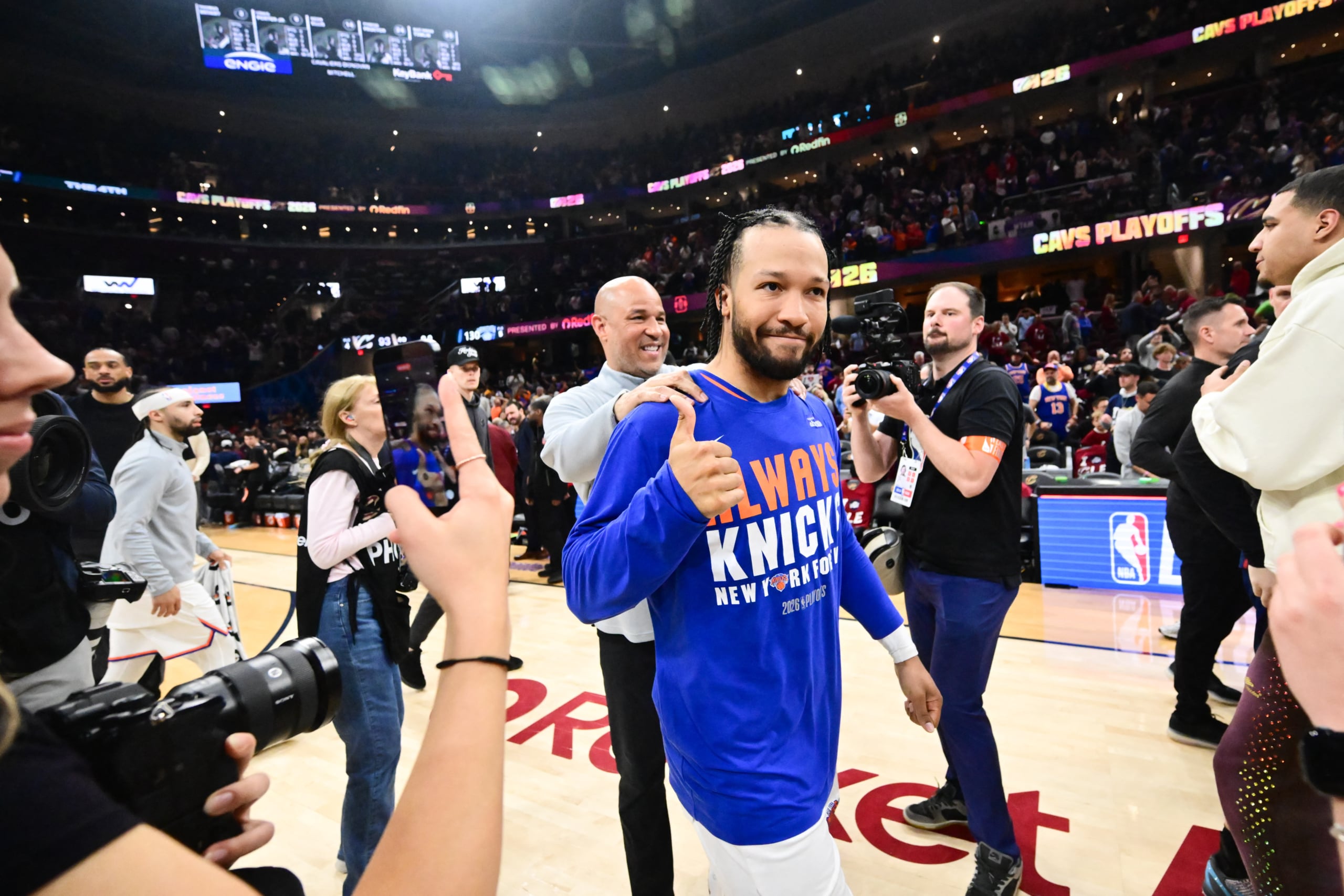
Image: courtesy of Sportsnaut
Why the NBA's Most Cynical Insiders Are Quietly Betting on the New York Knicks
For decades, conversations around the league about the New York Knicks focused on dysfunction, bad contracts, and missed lottery picks. Today, NBA coaches and scouts are singing a completely different tune behind closed doors. They see a roster built for the brutal, half-court reality of postseason basketball—a team that thrives when the game gets ugly. This is the inside story of why basketball's toughest critics believe Manhattan might finally host a championship parade.
Outlook
Background
The transformation of this franchise started in the front office, where Leon Rose chose patience over the quick fix. Instead of trading every draft pick for the first unhappy superstar on the market, the Knicks built a highly coordinated ecosystem where every player has a distinct, non-overlapping job. The signing of Jalen Brunson, once mocked by rival executives as a desperate overpay, has become one of the most lopsided free-agent victories in modern sports history. Brunson does not rely on elite vertical leap or blinding speed; he wins with footwork, leverage, and a midrange game that is virtually immune to playoff adjustments. Surrounding him is an army of wing defenders like OG Anunoby and Josh Hart who relish the dirty work. Anunoby can erase an opponent's best scorer, while Hart hunts down rebounds like a player twice his size. Thibodeau, long criticized for his rigid rotations and demanding practices, has finally found a locker room that shares his obsessive, workaholic DNA. They do not run from the grind. They embrace it. This alignment of coaching philosophy, executive restraint, and player identity has created something rare in today's league: a team without an obvious weak link to target.
See also
Precedents
Modern basketball fans often believe you need a consensus top-three player in the world to win a championship. History tells a more complicated story. The scouts picking the Knicks point directly to the 2004 Detroit Pistons as the ultimate proof of concept. That Detroit team lacked a singular, transcendent superstar, but they possessed five starters who functioned as a single, terrifying defensive unit. They broke the star-studded Los Angeles Lakers by simply refusing to beat themselves and making every possession a physical trial. Another clear comparison is the 2011 Dallas Mavericks. While Dirk Nowitzki was the clear focal point, that championship run was secured by a deep rotation of smart, tough role players who executed their defensive schemes to perfection. The Knicks are built on these exact same principles of structural cohesion and defensive accountability. They are betting that five players moving in perfect harmony will always beat a top-heavy roster relying on individual brilliance. It is an old-school philosophy wrapped in a modern, space-conscious package.
This shift in how insiders view the Knicks reveals a broader change in how NBA teams must be built under the league's new, highly restrictive collective bargaining agreement. The era of simply throwing three superstars together and filling the rest of the roster with minimum-salary players is dead. The new financial rules penalize top-heavy teams, making depth and smart asset management the ultimate competitive advantages. By building a deep, balanced roster, the Knicks have accidentally created the perfect blueprint for the modern salary-cap era. If New York wins a title with this group, it will change how front offices across the league approach roster construction. It proves that culture, defensive versatility, and physical endurance are more valuable than collecting famous names. This is not just about one championship for New York; it is about proving that basketball is still a team game.
Scenarios
AnalysisAnalysis: Two distinct paths lie ahead for this roster as they enter the postseason pressure cooker.
First, the system works exactly as designed. The Knicks use their deep rotation to absorb the physical toll of the playoffs, rotating fresh, physical defenders onto opposing stars while Jalen Brunson controls the tempo in the fourth quarter. They dominate the offensive glass, generating extra possessions that wear down opponents over a long series, culminating in a historic championship parade down the Canyon of Heroes. This outcome would cement Brunson's legacy and validate Thibodeau's demanding philosophy.
Second, the physical bill comes due. The high-intensity style that makes the Knicks so dangerous requires an immense physical sacrifice that eventually leads to roster breakdown. If key rotation players like OG Anunoby or Josh Hart suffer soft-tissue injuries due to heavy workloads, the entire defensive structure collapses. Without their elite wing depth, the Knicks are forced to play conservative defensive schemes, leaving them vulnerable to high-powered offensive teams that can exploit their lack of interior size.
Timeline
Frequently Asked Questions
Discussion
Be the first to share your thoughts.