
The conversation around England's white-ball cricket will continue to center on how the team integrates the lessons from its most experienced players, like Joe Root. Expect ongoing scrutiny of selection policies, batting approaches, and the overall development pathway for young talent in the lead-up to major tournaments. The tension between England's aggressive 'Bazball' philosophy and the more measured, wicket-preserving style exemplified by Root will likely be a recurring theme as the team seeks balance and consistency.
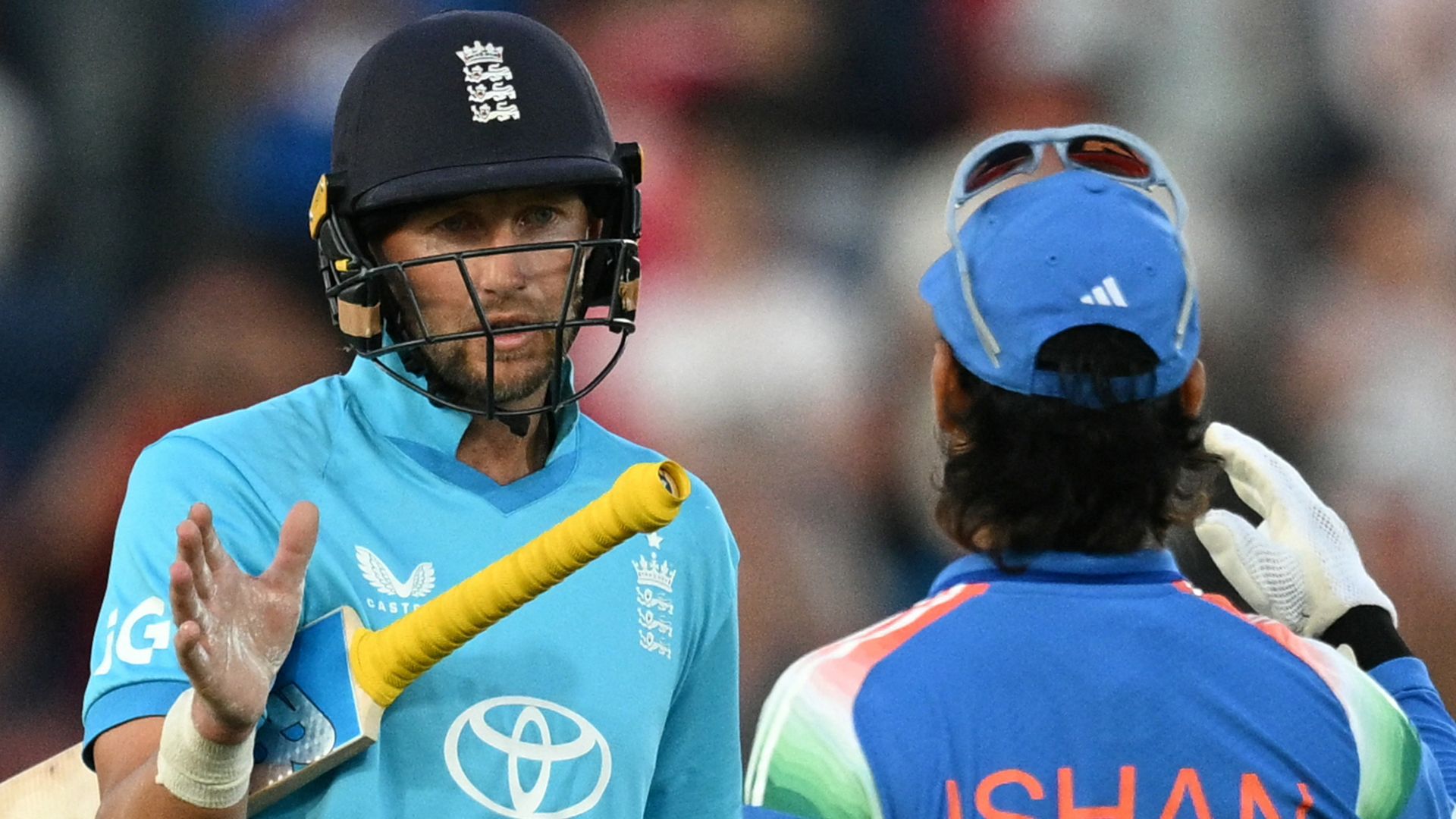
Image: courtesy of Sky sports
England's Unfinished Lesson: Can Joe Root's Example Reshape the Team for 2027?
England's cricket squad is looking to Joe Root's consistent performances and disciplined approach as a blueprint for future success, particularly with the 2027 World Cup on the horizon. Despite Root's individual brilliance, the team faces significant challenges in translating his personal resilience and technical mastery into a collective strategy, especially as younger players gain experience in the demanding one-day international format.
Outlook
Background
Joe Root remains a central figure in English cricket, a veteran whose career statistics place him among the sport's elite. As of July 17, 2026, he is the leading run-scorer among active batsmen in Test cricket, second only to Sachin Tendulkar in all-time Test runs, and England's highest run-scorer in the format. His recent unbeaten 99 in a One-Day International (ODI) against India highlighted his enduring class and ability to anchor an innings under pressure. This performance drew specific praise, with commentators and coaching staff suggesting England's younger players have much to learn from his discipline and resilience.
England's white-ball setup, however, has seen a period of transition since its 2019 World Cup victory and subsequent T20 World Cup win. While the team has often embraced an aggressive, high-risk approach, a lack of consistent exposure to 50-over cricket for some emerging talents has led to a situation where players are 'learning on the job.' Root himself, who captained the Test team from 2017 to 2022, has openly acknowledged past team behavior issues and the need for constant learning and adaptation. This context frames the current challenge: how to leverage Root's 'phenomenal' example to build a cohesive, competitive unit capable of challenging for the 2027 World Cup.
See also
Precedents
Cricket, particularly England's approach, has often swung between periods of aggressive, free-flowing play and more conservative, attritional styles. Historically, successful English sides have often featured a blend of both, with experienced anchors providing stability amidst dynamic stroke-makers. Think of the stability provided by Alastair Cook in Test cricket or Eoin Morgan's calm leadership in white-ball cricket, allowing others to play with freedom.
England's recent 'Bazball' philosophy, which prioritizes aggressive, fast-scoring cricket, has been highly effective in Test matches, redefining how the format is played. However, applying this same high-octane, sometimes high-risk, approach universally across all formats, especially ODIs which demand different tactical nuances, has shown its limitations. The challenge for England is not unique; many teams struggle to maintain consistent performance across formats and adapt their philosophy to the specific demands of each game type and opponent. Past teams have often seen a generational passing of the torch, where younger players learn from the temperament and technical rigor of their elders, but this process is rarely linear or immediate. The current situation echoes periods where England has relied heavily on a few star players, leading to questions about the depth and overall strategic direction of the team. The success of the 2019 World Cup team, for instance, was built on years of focused ODI development under Morgan, a process that current players are now trying to replicate under different leadership and with a new crop of talent.
The stakes for England cricket are substantial. While the team has enjoyed significant triumphs in recent years, particularly in T20 cricket, the 50-over format demands a specific blend of aggression, patience, and tactical depth. Joe Root's continued excellence, even amid broader team struggles, highlights a fundamental question for England: can they develop a sustainable model for success that balances their preferred attacking ethos with the discipline required to win major tournaments?
For younger players, absorbing Root's lessons isn't just about technique; it's about temperament and understanding the value of a wicket, particularly in longer white-ball innings. A team full of hitters is vulnerable when facing sustained pressure. Root's ability to absorb that pressure, rotate strike, and then accelerate provides a template for building an innings that many of England's emerging talents appear to lack.
Failure to effectively integrate these lessons could see England fall short in the 2027 World Cup, an event that carries immense national expectation. Success, on the other hand, would solidify a new generation of players, ensuring England remains a dominant force across all forms of the game. This isn't just about winning matches; it's about building a legacy and inspiring the next generation of cricketers through a coherent, adaptable strategy.
Scenarios
AnalysisEngland's efforts to learn from Joe Root's example could lead to several distinct outcomes:
Outcome 1: A More Balanced and Resilient White-Ball Squad
If England's coaching staff and younger players successfully integrate Root's emphasis on valuing wickets, building innings, and adapting to match situations, the team could develop a more robust and flexible white-ball game. This would mean fewer collapses under pressure and a greater ability to chase or defend challenging totals. This approach, combined with England's natural aggression, could create a formidable team capable of sustained success, potentially leading to a strong showing or even a victory at the 2027 World Cup. This outcome relies heavily on individual player growth and a clear strategic vision from team leadership.
Outcome 2: Continued Reliance on Individual Brilliance with Inconsistent Team Performance
Without a widespread adoption of Root's disciplined approach, England might continue to produce flashes of brilliance alongside periods of inconsistency. The team could remain highly dependent on individual performances, particularly from established stars like Root himself. This scenario implies that while Root continues to excel, the broader squad struggles to replicate his temperament, leading to a 'learning on the job' cycle that never fully matures into consistent team success. The 2027 World Cup campaign, in this instance, could be characterized by moments of individual heroics but ultimately fall short due to collective vulnerabilities, especially against top-tier opposition that exploits any lack of batting depth or tactical rigidity.
Outcome 3: Evolution of an Adaptive Hybrid Style
One possible outcome is that England avoids a complete shift away from its aggressive instincts but rather develops a hybrid style. This would involve players learning when to unleash their attacking game and when to emulate Root's more measured approach, based on match conditions, opposition, and game situation. This adaptive strategy would demonstrate a sophisticated understanding of ODI cricket, where flexibility is key. It would require players to develop a higher cricket IQ and the ability to switch gears effectively, leading to a team that is both dynamic and difficult to contain, potentially making them strong contenders for future tournaments, including the 2027 World Cup.
Timeline
2017-02-13
Named England Test Captain
Joe Root was appointed captain of the England Test team, a role he would hold for five years, leading the side through a period of significant change and personal batting records.
2019-07-14
England Wins Cricket World Cup
Root played a crucial role in England's historic victory in the 2019 ICC Cricket World Cup on home soil, contributing significantly with the bat throughout the tournament.
2022-04-15
Steps Down as Test Captain
After a challenging period for the Test team, Joe Root resigned from the captaincy, allowing him to focus solely on his batting, which subsequently saw a remarkable resurgence in form.
2026-07-15
Unbeaten 99 Against India
Joe Root scored 99 not out in a One-Day International against India in Cardiff, a performance widely praised as a 'masterclass' and an example for younger teammates, just two days prior to this article's publication.
2027-10-01
Anticipated 2027 Cricket World Cup Start
The next ICC Cricket World Cup is scheduled to commence, serving as a key benchmark for England's development and their ability to translate lessons from players like Root into team success.
Frequently Asked Questions
Joseph Edward Root is an English international cricketer who plays for England in Test and One-Day International (ODI) matches. He is considered one of the best batsmen of his generation, known for his elegant technique, consistency, and ability to score runs across formats. He also captained the England Test team from 2017 to 2022.
Discussion
Be the first to share your thoughts.