
Sports
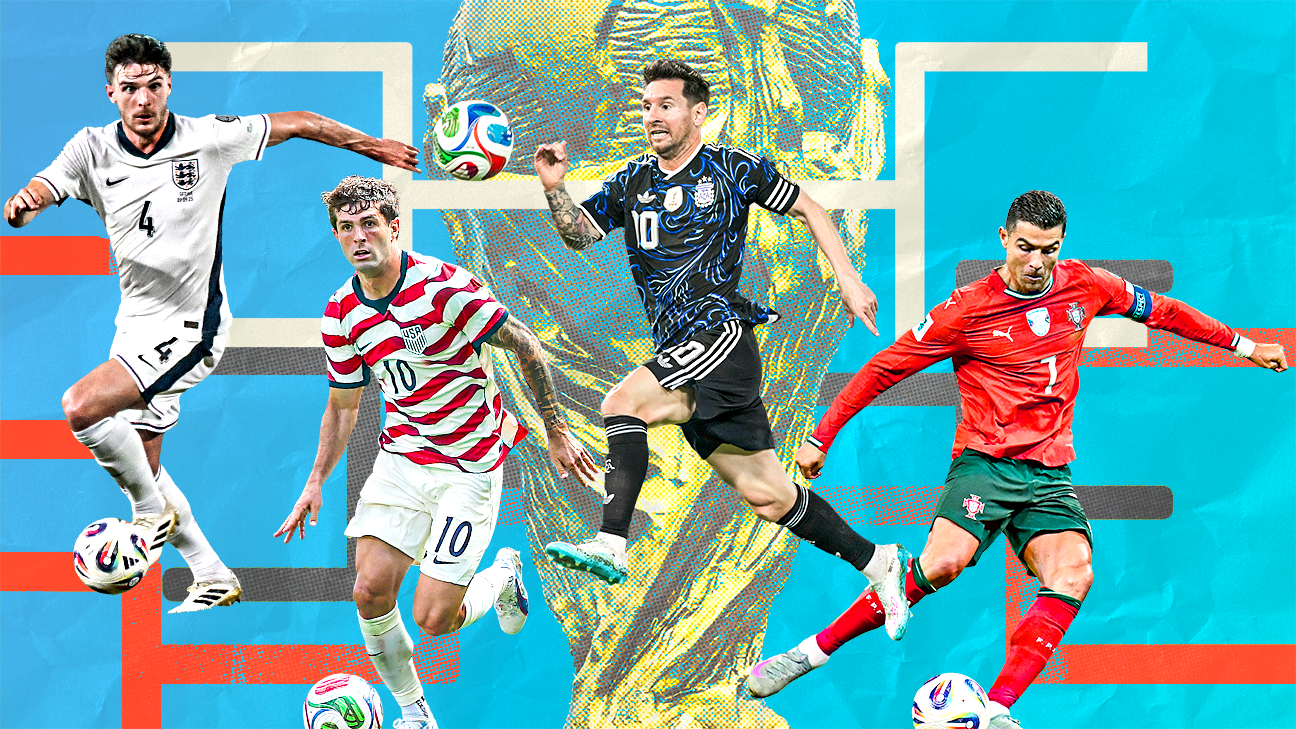
Predicting how all 48 teams will do in the World C...

Image: courtesy of ESPN

sportsJune 6, 2026By Veridact EditorialUpdated Jun 6

The 48-Team Stress Test: How FIFA’s Expanded World Cup Will Redefine Elite Football

The expansion of the 2026 FIFA World Cup to 48 teams represents the most radical structural and commercial transformation in the tournament's modern history. By moving from 32 to 48 nations, FIFA has not merely added more fixtures; it has fundamentally altered the competitive equilibrium, tactical incentives, and physical demands of international football. With 104 matches scheduled across three vast host nations—the United States, Mexico, and Canada—the tournament introduces a chaotic Round of 32 knockout stage that strips away the traditional safety margins of elite national teams. This analysis explores the operational realities, historical precedents, and structural friction points of a tournament that will test the absolute limits of player endurance and sporting integrity.

Disclosure: This article contains AI-assisted analysis based on publicly available information.

What to Expect

Spectators and analysts preparing for the tournament must look past the superficial excitement of a larger bracket to understand the grueling operational reality awaiting the squads. The physical load on elite players, already stretched to their absolute limits by bloated domestic and continental club calendars, will reach unprecedented levels. To lift the trophy, a team must now navigate eight matches instead of the historical seven, adding another layer of physical attrition to an already exhausting campaign. Furthermore, the sheer geographical footprint of this tournament introduces a logistical complexity never before seen in international sports. A squad could easily find themselves playing a group stage match in the high altitude of Mexico City, traveling to the humid summer heat of Miami for their second fixture, and then flying to the temperate Pacific Northwest of Vancouver for their final group game.

This climatic and temporal volatility will inevitably compromise recovery protocols, making squad depth and sports science departments as critical to success as tactical system design. On the pitch, do not expect a festival of expansive, attacking football in the early stages. The introduction of the Round of 32 means that 32 out of 48 teams will advance from the group stage, including the eight best third-place finishers. This generous safety net changes the mathematical risk profile for managers. Rather than chasing victories, mid-tier and defensive-minded nations will realize that securing three points from three draws, or a single narrow victory combined with a disciplined goal difference, will likely be enough to secure passage to the knockout rounds. The result is highly likely to be a highly cautious, risk-averse group stage where teams prioritize defensive block stability over offensive transition risk. The margin for error has vanished.

Key Context

To comprehend the magnitude of this shift, one must look at the institutional incentives driving FIFA's decision-making. The expansion to 48 teams is a masterclass in global football diplomacy and revenue maximization. By expanding representation, particularly for the Asian Football Confederation (AFC) and the Confederation of African Football (CAF), FIFA has secured deep political capital among member associations that have historically been underrepresented on the grandest stage. Economically, more matches translate directly to increased broadcasting inventory, hospitality sales, and corporate sponsorship opportunities. However, this commercial windfall comes with severe structural friction. The original proposal to split the 48 teams into 16 groups of three was quietly abandoned after intense pushback from sporting purists and analysts who pointed out the glaring risk of collusion in final group matches—a modern echo of the infamous 'Disgrace of Gijón' in 1982.

Instead, FIFA settled on 12 groups of four, preserving the integrity of simultaneous final group fixtures but creating a highly complex qualification matrix. Under this system, the top two teams from each group automatically qualify, joined by the eight best third-place teams. This structural design means that teams will spend days waiting in hotel rooms to learn if their goal difference is sufficient to keep them in the tournament, destroying the clean, immediate narrative progression of the traditional 32-team format. It also introduces a layer of competitive asymmetry. Some teams will enjoy four or five days of rest before their Round of 32 fixture, while others, qualifying late as third-place survivors, will face rapid turnarounds against rested group winners. The sporting meritocracy of the tournament will be tested like never before by these structural imbalances.

Historical Patterns

Historical precedent suggests that expanding international tournaments initially leads to a decline in group-stage intensity and a rise in tactical conservatism. When UEFA expanded the European Championship to 24 teams in 2016—employing a similar 'best third-place' advancement system—the immediate consequence was a drop in goals per game and a proliferation of defensive, low-block strategies. Portugal famously won that tournament despite failing to win a single group-stage match in 90 minutes, advancing as a third-place team with three draws. This pattern of conservative pragmatism is highly likely to repeat on a global scale. In previous World Cup expansions, such as the jump from 16 to 24 teams in 1982, or from 24 to 32 teams in 1998, the early rounds initially featured a wide disparity in quality, leading to occasional lopsided scorelines before the mid-tier nations adapted tactically.

However, the modern international game is far more tactically homogenized than it was in 1998. Even debutant nations now possess highly sophisticated defensive structures, aided by globalized coaching standards and advanced video analysis. The gap between the absolute elite and the global mid-tier has closed significantly in terms of defensive organization, if not individual attacking talent. This suggests we are unlikely to see the double-digit blowouts of yesteryear. Instead, expect highly disciplined, low-block defensive displays from emerging nations designed to frustrate heavyweights. The historical pattern of the World Cup shows that the most successful teams are rarely those that peak in the first week, but rather those that manage their physical resources and emotional energy most effectively over the long haul. In a 39-day tournament, this principle of energy conservation will be amplified to an extreme degree.

The Real Stakes for Elite Sport

Potential Outcomes

Analysis

Analysis of the expanded format reveals three primary competitive scenarios that could unfold over the course of the tournament:

Scenario One: The Triumph of the Ultra-Conservative In this outcome, the structural safety net of the third-place advancement rule prompts elite managers to adopt highly risk-averse strategies. Understanding that a single counter-attacking goal conceded can ruin goal-difference calculations, top-tier nations focus entirely on possession maintenance and defensive transition prevention. Mid-tier teams set up in deep defensive blocks, playing for low-scoring draws. The group stage becomes a war of attrition with historically low goal-scoring averages, and the tournament is ultimately won by a squad with elite defensive structure and the squad depth to survive the eight-match schedule without physical collapse.

Scenario Two: The Logistical Fracture In this scenario, the vast distances and climatic variations of the North American continent become the defining factor of the tournament. Heavyweight teams scheduled to play in high altitudes or extreme heat suffer rapid physical deterioration. Elite squads coming off exhausting domestic league campaigns experience a high frequency of soft-tissue injuries, forcing managers to rely heavily on reserve players. This logistical strain democratizes the tournament, leading to a highly volatile knockout stage filled with shocking upsets, as fresher, less-traveled underdog squads exploit the physical exhaustion of traditional powerhouses.

Scenario Three: The Global Power Shift This outcome sees the expanded representation of CAF and AFC nations translate into a historic breakthrough for non-European and non-South American football. Benefiting from the extra qualification spots, emerging footballing nations enter the tournament with highly developed, cohesive squads playing high-intensity transition football. The chaotic, single-elimination nature of the new Round of 32 acts as a giant killer, wiping out several traditional European giants early. At least two nations from outside the traditional UEFA-CONMEBOL duopoly make deep runs into the semi-finals, permanently altering the geopolitical balance of power in global football governance and commercial interest.

Timeline

2026-06-11
Opening Match at Estadio Azteca
The expanded 48-team tournament officially begins in Mexico City, marking the start of a historic 39-day sporting event.
2026-06-27
Group Stage Conclusion
Simultaneous final group fixtures conclude, initiating the complex mathematical calculation to determine the eight best third-place teams.
2026-06-28
The Round of 32 Begins
The first single-elimination knockout round in World Cup history commences, introducing immediate high-stakes pressure.
2026-07-19
World Cup Final
The two surviving nations contest the final at MetLife Stadium in East Rutherford, New Jersey, concluding the 104-match tournament.

Frequently Asked Questions

The 48 teams are divided into 12 groups of four. The top two teams from each group automatically advance to the Round of 32, along with the eight best third-place finishers across all 12 groups.

Discussion

0/100
0/1000

Be the first to share your thoughts.