
Veridact
TechSportsFinanceGaming🎯 Predictions⭐ OpportunitiesAbout
Sign InSign Up
Veridact

Analysis before the headline. Veridact examines technology, finance, sports, and gaming events before they unfold through forecasting, probability modeling, historical precedent, and public prediction tracking.

Stay ahead of what's next

Forecasts, analysis, and prediction updates delivered to your inbox.

Coverage

  • Tech
  • Sports
  • Finance
  • Gaming

Company

  • About Us
  • Privacy Policy

Β© 2026 Veridact. Forecasting & analysis platform.

Content may include AI-assisted research and analysis. Predictions and opinions should not be considered financial, legal, medical, or investment advice.

tech
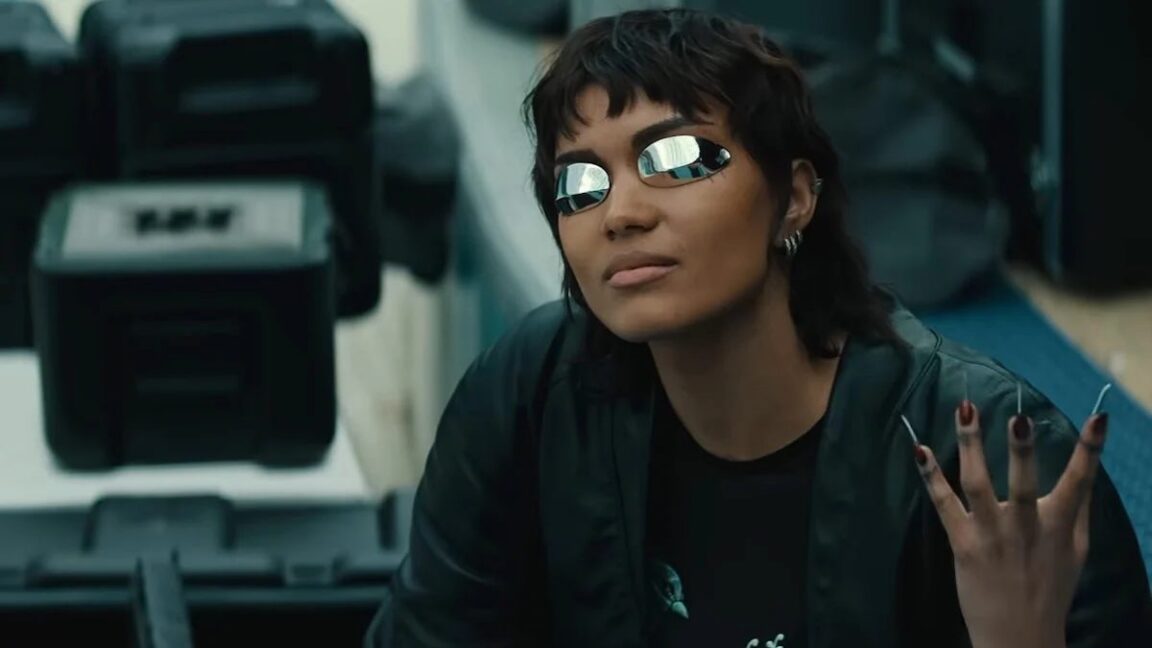
First teaser for Apple TV's Neuromancer debuts at SDCC

Image: courtesy of Ars Technica

techJuly 27, 2026By Veridact EditorialUpdated Jul 27

Apple TV's 'Neuromancer' Teaser Ignites Debate: Can Cyberpunk's 'Unfilmable' Bible Finally Work on Screen?

Apple TV debuted the first teaser for its highly anticipated 'Neuromancer' series at San Diego Comic-Con 2026, confirming a January 22, 2027 release date. The reveal, which featured star Callum Turner and executive producer Drake, has set a firm timeline for a project long considered one of science fiction's most challenging adaptations. The series aims to bring William Gibson's seminal 1984 novel, a cornerstone of the cyberpunk genre, to a visual medium, a task that has historically daunted filmmakers due to its dense prose, abstract concepts, and fragmented narrative structure. This initial glimpse offers the first real indication of how Apple TV plans to tackle such an ambitious and complex source material.

Outlook

The first teaser for Apple TV's 'Neuromancer,' unveiled at San Diego Comic-Con on July 26, 2026, provided a brief but potent look at the upcoming 10-episode series. Confirmed details from the event and subsequent reports indicate that Callum Turner will star as Case, the disillusioned hacker at the story's core. The footage, though short, appears to lean into the retro-futuristic aesthetic often associated with early cyberpunk, featuring what was described as a 'retro computer console' and the display of 'Ashpool-1,' a key reference for fans of the novel. The teaser also notably included William Gibson's iconic opening line: 'The sky above the port was the color of television, tuned to a dead channel.'

This choice of imagery and dialogue suggests the series intends to honor the novel's original tone and visual language, rather than a radical reimagining. Executive producer Drake's involvement, alongside a creative team tasked with adapting the intricate narrative, implies a significant investment in both authenticity and broad appeal. Viewers can likely anticipate a series that attempts to balance the philosophical depth and abstract nature of Gibson's cyberspace with the gritty, noir-like atmosphere of Chiba City and the corporate espionage that drives the plot. The 10-episode format indicates a commitment to exploring the novel's complexities without excessive compression, allowing for character development and world-building across multiple installments. The challenge, as always with such a revered text, will be to translate Gibson's interior monologues and non-linear data streams into a compelling visual narrative that satisfies both long-time devotees and new audiences.

Background

William Gibson's 1984 novel 'Neuromancer' is not merely a book; it is a foundational text that defined the cyberpunk genre. Its influence stretches across literature, film, video games, and even real-world technology. Gibson coined terms like 'cyberspace' and 'matrix,' concepts that have since become ubiquitous, shaping our collective imagination of the digital frontier long before the internet became mainstream. The novel follows Henry Dorsett Case, a washed-up hacker hired for one last, impossible job in a world dominated by artificial intelligence, powerful corporations, and a sprawling, interconnected digital realm. Its narrative is dense, often disorienting, and highly atmospheric, relying heavily on Gibson's distinctive prose to convey the sensation of 'jacking in' to cyberspace.

For decades, 'Neuromancer' has been considered notoriously difficult to adapt for the screen. The challenges are manifold: how to visually represent the abstract experience of cyberspace without it becoming a psychedelic mess; how to capture the novel's complex themes of identity, humanity, and artificial intelligence; and how to translate a story rich in internal monologue and fragmented perspective into a coherent, compelling visual narrative. Past attempts at adaptation, including a proposed film in the 1990s and another in the 2000s, never made it past development hell, earning the book its 'unfilmable' reputation.

Apple TV's decision to take on 'Neuromancer' is a significant statement of intent. The platform has already invested heavily in prestige science fiction, with series like 'Foundation' (another adaptation of a complex, seminal sci-fi work), 'Silo,' and 'Severance' proving critical darlings. 'Neuromancer' represents a new level of ambition, a direct engagement with the very roots of modern sci-fi. Its success or failure could significantly impact Apple's standing as a serious player in the high-concept streaming space, particularly within the sci-fi genre.

See also

Why Apple Might Put Cameras Into Its Next AirPodsβ†’Apple destroyed the mid-tier watch market. Now it’s coming for the $200 billion eyewear industry.β†’For the second time, Apple Intelligence is delayed in Europe, and this time there is no timelineβ†’

Precedents

The history of adapting seminal science fiction novels for the screen is fraught with both triumphs and cautionary tales. For every 'Blade Runner' or 'Dune' (the recent Denis Villeneuve adaptations), there are numerous projects that struggled to translate complex literary worlds into visual narratives. Philip K. Dick's works, for instance, have seen varied success, from the iconic 'Blade Runner' (inspired by 'Do Androids Dream of Electric Sheep?') to more divisive interpretations. Frank Herbert's 'Dune' famously languished for decades before successful modern adaptations emerged, showcasing the difficulty of capturing its vast lore and philosophical underpinnings. Even Isaac Asimov's 'Foundation,' another cornerstone of the genre, has received mixed reactions in its Apple TV+ adaptation, with some critics praising its visual ambition while others questioned its fidelity to the source material's intellectual core.

The common thread in these challenging adaptations is the struggle to balance fan expectations with the demands of a mass audience. Purists often demand strict adherence to the source, while commercial pressures necessitate streamlining and visual spectacle. 'Neuromancer' presents an even steeper climb due to its abstract nature and the profound influence it has already had on subsequent media. Many films and games have borrowed heavily from its aesthetic and thematic elements, meaning a direct adaptation might inadvertently feel derivative to those unfamiliar with its original context. This creates a unique pressure: to be original and groundbreaking in its own right, while simultaneously paying homage to a work that already broke ground decades ago. The success of such projects often hinges on a showrunner's ability to find the core emotional and thematic resonance of the novel and translate it visually, even if it means diverging from direct plot points. The visual representation of cyberspace, in particular, will face intense scrutiny, given how many subsequent works have already explored similar concepts.

Apple TV's commitment to 'Neuromancer' carries significant weight for several reasons, extending beyond just another streaming series. First, for Apple TV+, it represents a crucial strategic move in its ongoing effort to build a distinctive content library. The platform has positioned itself as a home for high-quality, prestige dramas and ambitious science fiction. Successfully adapting 'Neuromancer' would cement its reputation in this niche, drawing in a dedicated demographic of sci-fi enthusiasts and literary fans. A misstep, however, could be costly, both in terms of production budget and the platform's credibility, especially given the novel's revered status.

Second, the series is a litmus test for the enduring viability of classic, complex science fiction in the streaming era. As attention spans seemingly shorten and content becomes more fragmented, bringing a dense, philosophical work like 'Neuromancer' to a wide audience is a challenge. Its success could open doors for other 'unfilmable' literary works, demonstrating that there is a market for intellectually stimulating, visually ambitious adaptations. Its failure, conversely, might reinforce the idea that some stories are best left on the page.

Finally, for the cyberpunk genre itself, this adaptation is a landmark event. 'Neuromancer' is the genesis point for much of what we understand as cyberpunk. Seeing it realized on screen, decades after its publication and after so many other works have drawn from its well, offers a unique opportunity to re-evaluate its themes in a contemporary context. It could spark renewed interest in Gibson's work and the broader cyberpunk canon, prompting discussions about technology, humanity, and consciousness that remain as relevant today as they were in 1984. The series' reception will be closely watched by fans, critics, and the entertainment industry alike, as it attempts to bridge the gap between a literary masterpiece and the demands of modern visual storytelling.

Scenarios

Analysis

The path forward for Apple TV's 'Neuromancer' adaptation presents several distinct possibilities, each with its own set of implications for the series, the platform, and the genre.

One potential outcome is that the series achieves significant critical acclaim and draws a substantial audience, solidifying Apple TV+'s reputation as a top-tier destination for ambitious science fiction. This scenario would likely involve the creative team finding a delicate balance: honoring Gibson's intricate narrative and philosophical depth while making it accessible and visually compelling for a broader viewership. If the showrunners can successfully translate the abstract concept of cyberspace into a captivating visual language and maintain the novel's unique atmosphere, it could be hailed as a landmark adaptation. This would not only justify Apple's substantial investment but also potentially encourage other studios to tackle similarly challenging literary works, expanding the scope of prestige sci-fi on streaming platforms.

Conversely, the series might receive a mixed reception, satisfying some segments of the audience while alienating others. This is a common outcome for adaptations of beloved, complex novels. Hardcore fans of the book may find certain narrative choices or visual interpretations fall short of their expectations, while new viewers might struggle with the story's non-linear structure or philosophical density. Such a result would still contribute to Apple TV+'s content library but might not deliver the breakout cultural impact hoped for. It could lead to debates about the inherent 'unfilmability' of certain texts, reinforcing the idea that some stories are simply too challenging to translate perfectly across mediums, regardless of budget or talent.

A third possibility is that the adaptation struggles to capture the essence of 'Neuromancer,' resulting in a generally negative critical response and limited audience engagement. This could happen if the series either oversimplifies the source material to appeal to a mass market, losing its intellectual edge, or if it becomes too abstract and inaccessible, failing to connect with viewers. Such an outcome would represent a significant setback for Apple TV+, potentially making the platform more cautious about future high-concept literary adaptations. It could also lead to renewed discussions within the sci-fi community about the sanctity of certain texts and the risks involved in attempting to bring them to the screen, especially when the original work's influence is so pervasive that an adaptation might struggle to feel fresh.

Timeline

1984
William Gibson's 'Neuromancer' Published
The novel that defined the cyberpunk genre is released, introducing concepts like cyberspace and the matrix.
2024
Apple TV+ Announces 'Neuromancer' Series
Apple TV+ officially announces a series adaptation of William Gibson's novel, with a 10-episode order.
July 2026
First Look Clip Released
Apple TV+ shares a 25-second clip showing a retro computer console, 'Ashpool-1,' and Gibson's opening line, two weeks prior to SDCC.
July 26, 2026
Teaser Debuts at San Diego Comic-Con
The first official teaser for 'Neuromancer' is unveiled at Apple TV's Hall H panel at SDCC, featuring star Callum Turner.
July 26, 2026
Official Release Date Announced
During the SDCC panel, Apple TV+ confirms the series will premiere on January 22, 2027.
January 22, 2027
Series Premiere on Apple TV+
The 10-episode 'Neuromancer' series is set to debut globally on Apple TV+.

Frequently Asked Questions

'Neuromancer' is a 1984 science fiction novel by William Gibson. It follows Henry Dorsett Case, a disgraced hacker who gets a chance at redemption by taking on one last, highly dangerous job in a future world dominated by artificial intelligence, powerful corporations, and a digital realm called cyberspace.

Discussion

0/100
0/1000

Be the first to share your thoughts.

Related Coverage

tech

Mauna Loa's Awakening and Etna's Disruption: What Recent Eruptions Reveal About Earth's Volcanic Future

Aug 24
tech

The Unlikely Middle Ground: Flock Safety Confronts Deep Divisions on Surveillance

Aug 24
tech

China's Moon Mission Delay: What 'Absolute Success' Really Means for the Lunar Race

Aug 24
tech

Uber's $966 Million Fine Exposes the Limits of Automated Management in the Gig Economy

Aug 24

Stay ahead of the story

AI analysis delivered before events unfold. No spam.

β“˜

Methodology: Veridact combines public data, historical precedent, and analytical models to evaluate the likelihood of future outcomes.