
Consumers should anticipate a aggressive push toward 'smart' eyewear that merges medical-grade vision correction with augmented reality overlays. Apple will likely attempt to bypass traditional optical retail gatekeepers by integrating remote vision-testing technologies into their hardware ecosystem. This shift will force a collision between high-fashion design and high-stakes biometric data collection, as the company seeks to make digital connectivity as essential as the lenses themselves. The industry will move from a low-frequency, retail-driven purchase cycle to a high-frequency, subscription-based technology model that prioritizes data flow over traditional optics.
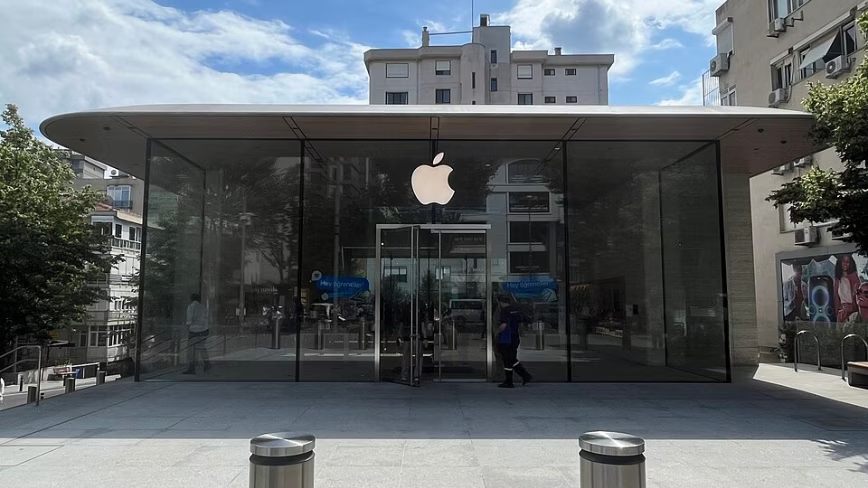
Image: courtesy of Thenextweb
The Silicon Valley Incursion: Why Your Next Pair of Glasses Might Come from Cupertino
Apple is quietly laying the groundwork to disrupt the $200 billion global eyewear market, aiming to transform traditional prescription frames into a primary digital interface. By moving from the wrist to the face, the company intends to treat vision correction as a software platform, threatening to displace legacy industry titans and reshape how humans interact with the physical world.
Outlook
Background
The eyewear industry is currently dominated by a vertically integrated monopoly, most notably led by firms like EssilorLuxottica, which control the supply chain from manufacturing to retail storefronts. Apple’s strategy relies on its proven ability to miniaturize complex sensor arrays and thermal management systems into wearable devices. Unlike the Apple Watch, which serves as a peripheral to the smartphone, smart glasses are positioned to be a standalone, persistent interface. Because eyewear is a medical necessity, the company must navigate complex regulatory environments, likely forming strategic alliances with health insurance providers to facilitate the shift toward digitally-enabled vision correction.
See also
Precedents
Apple’s approach mirrors the disruption of the photography market, where the iPhone effectively decimated the middle-tier 'point-and-shoot' camera industry. Just as the company turned a physical tool into a software-driven experience, it is now targeting the mid-tier eyewear sector. These brands, lacking the protection of ultra-luxury heritage and the R&D budgets to compete with Silicon Valley, are the most vulnerable to displacement. The company is essentially applying its 'hardware-as-a-service' playbook to a sector that has historically relied on the slow, steady turnover of physical frames, effectively forcing the optical industry to choose between collaboration or obsolescence.
This transition marks the final stage of the 'Internet of Things' evolution, shifting digital interaction from the pocket to the face. If Apple succeeds, the physical world will be permanently mediated by a Cupertino-controlled lens, granting the company unprecedented control over human perception and behavioral data. This shift changes the fundamental nature of the eyewear industry from a retail-fashion sector to a critical component of the global health and digital infrastructure. Companies that ignore this shift risk losing access to the most valuable engagement channels of the next decade, as the line between biological vision and digital overlay begins to blur.
Scenarios
Analysis1. The Walled Garden Scenario: Apple consolidates the market by forcing a proprietary standard for 'smart' lenses, effectively turning the eyewear industry into an extension of the App Store and squeezing out independent opticians. 2. The Regulatory Standoff: Governments classify smart eyewear as a medical device subject to strict antitrust and data privacy oversight, forcing Apple to open its platform to third-party software and limiting its ability to maintain a closed ecosystem. 3. The Bifurcated Market: Apple captures the high-end 'pro' segment of the population, leaving a large, stable, but stagnant traditional retail market for those who reject digital integration, leading to a long-term cultural divide in how people perceive reality.
Timeline
Near Term
Regulatory Integration
Apple begins lobbying for remote refraction standards and health-data integration, signaling a move toward bypassing traditional in-office vision testing.
Mid-Term
The 'Pro' Launch
The release of a high-end, premium-priced smart frame aimed at early adopters, focusing on seamless health tracking and AR-based navigation to prove the form factor.
Long-Term
Platform Assimilation
Standardization of the 'smart frame' as a primary computing device, leading to the decline of traditional non-connected eyewear in the premium retail segment.
Frequently Asked Questions
Apple is unlikely to manufacture the optical glass itself initially, but rather integrate it into a frame that houses proprietary sensors and software. By partnering with existing lens manufacturers, they can meet medical standards while controlling the 'smart' layer that sits on top, effectively turning the lens into a display surface.
Discussion
Be the first to share your thoughts.