
Lucid Motors is positioned at a critical juncture with the introduction of the 2026 Gravity SUV. Expect continued market attention on how quickly the company can address the reported software issues and ramp up production to meet demand. The initial strong reviews of the Gravity's core driving dynamics and range are a significant win, suggesting the underlying engineering is sound. However, the premium automotive market demands not just performance, but a seamless, refined user experience, which software directly impacts. Over the next 12 to 18 months, industry observers will closely watch for software updates, production figures, and how the Gravity's real-world sales performance compares to its lofty technical specifications. Lucid's ability to transition from a niche luxury sedan maker to a broader luxury EV brand hinges on the Gravity's success.
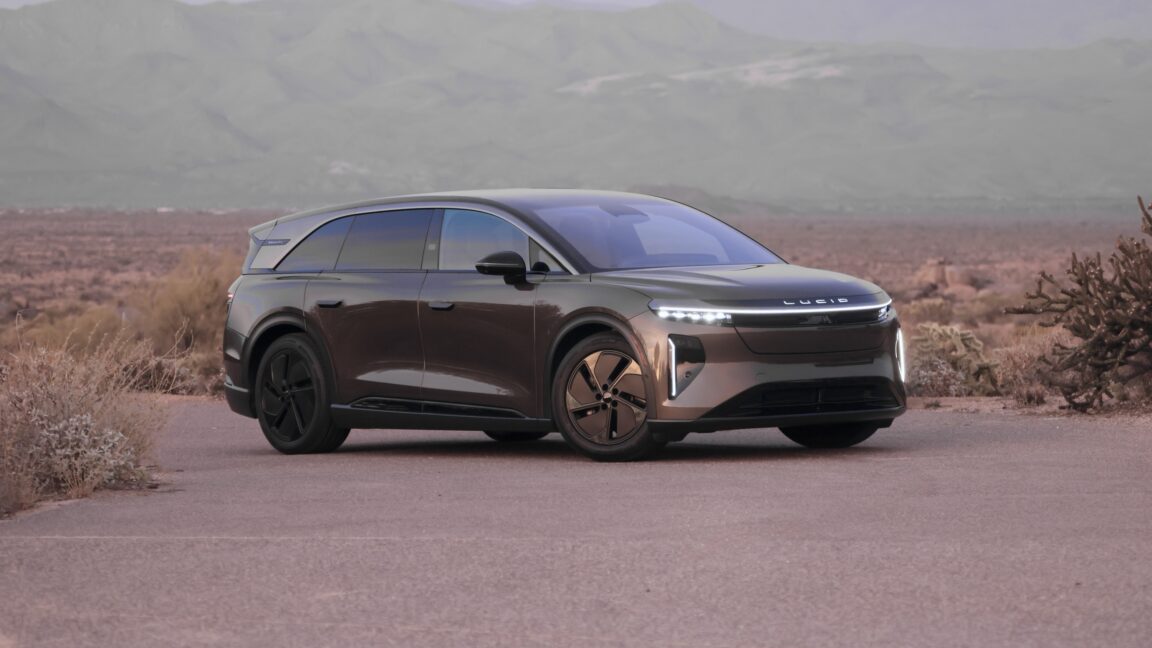
Image: courtesy of Ars Technica
Lucid's Gravity SUV: A Strong Second Act Faces Down the Software Challenge
The 2026 Lucid Gravity Touring, launched yesterday, July 17, is receiving significant praise for its dynamic handling, impressive electric range, and versatile design, with a starting price of $81,550. Reviewers highlight its ability to undercut competitors on price while delivering luxury performance, including up to 828 horsepower in the Grand Touring model and a claimed 0-60 mph time of 3.4 seconds. Despite these hardware strengths, early reviews note 'software teething issues' and describe the vehicle as 'incomplete' in its current state. The Gravity marks Lucid's crucial follow-up to its Air sedan, aiming to establish the brand's viability in the competitive luxury electric SUV market.
Outlook
Background
Launching a new automotive brand, especially one focused on electric vehicles, is an undertaking fraught with financial and operational challenges. Lucid Motors, founded in 2007, first introduced the Air sedan, which quickly earned a reputation for its groundbreaking range and performance. That initial success, however, came with its own set of production hurdles and a relatively high price point, limiting its market reach. The 2026 Gravity SUV represents Lucid's strategic expansion into a more mainstream, albeit still luxury, segment. SUVs dominate new car sales in many key markets, and an electric three-row SUV with competitive range and performance could significantly broaden Lucid's appeal and revenue streams.
The Gravity Touring starts at $81,550, positioning it directly against established luxury EV SUVs from brands like Mercedes-Benz, BMW, and Tesla, and potentially new entrants. The Grand Touring model boasts 828 horsepower, capable of accelerating from 0 to 60 mph in a claimed 3.4 seconds. The Touring variant, with 560 horsepower and 811 lb-ft of torque from its front and rear permanent-magnet synchronous AC motors, also offers substantial power. Its 89 kWh liquid-cooled lithium-ion battery pack is central to its impressive range, which Lucid claims can reach up to 450 miles.
Reviewers, including those from The Drive and Consumer Reports, have lauded the Gravity's dynamic driving characteristics, describing it as 'the best-driving three-row money can buy' and 'one of the most composed and engaging SUVs we’ve tested.' Its agility, precise steering, and strong braking performance for a vehicle of its size have been highlighted. Yet, alongside these accolades, there is a consistent caveat: software. Phrases like 'software teething issues aside' and 'incomplete' point to an area where Lucid still needs to mature. These initial software glitches, while common in new vehicle launches, are a critical point of friction in the luxury segment, where seamless digital integration is increasingly expected.
Precedents
The automotive industry has a long history of startups attempting to disrupt established players, with varying degrees of success. For electric vehicle manufacturers specifically, the pattern often involves an initial phase of technological innovation and hype, followed by the arduous process of scaling production and delivering a fully polished product. Tesla, for instance, famously navigated its 'production hell' with the Model 3, overcoming significant manufacturing bottlenecks and software refinement challenges before achieving profitability and market dominance.
New entrants like Lucid often excel in specific areas, such as powertrain efficiency or battery technology, but frequently struggle with the complexities of integrated software and robust supply chains. Early models often feature cutting-edge hardware paired with less refined user interfaces or connectivity features. This was evident with early Tesla models, Rivian's initial launches, and even some traditional automakers transitioning to EVs. The expectation is that software issues will be resolved through over-the-air updates, but this requires sustained engineering effort and customer patience.
From a pricing perspective, launching with high-end, expensive models before introducing more accessible variants is a common strategy for luxury brands, both traditional and new. This approach, often called a 'top-down' strategy, helps establish a premium brand image and generates initial revenue from early adopters willing to pay for exclusivity and advanced technology. Lucid followed this path with the Air sedan, and the Gravity Touring's $81,550 starting price continues this pattern. However, maintaining a price advantage, as the Gravity does by reportedly undercutting competitors by $20,000, is crucial for market penetration but can be difficult to sustain amidst fluctuating material costs and aggressive pricing from larger, more established automakers.
The 2026 Lucid Gravity is more than just another electric SUV; it represents a pivotal moment for Lucid Motors and a significant test for the broader electric vehicle market. For Lucid, a successful Gravity launch could validate its long-term vision and provide the necessary capital and market confidence to expand its operations. The company has demonstrated its engineering prowess with the Air, and the Gravity appears to extend that capability into a more practical, family-friendly format. If Lucid can effectively resolve its software challenges and scale production, it could solidify its position as a credible luxury EV competitor, capable of challenging both established giants and other well-funded startups.
However, failure to quickly address the software issues or to meet production targets could severely undermine confidence, making it harder to attract future investment and customers. In a market where digital experience is becoming as important as driving dynamics, persistent software glitches can deter potential buyers, even if the underlying hardware is exceptional.
For consumers, the Gravity offers a compelling new option in the luxury three-row EV SUV segment. Its reported range, performance, and value proposition could force competitors to innovate further and adjust their own pricing strategies, potentially leading to better choices and more competitive prices across the board. The emergence of strong contenders like the Gravity pushes the entire industry forward, accelerating the adoption of electric vehicles and refining the definition of automotive luxury in the electric age. The stakes are high, not just for Lucid's balance sheet, but for the competitive dynamics of the premium EV sector.
Scenarios
AnalysisThe trajectory of the 2026 Lucid Gravity and, by extension, Lucid Motors, could unfold in several ways, each with distinct implications for the automotive market.
Outcome 1: Lucid Leverages Hardware Strengths to Solidify Market Position
One possible scenario is that Lucid quickly addresses the reported software 'teething issues' through rapid over-the-air updates and continued engineering effort. Given that the underlying hardware and driving dynamics are already receiving strong praise, resolving the software friction points could allow the Gravity to realize its full potential. This would enable Lucid to capitalize on its competitive pricing — reportedly undercutting rivals by $20,000 — and impressive range, drawing in a significant number of luxury SUV buyers. Success here would likely lead to increased production volumes, stronger financial performance, and a more robust brand image, establishing Lucid as a formidable player in the premium EV segment. This outcome would also likely attract further investment, potentially enabling the development of more models and expanding its global footprint. The company could then use the Gravity's success as a blueprint for future vehicles, demonstrating its ability to deliver both groundbreaking performance and a polished user experience.
Outcome 2: Software and Production Challenges Hinder Broader Adoption
Conversely, a less optimistic outcome involves Lucid struggling to overcome its software issues or facing significant production bottlenecks. While initial reviews are strong on performance, persistent software glitches or a slow pace of resolution could erode consumer confidence over time. Luxury buyers expect a seamless experience, and if the Gravity's digital interface remains 'incomplete,' it may struggle to convert interest into sustained sales. Furthermore, scaling production for a complex, high-technology vehicle is notoriously difficult for new automakers. Any prolonged delays in delivery or quality control issues could damage Lucid's reputation and financial health. In this scenario, despite its technical brilliance, the Gravity might remain a niche product, struggling to achieve the sales volumes needed to compete effectively with larger, more established rivals. This could lead to increased financial pressure on Lucid, potentially requiring further capital infusions or strategic re-evaluations, and may temper the company's ambitious growth plans.
Timeline
Frequently Asked Questions
Discussion
Be the first to share your thoughts.