
The swift sell-out of a non-automotive product like a toddler balance bike suggests that Tesla's brand appeal extends well beyond its electric vehicles. This indicates a robust market for Tesla-branded lifestyle goods and could prompt the company to further diversify its merchandise offerings. For consumers, it means potentially more high-end, branded products from Tesla, while for competitors, it highlights the challenge of building similar brand loyalty.
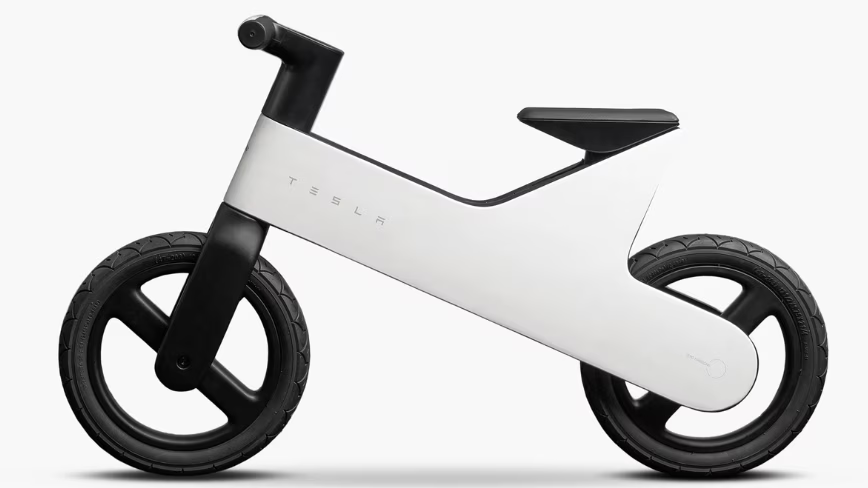
Image: courtesy of Thenextweb
Tesla's $225 Balance Bike Sells Out: The Real Story Behind its Brand Power Beyond EVs
Tesla, the electric vehicle manufacturer, yesterday launched a $225 balance bike for toddlers aged two to five, which sold out almost immediately. The bike, designed without a motor or pedals, features a lightweight magnesium frame and carries the distinct Tesla branding. While seemingly a niche product, its rapid sell-out signals the significant strength of Tesla's brand and its potential to command premium prices for lifestyle products far removed from its core automotive business.
Outlook
Background
On July 17, Tesla officially released its 'Balance Bike for Kids' on its online shop, priced at $225. The bike is designed for children between the ages of two and five, featuring a white magnesium frame, a five-way adjustable seat, and the company's wordmark and 'T' logo. Unlike the electric vehicles Tesla is known for, this bike is entirely powered by the child's feet, lacking a motor, pedals, or even brakes. Despite its high price point for a balance bike, it sold out within hours of launch, though Tesla did not disclose the number of units available. The release comes after years of Tesla fans requesting an electric bicycle, making the non-motorized toddler bike a surprising, if successful, turn.
Precedents
Tesla is not the first high-value brand to leverage its identity for lifestyle products. Luxury car manufacturers like Ferrari and Porsche have long sold branded apparel, accessories, and even scale models to their enthusiast base, often at premium prices. Tech companies, too, have expanded into merchandise; Apple, for instance, has a range of branded clothing and accessories, though typically not at the same price-to-utility ratio as the Tesla bike. The underlying principle is that a powerful brand can create demand for products that derive their value as much from their association with the brand as from their inherent utility. This strategy allows companies to deepen customer engagement and capture additional revenue streams from loyal consumers who aspire to the brand's aesthetic and values, regardless of the product category.
The immediate sell-out of the Tesla Balance Bike for Kids carries implications that reach beyond a simple product launch. It provides a real-world test of Tesla's brand elasticity — how far its appeal stretches from its core mission of sustainable energy and electric vehicles. The willingness of consumers to pay $225 for a branded children's item, when comparable non-branded balance bikes are available for significantly less, speaks volumes about the aspirational quality of the Tesla name. This success could embolden Tesla to explore a wider array of consumer goods, potentially transforming it from solely an automotive and energy company into a broader lifestyle brand. For the wider market, it demonstrates the enduring power of brand identity in driving purchasing decisions, even for products that offer little in the way of technological innovation. It also raises questions for other automakers about whether their brands possess similar cross-category appeal, or if Tesla's unique cultural cachet sets it apart.
Scenarios
AnalysisOne possible outcome is that the rapid sale of the balance bike encourages Tesla to expand its line of branded consumer products. This could include more children's items, home goods, or apparel, leveraging the brand's aesthetic and perceived quality to create new revenue streams and strengthen customer loyalty. The success of this product acts as a proof-of-concept for such a strategy.
Alternatively, the balance bike could remain a relatively isolated marketing exercise. While successful in generating buzz and reinforcing brand image, it might not lead to a significant, sustained diversification into lifestyle products if the company decides to maintain a sharper focus on its automotive and energy initiatives. The balance bike could simply be seen as a high-profile novelty item rather than the start of a new business segment.
A third possibility is that this success prompts other automotive or tech brands to test the waters with their own premium lifestyle merchandise. If Tesla can monetize its brand in this way, competitors may attempt to replicate the strategy, leading to a broader trend of companies exploring non-core product categories to capitalize on brand equity.
Timeline
2026-07-16
Initial Reports Emerge
Reports begin circulating about Tesla's impending launch of a balance bike for children, surprising many who expected an e-bike for adults.
2026-07-17
Tesla Balance Bike Launched and Sells Out
Tesla officially launches the 'Balance Bike for Kids' for $225 on its online shop. The product, aimed at toddlers aged 2 to 5, sells out within hours of its release.
Frequently Asked Questions
The Tesla Balance Bike for Kids is a non-motorized, pedal-less bicycle designed for toddlers aged 2 to 5. It features a lightweight magnesium frame, an adjustable seat, and prominent Tesla branding.
Discussion
Be the first to share your thoughts.