
Veridact
TechSportsFinanceGaming🎯 Predictions⭐ OpportunitiesAbout
Sign InSign Up
Veridact

Analysis before the headline. Veridact examines technology, finance, sports, and gaming events before they unfold through forecasting, probability modeling, historical precedent, and public prediction tracking.

Stay ahead of what's next

Forecasts, analysis, and prediction updates delivered to your inbox.

Coverage

  • Tech
  • Sports
  • Finance
  • Gaming

Company

  • About Us
  • Privacy Policy

© 2026 Veridact. Forecasting & analysis platform.

Content may include AI-assisted research and analysis. Predictions and opinions should not be considered financial, legal, medical, or investment advice.

tech
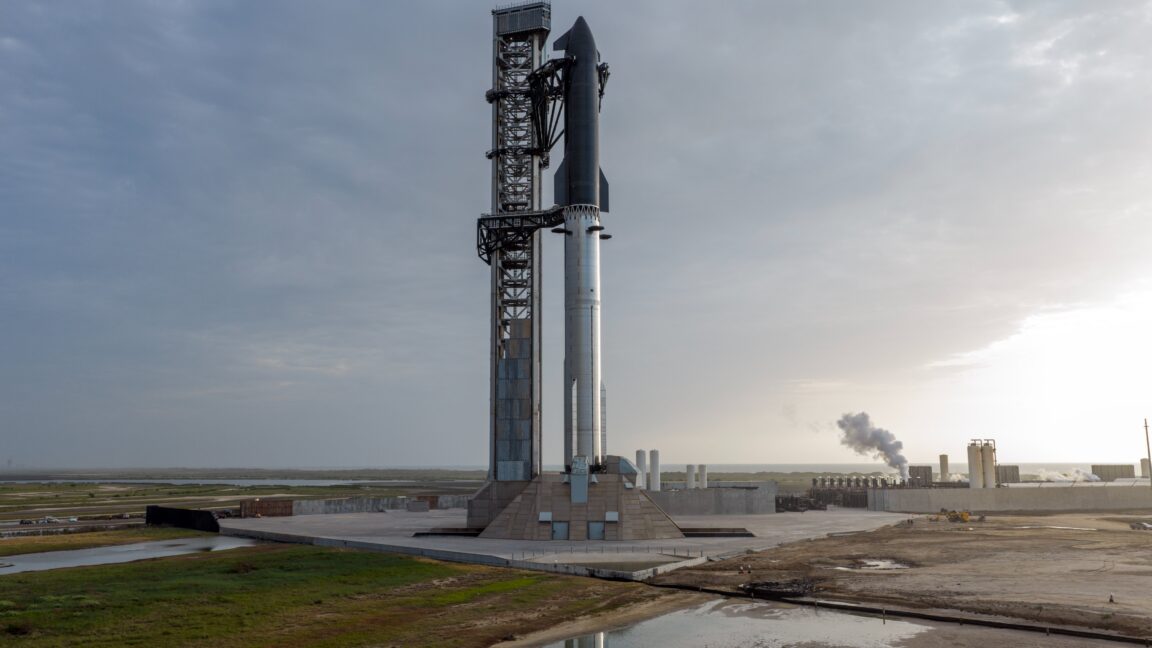
Rocket Report: India's Vikram-1 nears debut flight; AST to become rocket company?

Image: courtesy of Ars Technica

techJuly 18, 2026By Veridact EditorialUpdated Jul 18

India's Private Space Ambition Takes Center Stage as Skyroot's Vikram-1 Prepares for Orbital Debut

India's burgeoning private space sector faces its most significant test yet as Skyroot Aerospace prepares to launch its Vikram-1 rocket on its maiden orbital flight today, July 18, 2026. This mission, named 'Aagaman,' is set to lift off at 11:30 am local time from the Satish Dhawan Space Centre, marking a pivotal moment for Skyroot's aspirations to become the nation's first private company to successfully reach orbit. While the immediate goal is a test flight carrying several cubesats to Low Earth Orbit, the broader implications for India's standing in the global commercial space race are substantial.

Outlook

The Vikram-1 rocket, developed by Hyderabad-based Skyroot Aerospace, is scheduled for its inaugural orbital launch today, July 18, 2026. The mission, dubbed 'Aagaman' (meaning 'arrival'), aims to validate the rocket's performance under real flight conditions. Skyroot has confirmed the vehicle is fully stacked at the Satish Dhawan Space Centre, India’s primary launch site, and all necessary airspace and maritime clearances have been secured. The planned trajectory will take Vikram-1 to a Low Earth Orbit at an altitude of 450 kilometers with a 60-degree inclination. The rocket is expected to carry several small satellites, known as cubesats, which are common payloads for test missions and small-lift launch vehicles.

This launch follows extensive ground testing of the Vikram-1. Skyroot executives have stated that 'everything that could be done to test Vikram-1 on ground' has been completed, signaling the company's readiness to move to flight validation. The test flight is not merely about reaching orbit; it is about gathering critical data on propulsion, guidance, navigation, and control systems, which will inform future operational flights and design iterations. A successful demonstration of these capabilities would provide a significant boost to Skyroot's commercial prospects and further cement India's position as a serious contender in the global private space industry.

Background

For decades, India's space program was almost exclusively the domain of the Indian Space Research Organisation (ISRO), a government entity known for its cost-effective missions and technological prowess. This model, while successful, meant the commercial space sector remained largely underdeveloped. That began to shift following a series of policy reforms in 2020, which opened the doors for private companies to participate more actively in space activities, from satellite manufacturing to launch services.

Skyroot Aerospace emerged as one of the early beneficiaries and pioneers of this liberalization. Founded in 2018, the company has rapidly progressed, attracting significant investment and developing its 'Vikram' series of rockets, named after the father of India's space program, Vikram Sarabhai. The Vikram-1 is the most capable of these, designed to carry payloads of up to 480 kg to Low Earth Orbit.

The global market for small satellite launches is projected to grow substantially in the coming years, driven by the increasing demand for constellations of communication, Earth observation, and IoT satellites. Companies like SpaceX, Rocket Lab, and Arianespace's Vega program already compete in this segment. India, with its established space infrastructure and engineering talent, is well-positioned to capture a share of this market, provided its private players can reliably deliver launch services. This launch, therefore, is not just about Skyroot; it represents a major litmus test for the entire Indian private space ecosystem and the government's reform agenda.

See also

SpaceX is now a public company valued for its AI potential, so what comes next?→The FBI built a fake town to train agents for cyberattacks. It has a hospital, a power company, and 200 servers.→

Precedents

The journey from a first test flight to sustained commercial operations is long and often fraught with challenges, a pattern seen across the history of private space ventures globally. Companies like SpaceX and Rocket Lab, now industry leaders, faced multiple failures and setbacks in their early years. SpaceX's Falcon 1, for instance, failed its first three launch attempts before achieving orbit on its fourth try in 2008. These early failures, while costly, often provide invaluable data that drives rapid iteration and improvement.

Government support, whether through direct funding, regulatory frameworks, or providing access to launch infrastructure, has historically been crucial for the emergence of private space companies. In the United States, NASA's Commercial Orbital Transportation Services (COTS) program was instrumental in fostering companies like SpaceX and Orbital Sciences (now Northrop Grumman Innovation Systems). India's recent policy changes and ISRO's willingness to support private ventures mirror some of these historical patterns, aiming to replicate the success seen in other space-faring nations.

However, the commercial space sector is inherently capital-intensive. Building rockets, developing advanced propulsion systems, and establishing launch operations require significant investment, and the path to profitability can be elusive. Many private space companies, even those with successful launches, struggle with the economics of scaling up and securing enough consistent contracts to become self-sustaining. The market is also increasingly crowded, with new players emerging regularly, intensifying the competition for satellite launch contracts.

The successful orbital launch of Vikram-1 would carry far more weight than just a technical achievement for Skyroot Aerospace. It would signal India's arrival as a serious player in the global commercial space market, demonstrating that its private sector can develop and operate advanced launch vehicles. This capability could attract significant foreign investment into India's space-tech startups, creating jobs and fostering a new wave of innovation in aerospace engineering, satellite technology, and data services.

For India, this marks a strategic step toward diversifying its space capabilities beyond ISRO. A robust private space industry could reduce the burden on the national space agency, allowing ISRO to focus more on scientific research and interplanetary missions, while commercial entities handle routine satellite launches. This division of labor could accelerate India's overall space program.

Furthermore, it reinforces India's 'Make in India' initiative, showcasing indigenous technological prowess and reducing reliance on foreign launch providers for its own satellite needs, as well as offering launch services to other nations. The ability to offer competitive, reliable launch services would strengthen India's geopolitical influence and its position in the rapidly expanding space economy, which analysts estimate could reach trillions of dollars in the coming decades. It is a statement of national ambition, proving that India can not only build but also launch its own commercial rockets.

Scenarios

Analysis

The maiden flight of Vikram-1 presents several distinct possibilities:

* Full Mission Success: A perfect launch, orbital insertion, and successful deployment of the cubesats would be the ideal outcome. This would provide Skyroot with invaluable flight heritage, significantly boosting its credibility and making it far easier to attract future customers and investors. It would validate their design and engineering capabilities and mark a historic moment for India's private space sector. This outcome would likely lead to increased investor interest and a faster path towards commercial operations.

* Partial Success or Anomaly: The rocket might achieve some objectives but encounter issues, such as failing to reach the precise orbit, experiencing an engine cut-off, or having problems with payload deployment. While not a complete failure, such an outcome would still yield critical data for Skyroot's engineers. It would necessitate further analysis, design modifications, and potentially another test flight before commercial operations could begin. This scenario would likely temper initial market enthusiasm but would not be a fatal blow, as learning from anomalies is a standard part of rocket development.

* Launch Failure: In the event of a launch failure, such as an explosion on the pad or an uncontrolled flight path, the consequences would be more severe. This would represent a significant setback for Skyroot, leading to a loss of the rocket and its payloads, and potentially requiring a lengthy investigation. Such an outcome could delay future launches, impact investor confidence, and raise questions about the pace of India's private space sector development. However, even in failure, valuable data can be collected, and the company could theoretically recover, as many successful space companies have done after early mishaps.

Timeline

2018
Skyroot Aerospace Founded
Skyroot Aerospace is established, aiming to develop private launch vehicles in India.
2020
Indian Space Sector Reforms
The Indian government introduces policy changes to open the space sector to private companies, paving the way for ventures like Skyroot.
2026-07-02
Vikram-1 Placed on Pad
Skyroot announces its Vikram-1 rocket is on the launch pad at the Satish Dhawan Space Centre.
2026-07-12
Launch Window Opens
The official launch window for Vikram-1's 'Aagaman' mission opens, running through August 4, 2026.
2026-07-16
Launch Date Confirmed
Skyroot Aerospace officially announces the target launch date for Vikram-1 as July 18, 2026.
2026-07-18
Scheduled Launch of Vikram-1
Skyroot's Vikram-1 rocket is scheduled for its debut orbital flight, mission 'Aagaman,' at 11:30 am local time from Satish Dhawan Space Centre.

Frequently Asked Questions

Skyroot Aerospace is an Indian private aerospace company founded in 2018. It specializes in developing small-lift launch vehicles for the commercial satellite market, aiming to provide cost-effective access to space.

Discussion

0/100
0/1000

Be the first to share your thoughts.

Related Coverage

tech

Lucid's Gravity SUV: A Strong Second Act Faces Down the Software Challenge

Jul 18
tech

San Francisco Pressures Apple, Google Over 'Nudify' AI Apps: A New Front in Platform Liability

Jul 18
tech

Apple's Antitrust Settlement Talks: What It Means for the iPhone's Future

Jul 18
tech

Tesla's $225 Balance Bike Sells Out: The Real Story Behind its Brand Power Beyond EVs

Jul 18

Stay ahead of the story

AI analysis delivered before events unfold. No spam.

ⓘ

Methodology: Veridact combines public data, historical precedent, and analytical models to evaluate the likelihood of future outcomes.