
The immediate future holds continued, albeit private, negotiations between Apple and the DOJ. These are early talks, meaning a resolution is far from guaranteed. Both sides will likely assess the strength of their respective cases, the potential costs of a trial, and the regulatory and public relations implications of either settling or proceeding to court. For consumers and developers, the talks introduce an element of uncertainty regarding Apple's future policies, but no immediate changes are expected. Any eventual settlement, if reached, would require careful drafting and likely include a period for compliance.
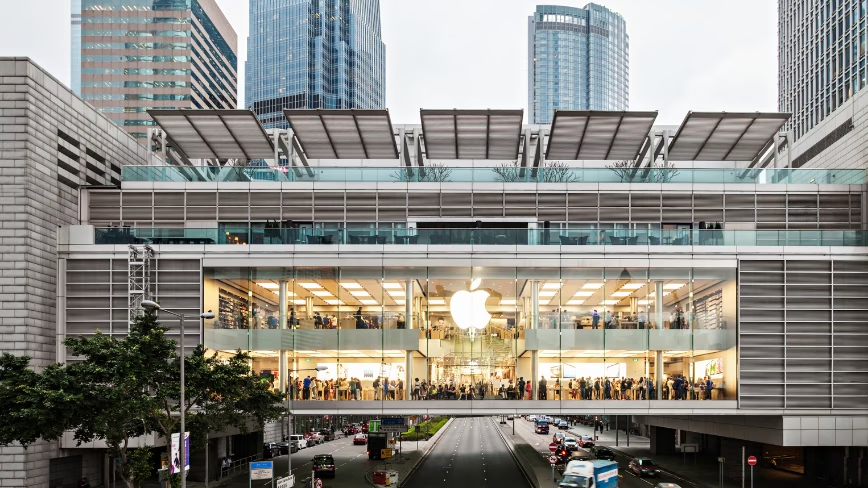
Image: courtesy of Thenextweb
Apple's Antitrust Settlement Talks: What It Means for the iPhone's Future
Apple Inc. and the U.S. Department of Justice are in early discussions to settle a 2024 antitrust lawsuit. The lawsuit alleges that Apple has violated antitrust laws by restricting competition within its ecosystem, particularly concerning the App Store. While no agreement has been reached and a trial date remains unset, these initial talks suggest a potential shift in strategy for both parties, aiming to avoid a protracted and costly legal battle. The outcome could reshape how Apple operates its iPhone business and App Store.
Outlook
Background
The 2024 lawsuit, filed by the Department of Justice, centers on allegations that Apple has engaged in monopolistic practices with its iPhone and the broader iOS ecosystem. Specifically, the DOJ claims Apple has used its market dominance to suppress competition, harming consumers, developers, and rival technology companies. The core of the complaint focuses on several key areas:
First, the App Store. The DOJ argues that Apple's strict rules and mandatory 15-30% commission on in-app purchases stifle innovation and force developers to pass higher costs onto consumers. Alternative app distribution methods are heavily restricted or outright prohibited, effectively creating a 'walled garden' where Apple controls access and pricing.
Second, the lawsuit points to Apple's control over hardware and software features. This includes restrictions on third-party digital wallets, limiting their functionality compared to Apple Pay, and alleged suppression of cloud streaming game services. The DOJ contends that by limiting the capabilities of competing products and services, Apple maintains an unfair advantage and prevents a level playing field.
Third, the complaint highlights Apple's messaging services, specifically iMessage. The lawsuit suggests that Apple intentionally degrades the experience when iPhone users communicate with non-iPhone users, making cross-platform messaging less appealing and reinforcing the 'stickiness' of its own ecosystem.
These allegations collectively argue that Apple's actions are not merely about maintaining quality or security, but rather about unlawfully maintaining a monopoly in the smartphone market, particularly in the U.S. The lawsuit seeks not only to halt these alleged practices but also to restore competition, which could lead to significant changes in Apple's business model.
See also
Precedents
Antitrust battles between the U.S. government and dominant tech companies have a long and complex history, often stretching over years, if not decades. One of the most prominent examples is the U.S. v. Microsoft case, filed in 1998. The DOJ accused Microsoft of using its Windows operating system monopoly to crush competition in the web browser market, primarily against Netscape. That case eventually led to a settlement that imposed restrictions on Microsoft's business practices, though the company avoided a full breakup. The protracted legal fight, however, diverted significant executive attention and resources.
More recently, the Justice Department has pursued antitrust actions against other tech giants, including Google, alleging monopolistic behavior in search and advertising. These cases are also ongoing, with some already having gone to trial, like the one concerning Google's search dominance. What these historical precedents show is that antitrust litigation is rarely swift. It involves extensive discovery, expert testimony, and often appeals, making settlement a financially attractive option for companies looking to avoid prolonged uncertainty and legal fees. Companies like Apple, with vast resources, can certainly endure a lengthy trial, but the reputational damage and the potential for a court-imposed structural change can be powerful motivators for seeking a negotiated resolution. Historically, settlements often involve concessions from the defendant, such as changes to business practices, but stop short of breaking up the company.
The outcome of these settlement talks, or a subsequent trial, carries significant implications, not just for Apple but for the entire digital economy. For Apple, the stakes are existential. Its App Store revenue, which falls under its Services division, has become a critical growth engine, generating billions of dollars annually. Any ruling or settlement that forces Apple to allow alternative app stores or significantly reduce its commissions could directly impact this revenue stream, potentially affecting its stock performance and long-term financial outlook. It could also force a fundamental rethinking of the 'walled garden' approach that has defined the iPhone experience for over a decade.
For developers, a settlement could mean greater freedom and potentially lower costs. Imagine a world where developers could distribute their apps outside the App Store, or where they paid significantly less in commission. This could foster more innovation, allow for more competitive pricing, and shift power dynamics within the mobile ecosystem. Consumers might see more choice in app stores, potentially lower app prices, and new features that Apple currently restricts.
More broadly, this case is a bellwether for how governments worldwide intend to regulate dominant tech platforms. A strong stance by the DOJ, whether through settlement or trial victory, could embolden regulators in Europe, Asia, and other regions to pursue similar actions against tech giants. It could set a precedent for how 'gatekeepers' in the digital sphere are expected to operate, influencing everything from hardware compatibility to payment systems. The core question is whether Apple's control is essential for security and user experience, as the company argues, or if it constitutes an illegal barrier to competition.
Scenarios
AnalysisThe current settlement discussions could lead to several distinct outcomes, each with its own set of consequences.
Outcome 1: A Negotiated Settlement. This is the immediate goal of the ongoing talks. A successful settlement would likely involve Apple agreeing to specific changes in its business practices, such as altering App Store rules, allowing certain third-party payment options, or easing restrictions on competing services. Such an agreement would allow Apple to avoid the uncertainty and public scrutiny of a trial, while giving the DOJ a victory in addressing alleged anti-competitive behavior. The terms of any settlement would be crucial, as they could range from minor tweaks to fundamental shifts in Apple's ecosystem strategy. An agreement would likely include a compliance period, during which Apple would implement the agreed-upon changes.
Outcome 2: Failed Settlement, Proceed to Trial. If the early talks do not yield a mutually agreeable solution, the lawsuit would move forward towards a trial. This would initiate a lengthy and resource-intensive legal battle, potentially spanning years, with appeals likely following any initial verdict. A trial would expose both Apple's internal operations and the DOJ's legal arguments to public scrutiny. A court ruling could either vindicate Apple, finding its practices legal, or impose remedies that could be far more extensive and prescriptive than those achieved through a negotiated settlement. A judicial decision could even mandate structural changes or severe financial penalties if Apple is found guilty of monopolization.
Outcome 3: Continued Status Quo with Gradual Internal Changes. Even without a formal settlement or trial verdict, the pressure of the lawsuit could implicitly influence Apple's actions. The company might proactively adjust some policies or introduce new features that address elements of the DOJ's complaints, hoping to demonstrate good faith or weaken the government's case. These changes might be framed as enhancements to the user experience or developer tools, rather than concessions. This approach could buy Apple time and potentially soften the terms of any future resolution, but it would not fully resolve the underlying legal challenge.
Timeline
2024
DOJ Files Antitrust Lawsuit Against Apple
The U.S. Department of Justice initiates a major antitrust lawsuit against Apple Inc., alleging monopolistic practices regarding the iPhone and its ecosystem.
July 17, 2026
Reports of Early Settlement Discussions Emerge
News outlets, including Bloomberg News and Reuters, report that Apple and the DOJ have entered early talks regarding a potential settlement of the 2024 antitrust case. No agreement has been reached.
Future (Undetermined)
Potential Settlement Agreement or Trial Commencement
Depending on the outcome of the ongoing talks, either a settlement agreement could be announced, detailing changes to Apple's business practices, or the case will proceed to trial, leading to a potentially lengthy legal process.
Frequently Asked Questions
Apple is accused of violating antitrust laws by suppressing competition through various means, including restrictive App Store policies, limiting third-party payment systems and cloud gaming services, and allegedly degrading the experience of non-iPhone users communicating with iMessage. The core argument is that Apple uses its iPhone dominance to maintain a monopoly.
Discussion
Be the first to share your thoughts.