
The immediate aftermath of this ruling will likely see Elon Musk's legal team prepare for an appeal. Such a move would escalate the case to a higher court, potentially drawing out the final resolution for years. While an appeal is a common next step in high-stakes litigation, it also opens the door for intensified settlement discussions. Both sides may weigh the costs and uncertainties of a lengthy appeal against the benefits of reaching a negotiated agreement, particularly given the substantial financial implications involved. For the plaintiffs, the decision offers a significant legal victory, reinforcing their position as they seek to recover losses.
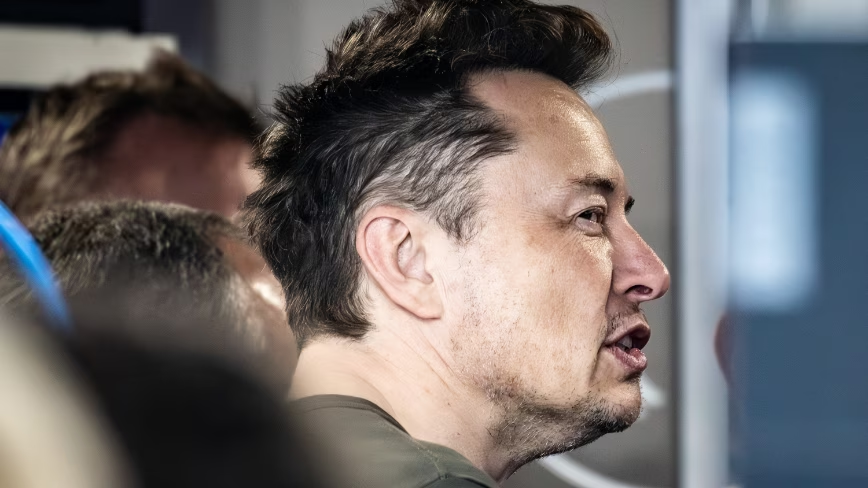
Image: courtesy of Thenextweb
The Bill Comes Due: Judge Upholds Elon Musk's Twitter Fraud Verdict, Leaving Billions in Play
A federal judge in San Francisco yesterday upheld a jury's verdict that Elon Musk defrauded Twitter investors during his 2022 buyout attempt. The ruling rejects Musk's bid to overturn the decision, confirming his liability for misleading statements made on social media. This decision leaves potential damages of up to $2.6 billion in play, setting the stage for a prolonged legal battle over accountability for public statements by influential figures in corporate transactions.
Outlook
Background
The heart of the case traces back to 2022, when Elon Musk was in the process of acquiring Twitter, now known as X. During that period, Musk made a series of public statements, primarily through tweets, that became the subject of intense scrutiny. The specific tweets at issue included his August 7, 2022, declaration that he had 'funding secured' to take Twitter private at $54.20 per share. Investors subsequently alleged that these statements were misleading and designed to manipulate Twitter's stock price, causing them significant financial losses.
A San Francisco jury, after hearing arguments, delivered a verdict in March 2026, finding Musk liable for securities fraud. This verdict was a significant moment, marking a rare instance of a jury holding such a high-profile figure accountable for social media statements directly impacting a corporate transaction. Following the jury's decision, Musk's legal team filed motions seeking to overturn the verdict, arguing that the evidence did not support the jury's findings.
Yesterday, US District Judge Charles Breyer largely rejected these motions. While the judge did side with Musk on the effect of one specific tweet sent on May 17, 2022, this partial concession did not alter the overall outcome: the core finding of fraud against investors remains upheld. The ruling reinforces the jury's original determination and keeps the possibility of damages, estimated at up to $2.6 billion, firmly on the table. This figure represents the maximum amount the plaintiffs claimed in losses, and its final determination would depend on further legal proceedings or a settlement.
See also
Precedents
The legal landscape has a long history of grappling with how public statements, particularly from corporate leaders, impact financial markets. Cases like this often draw parallels to past instances where influential figures faced scrutiny for their market-moving comments. While the specifics of social media are relatively new, the underlying principle of preventing market manipulation is not.
Historically, corporate executives have faced civil and criminal penalties for making false or misleading statements that affect stock prices. Think of cases involving insider trading or deliberate misrepresentation in financial disclosures. The Securities and Exchange Commission (SEC) has long pursued actions against individuals and companies for such infractions. What makes the Musk case particularly compelling is the medium — Twitter — and the individual's unprecedented public profile and influence.
This ruling builds on a growing body of legal precedent that increasingly recognizes the impact of social media on investor behavior. It suggests that courts are willing to apply traditional securities laws to modern communication channels, signaling that the 'wild west' perception of social media in financial discourse may be gradually giving way to stricter accountability. The judge's decision indicates a judicial willingness to uphold jury findings that hold individuals responsible for statements, regardless of where they are made, if those statements have a material impact on market prices.
This isn't just another legal skirmish for Elon Musk; it's a significant moment for corporate accountability and the evolving rules of engagement in public financial discourse. The decision sends a clear message that even figures with immense public platforms and wealth are not immune to the consequences of misleading statements that affect investor confidence.
For investors, the ruling offers a measure of reassurance. It suggests that legal protections against market manipulation extend to the rapid-fire, informal world of social media. This could, in theory, foster greater trust in public markets, as participants see that claims made by powerful individuals are subject to scrutiny and potential legal repercussions.
More broadly, the case highlights the unique challenges of regulating information in the digital age. When a single tweet from a billionaire can move markets by billions of dollars, the line between casual comment and material disclosure becomes critically important. This verdict could influence how other executives, public companies, and even celebrities approach their communications, particularly when their personal brands are intertwined with significant financial assets or corporate transactions. It raises the stakes for accuracy and transparency in all forms of public communication that could sway investor sentiment or the value of a company.
Scenarios
AnalysisThe road ahead for this case presents several distinct possibilities:
1. A Lengthy Appeals Process: Elon Musk's legal team is highly likely to appeal Judge Breyer's decision to the Ninth Circuit Court of Appeals. Such an appeal would challenge the legal basis of the verdict or the judge's interpretation of the evidence. Appeals at this level are often protracted, potentially taking years to resolve, and introduce a new layer of legal costs and uncertainty for all parties involved. This process would defer any final payment of damages.
2. Settlement Negotiations: The prospect of a prolonged and costly appeal could push both sides toward a settlement. A negotiated agreement would allow Musk to resolve the matter outside of court, potentially for a sum less than the maximum $2.6 billion, and avoid the continued public scrutiny and legal expense. For the plaintiffs, a settlement guarantees a recovery without the risks inherent in an appeal.
3. Damage Determination: If appeals are exhausted and the verdict stands, the court would then proceed to formally determine the exact amount of damages to be awarded to the class of investors. While the 'up to $2.6 billion' figure is on the table, the precise calculation would involve complex financial analysis to quantify the losses directly attributable to Musk's misleading tweets.
4. Influence on Corporate Communications: Regardless of the final financial outcome, this case has already served as a significant cautionary tale. It may prompt more stringent internal policies at companies regarding what their executives can say publicly, particularly on social media, about market-sensitive information. The ruling could lead to a broader re-evaluation of how 'personal' social media accounts of executives are viewed when they discuss corporate matters.
Timeline
2022
Musk's 'Funding Secured' Tweets
Elon Musk posts tweets, including one on August 7, 2022, claiming he had 'funding secured' to take Twitter private. These tweets become the basis of the investor fraud lawsuit.
March 2026
Jury Verdict Against Musk
A San Francisco federal jury finds Elon Musk liable for defrauding Twitter investors, concluding his tweets misled the market during the acquisition process.
July 6, 2026
Judge Upholds Verdict
US District Judge Charles Breyer rejects Elon Musk’s motion to overturn the jury’s verdict, upholding the finding that Musk defrauded Twitter investors and leaving potential damages of up to $2.6 billion in play.
Frequently Asked Questions
The jury found that Elon Musk made misleading statements on Twitter in 2022, particularly his 'funding secured' tweet, which falsely suggested he had secured financing to take the company private. Investors claimed these statements manipulated Twitter's stock price, causing them losses.
Discussion
Be the first to share your thoughts.