
Expect TikTok to continue its aggressive integration of new services, pushing further into areas traditionally dominated by specialized apps. This includes a more prominent role for in-app shopping, potentially expanded travel services, and a continued pursuit of financial technology licenses. The company's strategy suggests a future where users will spend more time and conduct more transactions within the TikTok ecosystem, reducing their need to switch to other platforms for daily tasks. The rollout of a new app version specifically for the U.S. market could mark a significant step in this direction, potentially introducing new features or a refined user experience designed to accelerate super app adoption.
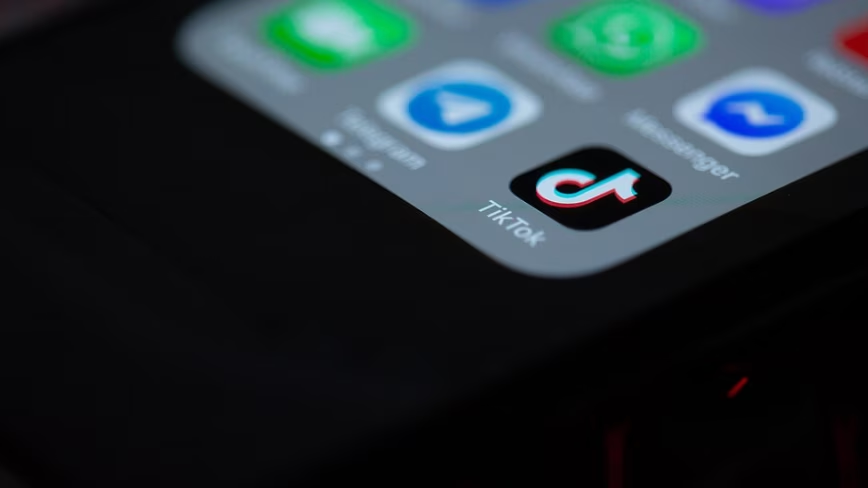
Image: courtesy of Thenextweb
Beyond Videos: TikTok's Super App Ambition Is Taking Shape, Most Users Haven't Noticed
TikTok is quietly transforming itself from a short-form video platform into a comprehensive 'super app,' integrating a wide array of services including e-commerce, hotel bookings, financial tools, and sports content. This strategic expansion, largely unnoticed by its vast user base, aims to diversify revenue streams and deepen user engagement, mirroring the successful models of Asian tech giants.
Outlook
Background
TikTok, primarily known globally for its addictive short-form video content, is owned by Beijing-based ByteDance. The platform has amassed a massive global audience, but faces intense scrutiny, particularly in the United States, over data security and its ties to China. This regulatory pressure has created an incentive for TikTok to diversify its offerings and revenue streams beyond advertising tied to video content. The company has already built a substantial e-commerce operation, TikTok Shop, which reportedly generated nearly $16 billion in sales. Beyond shopping, TikTok has integrated features like a map for local discovery, a robust search engine, and a growing library of games. More recently, the company has added hotel booking capabilities and is actively pursuing a fintech license, signalling a clear intent to enter financial services. Internally, there is a plan to launch a new version of the app, known as 'M2,' to U.S. app stores on September 5, 2026. This comes alongside recent updates like the June 2026 introduction of 'Creator Search Insights,' a tool designed to help content creators identify trending topics and content gaps.
See also
Precedents
The concept of a 'super app' is not new, but its most successful examples originate from Asia. WeChat, owned by Tencent in China, stands as the quintessential super app, offering everything from messaging and social media to mobile payments, ride-hailing, food delivery, and government services within a single platform. Other examples include Gojek in Indonesia and Grab in Southeast Asia, which started with ride-sharing but quickly expanded into a broad range of on-demand services. These apps thrive by creating a 'sticky' ecosystem where users rarely need to leave the app for their daily digital needs. This model offers tremendous advantages in terms of user data, advertising opportunities, and transaction fees. TikTok's current strategy closely mirrors these historical precedents, leveraging its existing massive user base and high engagement rates to cross-sell and integrate new functionalities. The challenge for TikTok, as with any company attempting this model in Western markets, is user adoption. Western users are generally accustomed to using separate, specialized apps for different tasks, making the transition to an all-in-one platform a more gradual process.
TikTok's super app ambition holds significant implications for the global tech industry, its competitors, and how billions of users interact with digital services. For TikTok itself, it represents a crucial diversification strategy. Relying solely on advertising revenue from short-form videos leaves it vulnerable to shifts in advertising budgets, creator trends, and regulatory changes. By building out e-commerce, travel, and financial services, TikTok can create multiple, more stable revenue streams, increasing its enterprise value and resilience. For competitors like Meta, Google, and Amazon, it means a new, formidable challenger. TikTok Shop is already taking market share from established e-commerce players, while its move into travel and fintech could disrupt industries where these tech giants have a presence. For users, a successful super app means greater convenience, potentially consolidating many daily digital activities into one interface. However, it also raises questions about data privacy, monopolistic power, and the potential for a single platform to exert undue influence over consumer choices and information flow. The quiet nature of this expansion suggests a deliberate strategy to integrate services without immediately altering user perception, allowing the platform to grow organically into its new form.
Scenarios
AnalysisOne possible outcome is that TikTok successfully replicates the Asian super app model in Western markets, fundamentally changing how users engage with digital services. This could lead to increased user stickiness and significant revenue growth for ByteDance, further cementing TikTok's position as a dominant force in global tech. The integration of services like shopping and travel could become so seamless that users rarely feel the need to open separate apps, creating a powerful, interconnected ecosystem.
Conversely, user resistance to an all-in-one app, particularly in regions accustomed to specialized platforms, could slow adoption. Regulatory pushback, especially concerning data privacy and anti-competitive practices, could also impede TikTok's expansion, forcing the company to scale back certain features or spin off parts of its business. The 'M2' app launch in the US, for instance, could face heightened scrutiny or be impacted by ongoing geopolitical tensions and legislative efforts concerning TikTok's ownership.
A third scenario involves TikTok finding a middle ground, where certain super app features, like e-commerce, thrive while others, such as fintech or extensive travel services, see more limited success. This would still represent a significant evolution from its video-only roots, but without achieving the full, all-encompassing integration seen in platforms like WeChat. The success of each service will depend heavily on user experience, competitive pricing, and TikTok's ability to market these new offerings effectively to a user base that primarily views it as an entertainment app.
Timeline
2026-06-26
TikTok's Super App Ambition Confirmed
Reports confirm TikTok is actively building a 'super app' by integrating various services including e-commerce, hotel bookings, fintech, and sports content, largely unnoticed by most users.
2026-06-26
Creator Search Insights Released
TikTok introduced Creator Search Insights, a new tool for creators to identify content gaps and boost discoverability, as part of its June 2026 update.
2026-09-05
Planned 'M2' App Launch in US
TikTok has an internal plan to launch a new version of its app, codenamed 'M2,' to U.S. app stores.
Frequently Asked Questions
A super app is a mobile application that combines multiple services into one platform. Instead of needing separate apps for messaging, shopping, payments, or booking travel, a super app allows users to do all these things within a single interface, creating a comprehensive digital ecosystem.
Discussion
Be the first to share your thoughts.