
The feature promises to eliminate the friction of group dining by automating the math involved in splitting tabs. By leveraging the iPhone’s advanced camera and Neural Engine, the system will identify line items on a receipt and allow users to assign specific charges to their contacts. This integration aims to turn the Wallet ecosystem into an active participant in social transactions, moving beyond simple payment processing to become a full-service financial manager for daily expenses.
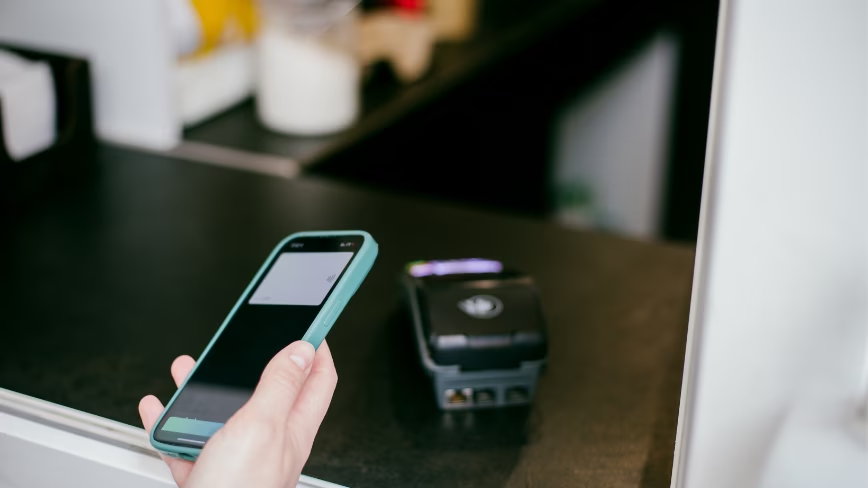
Image: courtesy of Thenextweb
Apple’s Next Big Move: Turning Your iPhone Camera Into a Digital Accountant
Apple is developing a sophisticated bill-splitting tool that uses onboard machine learning to scan physical receipts, itemize expenses, and coordinate payments through iMessage, potentially disrupting the entire social finance sector.
Outlook
Background
The primary threat here is to established fintech players like Splitwise, Venmo, and Cash App. When a feature is natively baked into the operating system, it creates a massive barrier for third-party apps that require users to sign up and invite friends. Furthermore, the move raises significant questions regarding data privacy; while Apple emphasizes on-device processing, the granular data regarding who buys what and with whom is incredibly valuable, placing the company in a delicate position as it expands its influence over the consumer financial experience.
See also
Precedents
This strategy mirrors Apple’s past moves, such as the introduction of Apple Pay in 2014 and the document-scanning capabilities added to the Notes app. In both instances, Apple took a specialized, often manual task and simplified it so thoroughly that standalone competitors saw their market share collapse. The company relies on the 'utility standard' approach: if a feature is default, convenient, and hardware-integrated, users rarely seek out alternatives, effectively consolidating power within the Apple ecosystem.
This development marks a shift from passive financial technology to active, intelligent financial management. By controlling the receipt, Apple gains unprecedented insight into consumer behavior, social circles, and spending habits at a micro-transaction level. For retailers and hospitality partners, this creates a new layer of engagement, while for consumers, it effectively offloads the mental burden of group accounting. The move signals that Apple is moving up the value chain to own the logic and context surrounding a transaction rather than just acting as the digital 'pipe' for money.
Scenarios
Analysis1. The 'Utility Standard' Success: The feature achieves high accuracy and becomes the default, causing a significant decline in usage for standalone bill-splitting apps. 2. The Privacy and Complexity Pushback: Technical hurdles with messy receipts lead to a clunky user experience, resulting in low adoption rates and keeping the status quo in the fintech market. 3. The Retailer Integration Pivot: Apple bypasses the camera entirely by pushing digital receipts directly to phones via NFC, forcing a massive shift in how point-of-sale systems interact with consumer devices.
Timeline
Near-term
Internal Beta Testing
Apple engineers refine OCR accuracy using diverse receipt formats and lighting conditions to ensure the Neural Engine can handle real-world, crumpled paper.
Mid-term
Public Developer Preview
The feature is introduced in an iOS beta, allowing developers to see how it interacts with the Wallet API and iMessage integration.
Long-term
Ecosystem Standardization
If successful, the feature becomes a staple of the iOS experience, potentially forcing retailers to adopt standardized digital receipt formats that communicate directly with Apple Pay.
Frequently Asked Questions
While Apple's machine learning is highly advanced, the initial success will likely depend on the clarity of the receipt. The system is being built to handle common restaurant slips, but crumpled or heavily faded paper remains a significant technical hurdle for OCR technology.
Discussion
Be the first to share your thoughts.