
Messi's latest achievement sets the stage for a dramatic chase to become the outright top scorer in World Cup history. With Argentina now firmly in contention, fans and analysts will be watching every minute of his remaining matches in this tournament. The focus will be on whether he can add just one more goal to claim the record for himself and how far he can lead his team. Beyond the immediate record, his continued presence at the elite level at 39 years old will be a major talking point, potentially influencing other veteran players and extending career expectations.
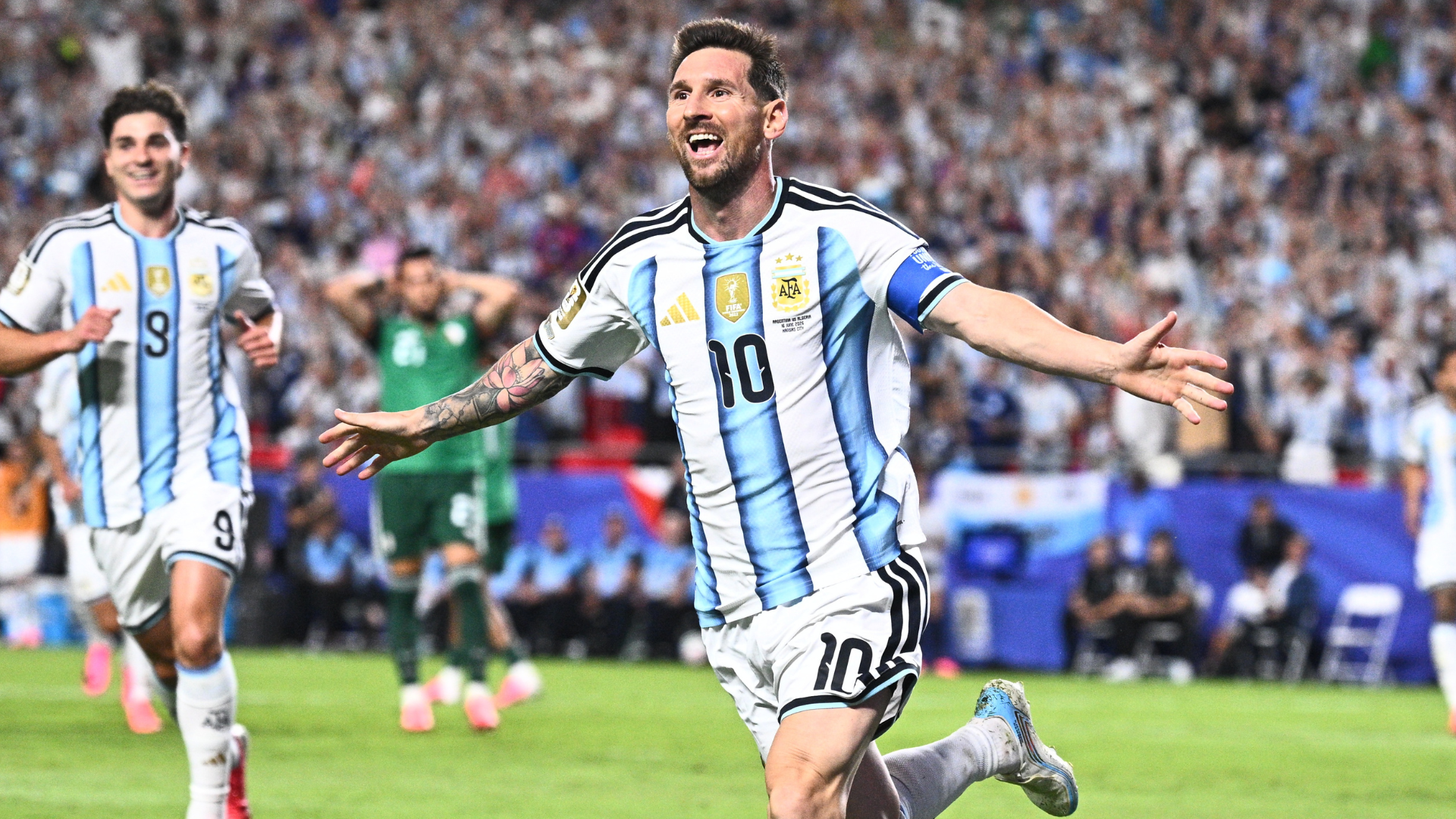
Image: courtesy of Cbs Sports
Messi's Hat Trick Ties World Cup Goal Record, Argentina Advances
Lionel Messi scored a stunning hat trick against Algeria today, matching Miroslav Klose's all-time record for career World Cup goals. The performance, which saw Argentina secure a decisive victory, has not only propelled the team deeper into the 2026 tournament but also reignited discussions about Messi's enduring legacy in global football.
Outlook
Background
Lionel Messi, widely considered one of the greatest footballers in history, delivered a memorable performance today, June 17, 2026, by scoring three goals against Algeria in a crucial World Cup match. This hat trick brings his total World Cup goal tally to 16, drawing him level with Germany's Miroslav Klose, the previous record holder. The goals were crucial for Argentina, securing a victory that significantly strengthens their position in the current tournament.
Messi, who led Argentina to a World Cup title in 2022, is participating in what many expected to be his final major international tournament. His ability to perform at such a high level at 39 years old defies conventional expectations for elite athletes in a physically demanding sport. This achievement comes at a point in his career where many players would have already retired or moved into less competitive leagues, further cementing his unique place in football lore.
Argentina's campaign in this World Cup has been under intense scrutiny, particularly after their triumph four years prior. The team carries the weight of expectation, and Messi's individual brilliance is often seen as the primary engine for their success. His hat trick today was not merely a statistical milestone; it was a statement of intent, both from Messi himself and from an Argentine side looking to repeat their previous glory. The match against Algeria, while not against one of the tournament's top-tier favorites, was a significant hurdle, and Messi's clinical finishing ensured a comfortable win.
See also
Precedents
The pursuit of individual World Cup records has a long and storied history, often intertwined with the narrative of national team success. Miroslav Klose, who held the record with 16 goals, achieved his tally across four World Cups (2002-2014), showcasing remarkable longevity and consistency as a striker for Germany. Ronaldo Nazário, the Brazilian legend, held the record before Klose, with 15 goals accumulated over three tournaments (1998, 2002, 2006), famously leading Brazil to victory in 2002.
Historically, players who reach such high goal counts are often central figures in their national teams' World Cup campaigns, their individual performances directly correlating with their team's deep runs in the tournament. Messi's journey to 16 goals has spanned multiple World Cups, beginning in 2006. His previous World Cup triumph in 2022, where he scored seven goals, demonstrated his capacity to deliver under immense pressure in the latter stages of his career. This pattern suggests that players capable of scoring at this level often have a team built around their strengths, allowing them the opportunities to find the net.
What makes Messi's current achievement particularly notable is his age. Few outfield players maintain such a decisive impact at 39 in a World Cup. The historical precedent for players of this age is typically a reduced role, often coming off the bench or playing in less central positions. Messi's continued role as Argentina's primary goal threat, culminating in a hat trick, speaks to an exceptional level of physical conditioning and tactical intelligence, allowing him to adapt his game to remain effective despite the passage of time.
Messi's hat trick against Algeria is more than just another entry in a statistic book; it reshapes the narrative of his own legacy and Argentina's prospects in the 2026 World Cup. For a player who has already achieved the sport's ultimate team prize in 2022, this individual record chase adds a new dimension to what many believed would be a victory lap tournament.
The immediate consequence is the boost it provides to Argentina's confidence. A hat trick from their captain and talisman confirms his peak form, which is invaluable for a team navigating the high-pressure knockout stages. This performance could galvanize the squad, reminding opponents that even at 39, Messi remains capable of single-handedly changing the course of a match.
On a broader scale, this achievement further solidifies Messi's claim as the greatest footballer of all time. While the World Cup trophy in 2022 removed the only significant void in his trophy cabinet, surpassing the all-time goal record would add another undeniable statistical anchor to his legendary status. It would place him in a category of one, holding both the ultimate team prize and the most prolific individual scoring record on the biggest stage.
For the sport itself, Messi's continued excellence at an advanced age provides a compelling storyline. It challenges perceptions of athlete longevity and peak performance, potentially inspiring a new generation of players and extending the commercial appeal of the World Cup beyond its traditional cycles. It also means that this World Cup, already significant, now carries the added drama of a living legend chasing one final, historic milestone.
Scenarios
AnalysisMessi's record-tying performance opens up several potential outcomes for both his individual legacy and Argentina's World Cup journey.
One clear outcome is that Messi could become the outright leading scorer in World Cup history. Needing just one more goal to surpass Klose, and with Argentina likely to play at least one more match, the opportunity is significant. Should he achieve this, it would be another monumental capstone to his career, further distinguishing him in the pantheon of football greats. This outcome would likely generate immense global attention and add a unique individual achievement to his already decorated career.
Another outcome is that Argentina, fueled by Messi's form, could make a deep run in the tournament, potentially reaching the final or even winning the World Cup again. His hat trick suggests he is in prime form, and a team that has successfully built around his genius could leverage this momentum. A second consecutive World Cup title would be an extraordinary feat for any nation, especially one led by a player nearing 40. This would solidify Argentina's status as a dominant force in international football for this era.
Alternatively, despite his individual brilliance, Argentina's team performance might falter in later stages, or Messi himself could be contained by a strong defensive opposition. While he has tied the record, breaking it is not guaranteed, especially in the high-stakes environment of a World Cup knockout round where defensive tactics become more stringent. Argentina faces increasingly difficult opponents, and even a player of Messi's caliber can be limited if the team structure or tactical approach is not perfect. This could mean he ends the tournament sharing the record but not holding it outright, and Argentina's campaign might end earlier than hoped.
Timeline
2006-06-16
Messi's First World Cup Goal
Lionel Messi scores his first World Cup goal for Argentina against Serbia and Montenegro in the 2006 World Cup.
2014-07-13
World Cup Final Appearance
Messi leads Argentina to the World Cup final against Germany, losing 1-0 in extra time. He is awarded the Golden Ball as the tournament's best player.
2014-07-08
Klose Breaks World Cup Goal Record
Miroslav Klose scores his 16th World Cup goal for Germany against Brazil in the semi-finals, surpassing Ronaldo Nazário's record of 15 goals.
2022-12-18
Argentina Wins World Cup
Lionel Messi captains Argentina to victory in the 2022 World Cup final against France, scoring two goals in the match and winning the Golden Ball for a second time.
2026-06-17
Messi Ties All-Time World Cup Goal Record
Lionel Messi scores a hat trick against Algeria in the 2026 World Cup, bringing his total career World Cup goals to 16, tying Miroslav Klose's record.
Frequently Asked Questions
Germany's Miroslav Klose held the record with 16 goals. Brazil's Ronaldo Nazário held it before Klose, with 15 goals.
Discussion
Be the first to share your thoughts.