
The immediate aftermath of UEFA and Concacaf's unified rejection is a significant test of power within global football governance. FIFA is now faced with a stark choice: either push forward with a plan that risks alienating two of its most powerful confederations and their lucrative national teams, or reconsider its financial strategy. This standoff could lead to intense negotiations behind closed doors, with the future structure and commercialization of the World Cup at the core. Football fans, national associations, and commercial partners will be watching closely to see if FIFA softens its stance or if the confederations follow through on their boycott threats.
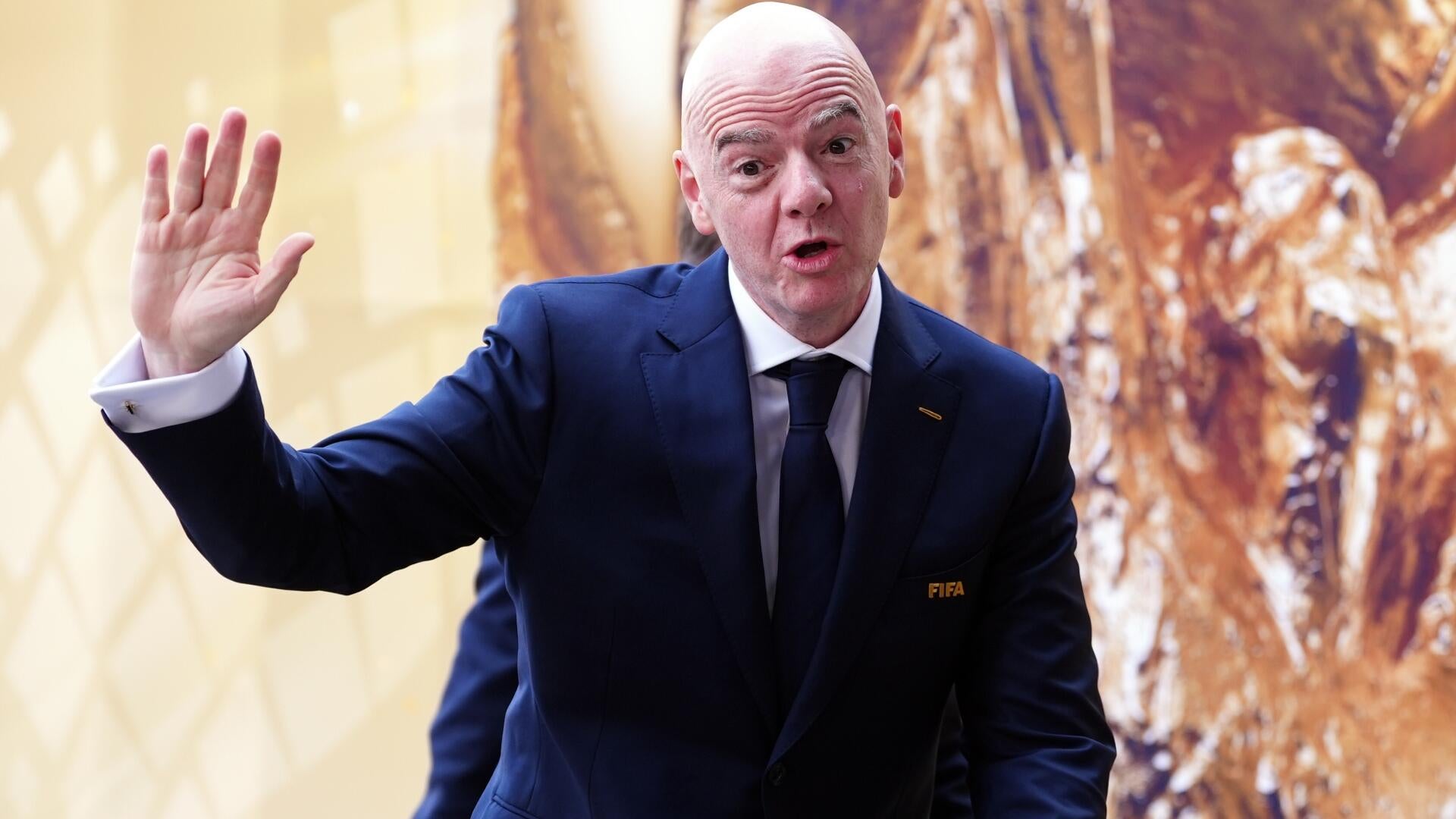
Image: courtesy of Cbs Sports
The World Cup's Future Hangs in the Balance as UEFA and Concacaf Reject FIFA's Investment Plan
Europe's governing football body, UEFA, and its North and Central American counterpart, Concacaf, have both rejected FIFA President Gianni Infantino's proposal to sell stakes in major FIFA competitions, including the World Cup, to private investors. UEFA's 55 member associations unanimously agreed on Thursday to boycott future FIFA tournaments if the plan proceeds, stating the World Cup's legacy cannot be treated as a mere investment product. Concacaf's 41 member associations followed with their own rejection later the same day, signaling a unified front against FIFA's financial strategy.
Outlook
Background
At the heart of this dispute is FIFA President Gianni Infantino's ambition to create new revenue streams by commercializing its marquee events. The specific plan involves selling stakes in competitions like the World Cup to private equity investors, a move FIFA believes would unlock significant capital for global football development. However, UEFA views the World Cup not just as an event, but as a cultural institution and a sporting legacy that should remain under the full control of football's governing bodies, free from external commercial pressures. Their statement that the World Cup 'cannot be treated as an investment product' directly challenges FIFA's financial philosophy.
Concacaf's decision to align with UEFA amplifies the opposition. Together, these two confederations represent a substantial portion of global football's economic power and competitive strength. Europe, in particular, is home to many of the world's most valuable national teams, players, and major football leagues. A World Cup without European teams, or without the participation of nations like the United States, Mexico, and Canada, would be a significantly diminished product, both commercially and sporting-wise. This unified front indicates a deep-seated concern among key football stakeholders regarding the long-term implications of private investment in the sport's most prestigious events.
See also
Precedents
The current confrontation between FIFA and its continental confederations is not an isolated incident; it echoes a long history of power struggles within global football. Throughout its existence, FIFA has often sought to consolidate power and centralize control over international football, sometimes clashing with the autonomous interests of the continental bodies like UEFA, which often represent stronger economic and sporting blocs.
One notable parallel can be drawn to the debates surrounding the expansion of the World Cup itself. While FIFA successfully pushed through an expansion to 48 teams, there were initial concerns from some confederations about the logistical and sporting integrity challenges. Similarly, proposals for new club competitions, such as the now-defunct European Super League, highlighted the tension between a global governing body's vision and the regional interests of powerful clubs and confederations.
Financial control has consistently been a flashpoint. FIFA's attempts to introduce new tournaments or restructure existing ones often face scrutiny over revenue distribution and who ultimately benefits from the commercialization of the sport. This history suggests that while a resolution will likely be sought, it will emerge from a complex negotiation where both sides leverage their influence and financial muscle. The current standoff is less about a single investment deal and more about the fundamental balance of power and financial philosophy that will shape international football for decades.
The outcome of this standoff between FIFA and its dissenting confederations carries profound implications for the future of global football, reaching far beyond administrative boardrooms. For fans, the most immediate concern is the integrity and quality of competitions like the World Cup. A boycott by major European and North American nations would strip the World Cup of many of its star players and most competitive teams, fundamentally altering the tournament's appeal and historical significance. It would transform the premier international football event into something unrecognizable to millions.
Financially, the stakes are enormous. The World Cup is FIFA's primary revenue generator, drawing billions in broadcasting rights, sponsorship deals, and ticketing. Losing the participation of UEFA and Concacaf teams would severely diminish the tournament's commercial value, potentially costing FIFA and its partners billions. This could force a re-evaluation of commercial strategies across the entire sport, impacting everything from grassroots development funding to the financial health of national associations.
More broadly, this dispute represents a critical moment for the governance of football. If FIFA pushes through its plan despite widespread opposition from key confederations, it could lead to a lasting schism within the sport, potentially fracturing the unified structure that has governed football for over a century. Conversely, if FIFA backs down, it could signal a shift in power dynamics, empowering continental bodies to have a greater say in the sport's commercial future. This is a battle over the soul and commercial direction of the world's most popular sport, determining who controls its crown jewels and for what purpose.
Scenarios
AnalysisThis high-stakes confrontation could unfold in several distinct ways, each with significant ramifications for the sport:
1. FIFA Reconsiders Its Plan: Faced with the threat of a boycott from two powerful confederations, FIFA may choose to withdraw or significantly revise its proposal for private investment in its competitions. This would be a significant climb-down for President Infantino but could preserve the unity of global football. Such a move might involve exploring alternative funding models or seeking a compromise that offers confederations more control or a larger share of potential profits.
2. A Negotiated Compromise Emerges: It is possible that intense, behind-the-scenes negotiations could lead to a middle ground. This could involve a modified investment plan that addresses UEFA and Concacaf's concerns, perhaps by limiting the scope of private equity involvement, guaranteeing specific protections for the World Cup's integrity, or offering greater financial incentives to the dissenting confederations. This outcome would require significant concessions from all parties but would avoid a damaging boycott.
3. FIFA Proceeds, Facing a Boycott: If FIFA decides to press ahead with its investment plan despite the opposition, UEFA and Concacaf may follow through on their threat to boycott future FIFA competitions, including the World Cup. This would create an unprecedented crisis in international football, potentially leading to a 'two-tier' system where a FIFA World Cup proceeds without many of the world's top teams, and dissenting confederations might explore alternative international tournaments. The commercial and sporting consequences of such a split would be immense and far-reaching.
4. Dissenting Confederations Back Down: While less likely given the unanimous and public stance, there remains a possibility that UEFA and Concacaf could eventually soften their position under intense pressure from FIFA, national governments, or commercial partners. This would likely only happen if FIFA offers significant incentives or if the perceived risks of a boycott outweigh the concerns about private investment. However, given the strong statements made, such a reversal would be a difficult political maneuver for the confederations.
Timeline
2026-07-30
FIFA President Gianni Infantino Proposes Investment Plan
FIFA President Gianni Infantino officially presents a plan to sell stakes in major FIFA competitions, including the World Cup, to private equity investors, aiming to generate new revenue.
2026-07-30
UEFA Unanimously Rejects Plan and Threatens Boycott
Following an emergency meeting, UEFA's 55 member associations unanimously reject FIFA's investment plan. They issue a statement asserting the World Cup cannot be treated as an investment product and announce a boycott of future FIFA competitions if the plan is adopted.
2026-07-30
Concacaf Joins Opposition
Shortly after UEFA's announcement, Concacaf, representing 41 national associations in North, Central America, and the Caribbean, holds an urgent meeting and also rejects Infantino's World Cup investment plan.
2026-09-05
Women’s Under-20 World Cup Begins in Poland
The next FIFA competition, the Women’s Under-20 World Cup, is scheduled to begin in Poland. This tournament could be the first event potentially affected by UEFA’s conditional boycott, depending on FIFA's next steps regarding the investment plan.
Frequently Asked Questions
FIFA's plan, championed by President Gianni Infantino, aims to sell stakes in its major competitions, most notably the World Cup, to private equity investors. The goal is to generate significant capital, which FIFA says would be used to fund football development globally.
Discussion
Be the first to share your thoughts.