
The coming weeks are expected to bring clarity to Vinicius Jr's contract situation at Real Madrid. Either an extension will be agreed upon, or the club will likely intensify efforts to sell him this summer rather than risk losing him on a free transfer next year. Arsenal, among other potential suitors, will be watching these developments closely, ready to make a move if Real Madrid signals a willingness to sell. Simultaneously, Real Madrid's pursuit of Yan Diomande is anticipated to progress, potentially leading to a significant transfer fee being paid for the Ivorian winger before the summer transfer window closes.
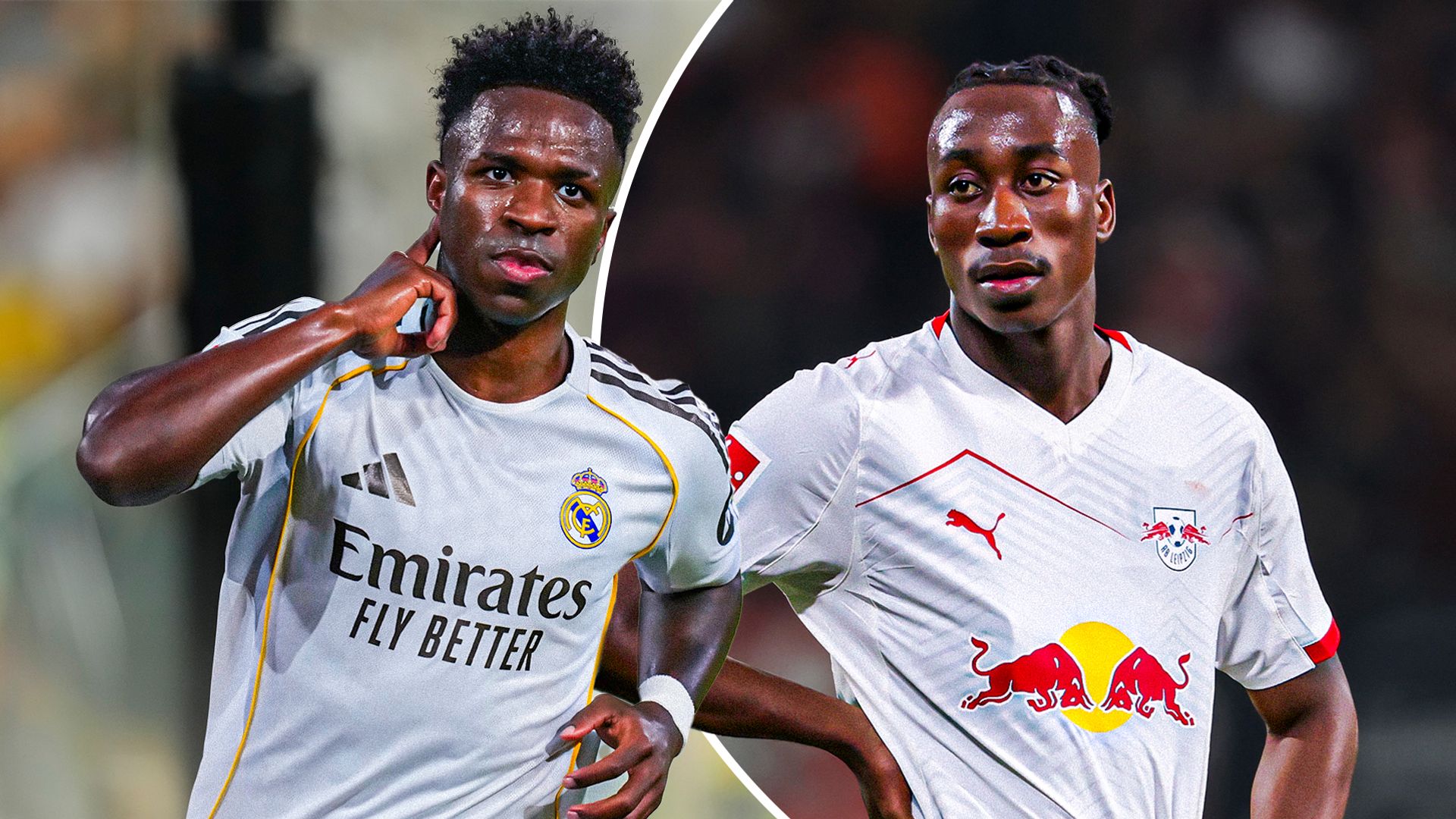
Image: courtesy of Sky sports
Real Madrid's €120 Million Diomande Pursuit: The Real Stakes for Vinicius Jr's Future
Vinicius Jr, Real Madrid's star forward, finds himself at a career crossroads as his contract enters its final year with extension talks stalled. While Arsenal explores a potential move, Real Madrid is aggressively pursuing Ivorian winger Yan Diomande for a reported €120 million, raising questions about the Spanish giant's long-term plans for Vinicius and whether this is a negotiation tactic or a genuine succession strategy. The situation is further complicated by new head coach Jose Mourinho's reported opposition to selling Vinicius.
Outlook
Background
The future of Vinicius Jr, a central figure in Real Madrid's attack, has become a focal point of the summer transfer window. The 26-year-old Brazilian international has just one year remaining on his current contract with the club. Negotiations for a new deal have reportedly 'dragged on without a breakthrough,' leading to increasing speculation about his long-term commitment to the Spanish capital.
This contractual stalemate has opened the door for external interest. Arsenal, a prominent Premier League club, has emerged as a serious suitor, actively 'exploring' a deal for Vinicius Jr. Sources indicate that while Arsenal's interest is 'real,' there has been 'no club-to-club contact' with Real Madrid at this stage. Instead, Arsenal's pursuit is contingent on Vinicius Jr failing to agree to new terms with Real Madrid, positioning themselves to act if the player becomes available. Arsenal's interest is not singular, as they are reportedly considering several forward targets, including Julian Alvarez, Yan Diomande, and Bradley Barcola.
Adding another layer of complexity to the situation is Real Madrid's own aggressive move in the transfer market. The club has reportedly taken 'pole position' in the race to sign Yan Diomande, an Ivorian winger currently playing for Leipzig. The proposed deal for Diomande is significant, with a 'total package of €120 million' (£103 million/$136 million) expected. Despite the substantial fee, it is 'anticipated that a deal will be struck in due course,' suggesting Real Madrid is serious about acquiring the player.
Further complicating any potential transfer for Vinicius Jr is the reported stance of Real Madrid's new head coach, Jose Mourinho. According to reports, Mourinho would 'oppose' any move to sell the Brazilian forward, indicating a desire to keep him as a key part of his squad. This internal dynamic within Real Madrid's hierarchy could influence the club's strategy regarding both Vinicius's contract and the acquisition of Diomande.
Precedents
Real Madrid has a long and well-documented history of navigating high-stakes contract situations with its star players. The club operates under a clear financial imperative: protect asset value. Allowing a player of Vinicius Jr's caliber and market value to enter the final year of his contract without resolution is unusual for Real Madrid, unless a strategic decision has been made. Historically, when a key player approaches the end of their deal without an extension, Real Madrid typically pursues one of two paths.
The first, and often preferred, path is to secure an extension, sometimes with improved terms, to maintain the player's value and commitment. This happened with Luka Modrić and Toni Kroos in previous seasons, though their situations involved older players with different market dynamics. For younger, high-value assets like Vinicius, the club typically moves swiftly to tie them down long-term, thereby fending off external interest and ensuring future transfer fee potential.
The second path, if an extension proves impossible, is to sell the player before they can leave on a free transfer. This was the case with Raphaël Varane, who was sold to Manchester United in 2021 after entering the final year of his contract, rather than risk losing him for nothing. Similarly, Mesut Özil was sold to Arsenal when his contract situation became uncertain. The club understands the financial implications of letting a player walk away for free, especially one who could command a nine-figure transfer fee.
Real Madrid's current pursuit of Yan Diomande, a player in a similar attacking role to Vinicius Jr, aligns with a pattern of proactive squad planning. The club often identifies and acquires talent in anticipation of future needs or potential departures. This could be interpreted as a genuine succession plan, preparing for a scenario where Vinicius Jr ultimately departs, or as a strategic move to create leverage in contract negotiations, signaling to Vinicius and his representatives that the club has alternatives. The pressure on the player to sign a new deal intensifies when a potential replacement is actively being pursued. The club's financial strength also allows it to make simultaneous high-value moves, such as acquiring Diomande, even while managing a significant contract negotiation.
The reported stance of a new head coach, like Jose Mourinho's opposition to selling Vinicius Jr, also plays a critical role. Historically, coaches often have significant input into squad composition, and their preferences can sway boardroom decisions regarding player sales and acquisitions. However, ultimately, the club's financial and strategic interests, particularly those driven by the president, often take precedence in such high-profile decisions. The interplay between coaching preferences, player demands, and club financial strategy creates a complex environment for these types of transfer sagas.
The outcome of Vinicius Jr's contract negotiations and Real Madrid's pursuit of Yan Diomande carries significant implications across the European football landscape. For Real Madrid, it represents a critical test of their squad management and financial strategy. Losing a player of Vinicius Jr's caliber, particularly at 26, would leave a substantial void in their attack, regardless of Diomande's potential. If he leaves on a free, it would also be a significant financial hit, forfeiting a potentially massive transfer fee. Conversely, securing his long-term commitment would solidify their attacking prowess for years to come, sending a strong message about their ability to retain top talent.
For Arsenal, this situation presents a rare opportunity. Vinicius Jr is a proven, world-class talent, and his availability, even if speculative, would be a major coup. Acquiring such a player could dramatically elevate their competitive standing in the Premier League and Champions League. However, the financial demands, both in terms of transfer fee (if Real Madrid sells) and wages, would be substantial, testing Arsenal's fiscal boundaries. Their ability to attract a player of Vinicius's stature also speaks to their growing ambition.
The broader consequence for the transfer market is the potential ripple effect. A €120 million move for Diomande, alongside a potential high-value sale or renewal for Vinicius, reinforces the escalating costs of elite attacking talent. It also highlights the increasing power of top players in contract negotiations, especially when approaching the final year of their deals. Clubs are constantly balancing the need to retain stars with the risk of losing them for free, and these situations set precedents for future negotiations across the sport. The entire saga underscores the strategic chess match played by top clubs, where every move, from contract talks to rival player pursuits, is carefully calculated for maximum advantage.
Scenarios
AnalysisThe current standoff around Vinicius Jr's contract and Real Madrid's interest in Yan Diomande could lead to several distinct outcomes, each with significant ramifications for the player and both clubs.
Outcome 1: Vinicius Jr Extends His Real Madrid Contract
This is the most straightforward resolution for Real Madrid. If negotiations, perhaps spurred by the pressure of Arsenal's interest and Diomande's potential arrival, finally yield a breakthrough, Vinicius Jr would sign a new long-term deal. This would secure his future at the Santiago Bernabéu, reaffirming his status as a cornerstone of the team. Real Madrid would retain one of its most valuable assets, and any move for Diomande could then be seen as an enhancement to squad depth or a strategic rotation option, rather than a direct replacement. This outcome would likely end Arsenal's immediate pursuit, forcing them to look elsewhere for attacking reinforcements. The reported opposition of Jose Mourinho to selling Vinicius Jr would be upheld, and the club's financial asset would be secured.
Outcome 2: Real Madrid Sells Vinicius Jr This Summer
Should contract talks definitively collapse, Real Madrid may opt to sell Vinicius Jr during the current transfer window rather than risk losing him for free next summer. This would allow the club to recoup a substantial transfer fee, likely in the nine-figure range, which could then be reinvested, perhaps in the acquisition of Yan Diomande and other targets. Arsenal would be a prime candidate for such a move, provided they can meet Real Madrid's valuation and Vinicius Jr's wage demands. This outcome would mark a significant shift for Real Madrid's attacking line and a major coup for any acquiring club. It would also indicate that the club's strategic planning, potentially including Diomande's arrival, was indeed geared towards a future without Vinicius Jr.
Outcome 3: Vinicius Jr Stays at Real Madrid Without a New Contract
In a less likely, but still possible scenario, Vinicius Jr could remain at Real Madrid for the final year of his contract without signing an extension. This would be a high-risk strategy for Real Madrid, as it means he could leave as a free agent in July 2027. While it would allow the club to retain his services for the upcoming season, it would come at the cost of foregoing a massive transfer fee. This scenario might occur if the club and player remain far apart on terms, but Real Madrid's hierarchy, perhaps influenced by Mourinho, decides his immediate contribution is too valuable to lose. For Vinicius Jr, this would mean playing with an uncertain future, potentially impacting his focus, but also giving him maximum leverage for a lucrative free transfer next year. Arsenal would then have to wait a year for a potential move, or shift their immediate attention to other targets.
Timeline
2026-07-26
Arsenal's Interest in Vinicius Jr Emerges
Reports, including from The Athletic and Mirror Football, confirm Arsenal is exploring a move for Vinicius Jr, having received approval from the club's hierarchy. This interest is contingent on Real Madrid not agreeing to a new deal with the player.
2026-07-28
Current Status: Contract Standoff and Diomande Pursuit
Vinicius Jr has officially entered the final year of his Real Madrid contract, with extension negotiations stalled. Real Madrid is in 'pole position' to sign Yan Diomande for an anticipated €120 million, raising questions about Vinicius's future. Jose Mourinho, Real Madrid's new head coach, reportedly opposes selling Vinicius Jr.
Frequently Asked Questions
Vinicius Jr is a high-value asset and a key player. Allowing him to enter the final year of his contract without an extension means Real Madrid risks losing him for free next summer, forfeiting a potentially massive transfer fee. This also creates uncertainty around squad planning.
Discussion
Be the first to share your thoughts.