
Williams' immediate future hinges on several factors, primarily her ability to secure a new doubles partner for Wimbledon and the impact of this curtailed warm-up on her physical and mental preparation. While she has stated she has nothing to prove, the abrupt end to her Queen's Club run means she enters Wimbledon with less competitive match play than anticipated. Spectators can expect intense scrutiny on her performance, particularly in singles, as she faces younger, match-hardened opponents. The coming days will likely bring updates on her doubles partnership for the Grand Slam.
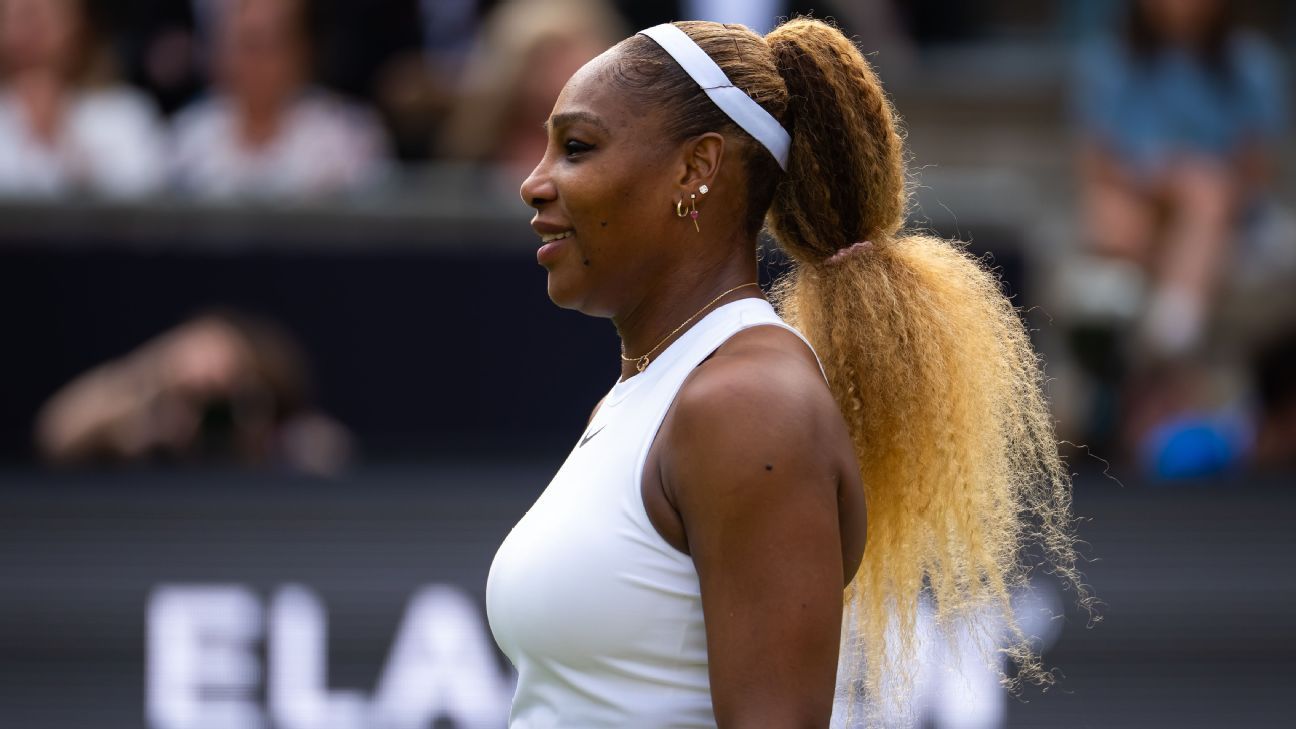
Image: courtesy of ESPN
Serena Williams' Return Cut Short by Partner's Injury, Clouding Wimbledon Plans
Serena Williams, at 44, made her highly anticipated return to professional tennis at the HSBC Championships in London, securing a decisive doubles win with partner Victoria Mboko. However, the comeback was abruptly curtailed when Mboko suffered a knee injury, forcing their withdrawal from the tournament. This unexpected setback immediately raises questions about Williams' readiness and strategy for her planned singles and doubles appearances at Wimbledon, just weeks away, and the broader trajectory of her return to elite competition after nearly four years away from the court.
Outlook
Background
Serena Williams, widely considered one of the greatest tennis players of all time, stepped away from professional tennis after the 2022 U.S. Open. Her last match was a third-round loss to Ajla Tomljanović. During her nearly four-year absence (specifically, 3 years, 9 months, and 6 days), Williams, now 44, gave birth to her second child, Adira, in August 2023, with her husband Alexis Ohanian. Her return at the Queen's Club, also known as the HSBC Championships, was her first competitive appearance since then. She partnered with Victoria Mboko, a 19-year-old Canadian rising star, for a women's doubles match. The pair defeated the third-seeded team of Erin Routliffe and Nicole Melichar-Martinez in straight sets, 7-6(2), 6-2, on Tuesday. Despite the win, Mboko sustained a left knee injury during the match, which subsequently led to their withdrawal from the tournament. Williams had previously confirmed her intention to compete in both singles and doubles at Wimbledon, which is scheduled to begin shortly after the Queen's Club event. She has publicly expressed that she has 'nothing to prove' in her comeback, a statement that suggests a more personal motivation behind her return.
See also
Precedents
High-profile tennis comebacks, especially after extended breaks or childbirth, have a mixed record. Kim Clijsters famously returned to win multiple Grand Slam titles after having a child, demonstrating that it is possible to reclaim top form. However, Clijsters was younger during her initial comeback. Other players, like Martina Hingis, also had successful returns, though often in doubles or after a shorter hiatus. The physical demands on a player in their mid-40s, after nearly four years away and having given birth, are significant. While Williams' natural talent and competitive drive are undeniable, the sport has evolved, with a new generation of powerful athletes. Historically, success in a comeback often depends on a consistent build-up of match fitness, avoiding injuries, and gradually increasing the intensity of competition. An abrupt end to a warm-up tournament, even if not due to Williams' own injury, disrupts this crucial preparation. The unpredictable nature of doubles partnerships can also be a hurdle; finding synergy and trust on court takes time, which is now compressed for Wimbledon.
Serena Williams' return is not just another tennis story; it is a global sporting event. Her presence elevates any tournament she enters, drawing immense viewership and media attention. For the sport itself, her comeback injects a narrative of legacy, perseverance, and the timeless appeal of a champion. For Williams personally, this return, particularly after having a second child, redefines what is possible for female athletes balancing family and elite competition. The unexpected withdrawal from Queen's Club, however, shifts the narrative from a triumphant re-entry to one of immediate challenge and uncertainty. It underscores the brutal realities of professional sports, where even a legend is subject to the unpredictable nature of competition and the physical toll it takes on partners. This development could impact her seeding at Wimbledon, her psychological approach, and ultimately, the public's perception of her ability to compete for major titles at this stage of her career. The market for tennis sponsorships and media rights also closely tracks her involvement, making her performance a commercial factor.
Scenarios
AnalysisThe abrupt end to Serena Williams' Queen's Club run due to her partner's injury presents several distinct paths for her Wimbledon campaign and broader comeback:
1. A Scramble for a New Doubles Partner and Limited Singles Impact: Williams may quickly secure a new, perhaps less experienced, doubles partner for Wimbledon. While she will undoubtedly compete, the lack of consistent match play and partnership synergy could lead to early exits in both doubles and singles. This outcome would highlight the challenge of re-entering elite competition after a long hiatus and at an advanced age, even for a player of her caliber. The focus would shift from winning titles to simply competing effectively.
2. A Focused Singles Push with Doubles Uncertainty: Given the limited time, Williams could prioritize her singles preparation, viewing the doubles entry as secondary or even withdrawing from it if a suitable partner isn't found or if she feels the distraction is too great. This could allow her to concentrate her energy on a deeper singles run, leveraging her power game and experience. However, a lack of match rhythm from Queen's Club could still prove a significant hurdle against younger, in-form opponents.
3. A Re-evaluation of the Comeback Timeline: The immediate setback might prompt Williams and her team to reassess the aggressive timeline of a Wimbledon return. While she has committed to playing, a pragmatic decision could see her withdraw from one or both events if she feels unprepared or if another minor issue arises. This would be a cautious approach, potentially aiming for a more gradual re-entry into the tour later in the season, allowing for more controlled preparation and less pressure.
4. Resilience Leading to a Surprise Deep Run: Despite the Queen's Club withdrawal, Williams' sheer talent, competitive fire, and Grand Slam experience could still see her make a surprisingly deep run in either singles or doubles at Wimbledon. This outcome would defy conventional wisdom about comebacks and underscore her unique athletic gifts. It would require her to quickly adapt to the grass courts, find form without extensive match play, and potentially build chemistry with a new doubles partner on the fly. This is the outcome her fans would hope for, but it remains the most speculative given the circumstances.
Timeline
2021-06-05
Last Roland Garros match before hiatus
Serena Williams' last match at the 2021 Roland Garros, where she won against Buzarnescu in R64 and Begu in R128, but lost in R32 to Collins.
2022-09-02
Last professional match before hiatus
Serena Williams played her last professional match at the 2022 U.S. Open, losing in the third round to Ajla Tomljanović 7-5, 7-6 (7-4), 6-1.
2023-08-01
Birth of second child
Serena Williams gave birth to her second daughter, Adira, in August 2023.
2026-06-09
Comeback hinted
Williams released a short teaser video and statement confirming her return to the HSBC Championships at Queen's Club.
2026-06-29
Return to tennis and doubles win
Serena Williams, 44, returned to professional tennis after 3 years, 9 months, and 6 days, partnering with Victoria Mboko at the HSBC Championships. They defeated the No. 3 seeds 7-6(2), 6-2.
2026-06-29
Partner's injury and withdrawal
Victoria Mboko injured her left knee during the match, forcing her and Williams to withdraw from the HSBC Championships, cutting short Williams' return.
Frequently Asked Questions
Serena Williams was away from professional tennis for 3 years, 9 months, and 6 days, last playing at the 2022 U.S. Open before her return on June 29, 2026.
Discussion
Be the first to share your thoughts.