
Players should anticipate a final, polished update that prioritizes stability, bug fixes, and long-term modding support rather than a surge of new, game-altering content. The developers aim to leave the game in a 'good place,' ensuring that the core engine remains robust for years to come. This transition marks the end of a decade-long cycle of constant feature additions, shifting the focus toward preservation and the empowerment of the modding community to sustain the game's life cycle.
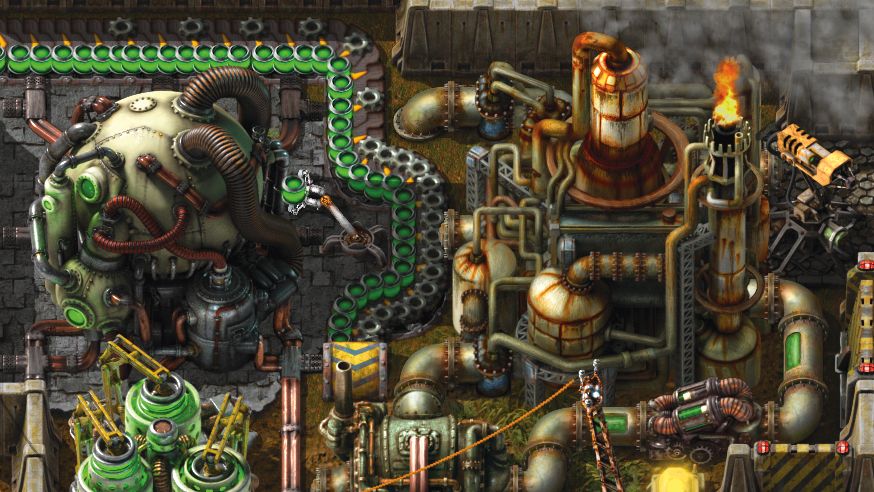
Image: courtesy of PC Gamer
The Final Blueprint: Why Factorio is Closing its Development Factory
Wube Software has announced that its genre-defining automation game, Factorio, will soon cease active development after its next major update. This rare move in the modern gaming era signals a shift from continuous live-service expansion to a finished, stable product, placing the game's future in the hands of its dedicated community.
Outlook
Background
Since its early alpha days in 2013, Factorio has set the gold standard for simulation games. Unlike modern titles that rely on subscription models or endless content treadmills to keep players engaged, Factorio has thrived on a one-time purchase model. The complexity of its mechanics means that adding too much 'feature creep' could eventually break the delicate balance that millions of players have spent thousands of hours mastering. By deciding to stop now, Wube Software is prioritizing the integrity of the game's design over the industry-standard pressure to keep a game 'live' indefinitely.
See also
Precedents
In an industry dominated by the 'games-as-a-service' model, where titles like Minecraft remain in perpetual development to stay relevant, Factorio’s choice to call it quits is a throwback to the 'Gold Master' era of the 1990s. This approach echoes the lifecycle of classic PC games that were considered complete at version 1.0 or 2.0. By choosing to step away, Wube is rejecting the fear that ending development equals abandonment, opting instead to treat the game as a finished work of digital art that stands on its own merits.
The decision challenges the prevailing economic logic that games must be infinite to be valuable. It proves that a developer can respect their audience's time and intelligence by delivering a complete experience rather than a bottomless pit of engagement hooks. Furthermore, it provides a blueprint for other independent studios, demonstrating that a loyal community can sustain a game long after the developers have moved on to new projects. This shift from 'what's next?' to 'how well does this work?' represents a maturing of the gaming industry's approach to product lifecycles.
Scenarios
Analysis1. The Community-Led Longevity Path: The game becomes a permanent fixture in the simulation genre, similar to OpenTTD, where the modding community takes over the role of maintenance, ensuring compatibility with future hardware. 2. A Strategic Studio Evolution: Wube Software successfully leverages its reputation for deep, systemic design to launch a new, highly anticipated project that avoids the 'Factorio 2' trap while applying the same high standards of polish. 3. The Stagnation Risk: The final update fails to address critical technical debt, leading to a slow migration of the player base toward newer, more actively supported competitors who promise a more modern experience.
Timeline
2013
Alpha Launch
Factorio debuts, introducing players to its unique blend of industrial automation and resource management.
2020
1.0 Release
The game officially leaves early access, cementing its status as a critical and commercial success.
2024
Space Age Expansion
A massive content drop that expands the game's scale to an interplanetary level, pushing the engine to new heights.
Future
Final Update
The concluding development milestone that marks the end of Wube Software's active gameplay updates.
Frequently Asked Questions
Not at all. The developers are framing this as a 'conclusion' to active development, not a shutdown. They are ensuring the game is stable and providing the tools for the community to keep the game alive through mods and custom scenarios.
Discussion
Be the first to share your thoughts.