
The immediate expectation is a halt in active principal photography until a new actor for Kratos is secured and brought up to speed. Filming is confirmed to resume in mid-October 2026. The need to reshoot four episodes means a substantial portion of the initial production work will be discarded and re-done, incurring significant additional costs and time. The series' release, which was previously unannounced, is now projected to be delayed into 2027. Fans can anticipate an announcement regarding the new Kratos actor in the coming months, likely before the mid-October filming resumption.
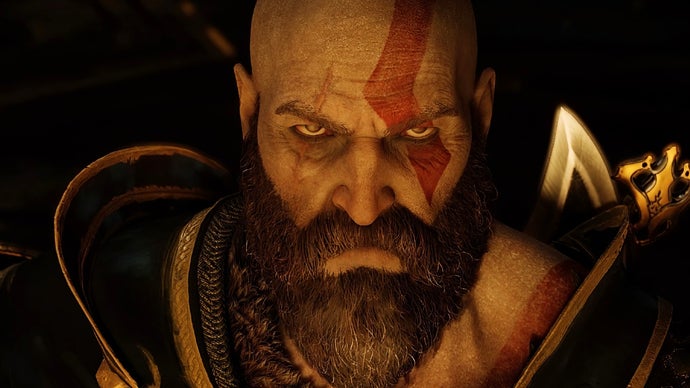
Image: courtesy of EuroGamer
Amazon's 'God of War' Series Faces Uphill Battle After Kratos Recast And Production Delays
Amazon's live-action 'God of War' TV series has hit a significant roadblock: lead actor Ryan Hurst, cast as Kratos, suffered a severe on-set injury and will be recast. This setback means four already-filmed episodes will need to be reshot, pushing the production's restart to mid-October 2026 and delaying the series' expected release into 2027. The development adds considerable pressure to an adaptation already under scrutiny, forcing Amazon to navigate creative, financial, and logistical challenges to deliver a faithful and compelling rendition of the acclaimed video game.
Outlook
Background
The Amazon Prime Video adaptation of Sony's popular 'God of War' franchise has been a highly anticipated project, aiming to translate the brutal, emotionally complex journey of Kratos and Atreus to the screen. Ryan Hurst, known for roles in 'Sons of Anarchy' and 'Remember the Titans,' was cast as the titular God of War, Kratos, with Callum Vinson as Atreus. The series had already revealed a first look at its cast in February 2026, which included Ólafur Darri Ólafsson as Thor, Mandy Patinkin as Odin, and Ed Skrein as Baldur.
This is not the first production hurdle for the series. In 2024, showrunner Rafe Judkins exited the project, with Amazon MGM later bringing on Ronald D. Moore, known for his work on 'Battlestar Galactica' and 'Star Trek Deep Space Nine,' to take the helm. The on-set injury to Hurst, reportedly a torn bicep suffered during a stunt, now forces a complete recast of the central character. The decision to reshoot four episodes indicates that a significant amount of material featuring Hurst's performance cannot be salvaged or integrated with a new actor, making this a costly and time-consuming corrective measure.
Precedents
Major recasts and production delays, while disruptive, are not unheard of in Hollywood, especially with ambitious, high-budget projects. The historical record shows a mixed bag of outcomes.
In some cases, recasts have led to critical or commercial success. For example, Don Cheadle famously replaced Terrence Howard as War Machine in the Marvel Cinematic Universe, a change that, while initially noted, did not derail the franchise. Similarly, Richard Harris's death led to Michael Gambon taking over as Dumbledore in the 'Harry Potter' series, and the films continued their immense popularity. These instances often benefit from strong existing narratives and ensemble casts that can absorb the change.
However, recasts can also signal deeper production troubles or fail to resonate with audiences. The challenges are compounded when the character is as iconic and central as Kratos, a figure deeply ingrained in the minds of millions of gamers. Fan attachment to the original casting, or even the initial visual reveals, can be intense. Early set photos of Hurst as Kratos, for instance, were reportedly 'widely mocked' online, suggesting a pre-existing sensitivity among fans regarding the portrayal. A recast, while forced by circumstance, could either be an opportunity for a reset or further inflame skepticism.
Delays, particularly those involving reshoots, invariably drive up costs and can create scheduling conflicts for other cast and crew members. The longer a project is in limbo, the more expensive it becomes, and the harder it is to maintain creative momentum. The 'God of War' series now enters a lineage of productions that faced significant early turbulence, with its ultimate fate hinging on Amazon's ability to swiftly and effectively manage this unexpected crisis.
The recasting of Kratos and the subsequent production delays represent more than just a scheduling hiccup; they are a significant test for Amazon Prime Video's strategy in adapting major video game intellectual property. The 'God of War' series is a tentpole project, designed to attract a massive global audience and bolster Amazon's streaming catalog with a proven, high-value franchise.
First, there are the substantial financial implications. Reshooting four episodes will add millions of dollars to an already expensive production budget. This kind of unexpected cost can strain resources and potentially impact other projects in Amazon's pipeline. Second, the creative continuity is at stake. The initial vision for Kratos, as embodied by Hurst, will now be replaced, requiring the new actor to seamlessly step into a role that has already been partially developed and filmed. This demands exceptional skill from both the new actor and the production team to ensure a consistent character portrayal and narrative flow.
Finally, and perhaps most critically, are the fan expectations. 'God of War' has a fiercely loyal fanbase that holds strong opinions about the characters and lore. The initial casting of Hurst, and the subsequent online reaction, already highlighted this sensitivity. The recast offers a chance to either win over skeptics or alienate them further. Amazon's handling of this situation will be closely watched, not just by 'God of War' fans, but by the wider industry as a case study in managing high-stakes adaptations.
Scenarios
Analysis1. Successful Recovery and Strong Debut: Amazon could leverage this setback as an opportunity for a creative reset. A new Kratos actor, if chosen carefully and given the necessary time and support, might deliver a performance that resonates more strongly with the fanbase and the creative vision. With Ronald D. Moore at the helm, the production team may be able to integrate the new actor's performance seamlessly, making the reshoots a non-issue in the final product. The extended production time could allow for further refinement, leading to a critically acclaimed and commercially successful series when it eventually launches in 2027 or beyond.
2. Compounded Challenges and Mixed Reception: The delays and reshoots could exacerbate existing production challenges, leading to budget overruns and potential creative compromises. Finding a suitable replacement for an iconic character like Kratos is difficult, and the new actor might struggle to capture the essence of the role or integrate smoothly into a partially-filmed series. This could result in a fragmented viewing experience, a lukewarm reception from critics, and a divided fanbase, ultimately undermining Amazon's significant investment in the 'God of War' IP. Further delays beyond 2027 are also possible if the recasting or subsequent filming encounters additional hurdles.
Timeline
2024
Showrunner Change
Rafe Judkins exits the 'God of War' TV series project as showrunner, with Ronald D. Moore ('Battlestar Galactica') later taking over.
February 2026
First Look Revealed
Amazon releases a first look at the cast, confirming Ryan Hurst as Kratos and Callum Vinson as Atreus, alongside other key actors.
July 17, 2026
Kratos Actor Injury and Recast Announced
News breaks that Ryan Hurst, portraying Kratos, suffered a severe on-set injury (reportedly a torn bicep during a stunt) and will be recast. Four already-filmed episodes will require reshooting.
Mid-October 2026
Filming Expected to Resume
Production is slated to restart in mid-October 2026, after a new Kratos actor is cast and prepared.
2027
Anticipated Release Delay
The series' release, which had no confirmed date, is now expected to be pushed back into 2027 due to the production delays and reshoots.
Frequently Asked Questions
Ryan Hurst, known for his roles in 'Sons of Anarchy' and 'Remember the Titans,' was originally cast to play Kratos.
Discussion
Be the first to share your thoughts.