Veridact
TechSportsFinanceGaming🎯 Predictions⭐ OpportunitiesAbout
Sign InSign Up
Veridact

Analysis before the headline. Veridact examines technology, finance, sports, and gaming events before they unfold through forecasting, probability modeling, historical precedent, and public prediction tracking.

Stay ahead of what's next

Forecasts, analysis, and prediction updates delivered to your inbox.

Coverage

  • Tech
  • Sports
  • Finance
  • Gaming

Company

  • About Us
  • Privacy Policy

© 2026 Veridact. Forecasting & analysis platform.

Content may include AI-assisted research and analysis. Predictions and opinions should not be considered financial, legal, medical, or investment advice.

gaming
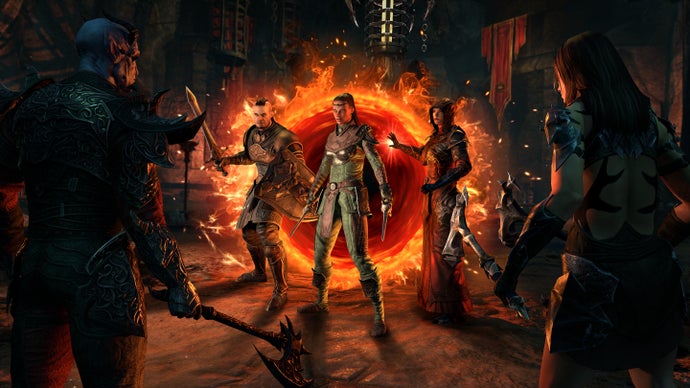
Zenimax Online Studios leadership included in widespread Xbox job cuts, as concerns around Elder Scrolls Online's longevity persist

Image: courtesy of EuroGamer

gamingJuly 17, 2026By Veridact EditorialUpdated Jul 17

Xbox's Deep Cuts at ZeniMax Online Studios Signal a Shifting Future for The Elder Scrolls Online

In mid-July 2026, ZeniMax Online Studios, the developer behind *The Elder Scrolls Online* (ESO), faced significant leadership and staff reductions as part of broader Xbox job cuts. These changes, which included the departure of studio head Jo Burba and the appointment of Josh Henderson and Nick Giacomini, come amidst a strategic shift from large expansions to seasonal content for ESO. The repeated layoffs and internal sentiment of a 'graveyard' raise questions about the long-term health and strategic direction for one of Xbox's key live-service titles.

Outlook

The immediate aftermath of the July 2026 layoffs at ZeniMax Online Studios points to a period of adjustment and uncertainty for The Elder Scrolls Online. Players should expect a continued focus on the announced seasonal update model, which replaces the previous rhythm of large annual expansions. This shift was confirmed by ZeniMax Online Studios in a post on the game's forums, acknowledging that 'the roadmaps we previously shared will be shifting.'

New leadership, with Josh Henderson and Nick Giacomini stepping into key roles, will now be tasked with steering the studio through these operational changes while maintaining development momentum. The studio has publicly expressed 'tremendous confidence' in ESO's future. However, the scale of the cuts, reportedly impacting up to half of the development team and including multiple leadership figures, suggests a leaner operation moving forward. This could translate into adjustments in content scope, development timelines, or the frequency of new features as the team recalibrates.

Background

The layoffs at ZeniMax Online Studios (ZOS) in mid-July 2026 were part of a wider restructuring effort across Microsoft's Xbox division. Maryland officials were notified of 379 gaming job cuts across ZeniMax Media Inc., which encompasses Bethesda Game Studios and central publishing operations, and ZOS. More than 200 of these positions were eliminated at ZOS alone, marking this as at least the second major round of layoffs the studio has endured under Microsoft's ownership within the last year.

Among those affected were key figures in ZOS leadership, including studio head Jo Burba. This follows the resignation of former ZOS boss Matt Firor last summer, which also occurred in the wake of previous sweeping Microsoft layoffs. The leadership vacuum created by Burba's departure has since been filled, with Josh Henderson and Nick Giacomini reportedly taking over leadership roles at the studio.

The timing and depth of these cuts have sent ripples through the Elder Scrolls Online community and the broader gaming industry. Developers within ZeniMax have described the situation as 'brutal,' with one staff member stating it felt like 'looking at a graveyard.' There is a palpable sense that Xbox leadership is 'disconnected' from the day-to-day realities of game production, as expressed by affected employees.

In conjunction with these personnel changes, the development strategy for The Elder Scrolls Online has been explicitly altered. The studio is moving away from its long-standing model of major annual expansions, instead opting for a cadence of seasonal updates. While ZOS has affirmed its commitment to the game, this strategic pivot, combined with significant staff reductions, raises questions about the scope and ambition of future content.

Precedents

Microsoft's history with acquired studios, particularly in the gaming sector, often follows a pattern of initial integration followed by periods of restructuring and rationalization. Since its acquisition of ZeniMax Media in 2021 for $7.5 billion, Microsoft has absorbed a diverse portfolio of studios, each with its own culture and operational rhythm. The current wave of layoffs at ZeniMax Online Studios, and indeed across the broader Xbox ecosystem, is not an isolated event but rather a continuation of a trend seen across the industry and within Microsoft itself.

Large tech companies, including Microsoft, frequently undertake periodic workforce reductions, often citing efficiency gains, strategic realignments, or a need to optimize resources in response to market conditions. The gaming industry, in particular, has seen a challenging period of job cuts in 2023 and 2024, driven by factors like post-pandemic market corrections, rising development costs, and shifts in consumer spending habits. Studios acquired by larger entities like Microsoft often face increased scrutiny on profitability and operational efficiency, sometimes leading to consolidation or downsizing if a project or studio doesn't align with evolving corporate goals.

The shift in The Elder Scrolls Online's content strategy from large expansions to seasonal updates also reflects a broader trend in the live-service game market. Many successful live-service titles, from Fortnite to Destiny 2, rely on a consistent flow of smaller, more frequent content drops to maintain player engagement rather than relying solely on large, infrequent paid expansions. This model can be more cost-effective to produce over time, allows for quicker iteration based on player feedback, and can potentially extend the long-term viability of a game by keeping its community active. However, it also requires a highly agile development team and a clear vision to avoid content fatigue or a perception of reduced value.

The deep cuts at ZeniMax Online Studios and the subsequent leadership changes carry significant weight, not just for the studio and its employees, but for the millions of players invested in The Elder Scrolls Online and for Xbox's broader strategy in the live-service gaming market. ESO is one of the most successful and long-running massively multiplayer online (MMO) games within the Xbox portfolio, representing a consistent revenue stream and a dedicated player base. Any disruption to its development or leadership structure directly impacts its ability to deliver new content and retain that audience.

For Xbox, these decisions highlight the ongoing challenge of integrating acquired studios and optimizing their operations. The repeated rounds of layoffs, particularly impacting leadership, suggest a difficult period of adjustment and potentially a re-evaluation of how these studios fit into the larger corporate structure. It raises questions about Microsoft's commitment to specific titles and its ability to foster stable, creative environments within its vast gaming empire. The sentiment from developers about feeling 'disconnected' from leadership signals potential morale issues that could affect future output and talent retention.

For players, the shift from expansions to seasonal updates could alter the very nature of their engagement with ESO. While seasonal content can keep a game fresh, it often comes with a different scope and narrative depth than full expansions. The concern is whether the reduced team size can deliver seasonal content that maintains the quality and ambition players have come to expect, or if it will lead to a perceived 'thinning' of content. The long-term viability of a live-service game hinges on continuous, engaging content, and significant operational changes like these can either revitalize or undermine that delicate balance.

Scenarios

Analysis

The situation at ZeniMax Online Studios could evolve in several ways, each with distinct implications for The Elder Scrolls Online and Xbox's live-service strategy.

One possible outcome is that the new leadership, Josh Henderson and Nick Giacomini, successfully navigates the transition to a seasonal update model with a leaner team. This could lead to a more efficient development pipeline, potentially allowing ZOS to deliver consistent, high-quality seasonal content that keeps the player base engaged. If this strategy proves successful, it could serve as a blueprint for other live-service titles within the Xbox ecosystem, demonstrating how to maintain profitability and player interest with a streamlined operational structure. The studio's commitment, despite the cuts, could translate into a renewed focus on core gameplay loops and community features, potentially attracting new players and retaining existing ones.

Conversely, the significant reduction in staff, combined with the leadership changes and the shift in content strategy, could lead to a period of instability and reduced content quality. A smaller team may struggle to maintain the previous pace and scope of updates, potentially resulting in less ambitious seasonal content, longer gaps between releases, or a decline in technical polish. This could erode player confidence, leading to a decrease in subscriber numbers and overall engagement, particularly if the game struggles to compete with other live-service titles. The departure of experienced developers and leaders might also impact the institutional knowledge and creative vision necessary for a long-running MMO, making it harder to innovate and address player feedback effectively.

Another scenario involves ZeniMax Online Studios focusing more intensely on monetization within the seasonal update model to offset reduced development costs. This could manifest as more aggressive battle passes, cosmetic items, or other in-game purchases. While common in live-service games, an over-reliance on monetization without a commensurate increase in perceived content value could alienate players and further accelerate churn. The challenge for ZOS will be to find a balance that supports the game's financial health without sacrificing the player experience.

Finally, these changes could be a precursor to a broader strategic re-evaluation of The Elder Scrolls Online's role within the Xbox portfolio. If the game's performance falters post-restructuring, Microsoft might choose to reduce its investment further, or even consider transitioning it into a maintenance mode with minimal new content. This is a speculative outcome, as ZOS has affirmed its commitment to the game, but it remains a possibility given the aggressive cost-cutting measures and the competitive nature of the MMO market. The ultimate trajectory will depend heavily on player reception to the new content strategy and the ability of the reconstituted ZOS team to execute effectively.

Timeline

2025 Summer
Former Studio Head Resigns
Matt Firor, the former boss of ZeniMax Online Studios, resigned following an earlier round of sweeping Microsoft layoffs.
2026 July 6
Initial Reports of Xbox Layoffs Emerge
Details began to surface regarding widespread job cuts across Xbox's gaming division, impacting multiple studios.
2026 July 6
Zenimax Online Studios Cuts Reported as 'Brutal'
Reports indicated 'brutal' cuts at ZeniMax Online Studios, with suggestions that up to half of *The Elder Scrolls Online*'s development team could be affected.
2026 July 16
ZeniMax Online Studios Leadership Included in Cuts
Studio head Jo Burba was confirmed to be among the ZeniMax Online Studios leadership laid off, part of 379 total gaming jobs cut across ZeniMax in Maryland.
2026 July 16
New Leadership Appointed and Strategy Shift Confirmed
Josh Henderson and Nick Giacomini took over leadership roles at ZeniMax Online Studios. The studio also confirmed a shift from large expansions to seasonal updates for *The Elder Scrolls Online*, stating previous roadmaps would change.

Frequently Asked Questions

The layoffs at ZeniMax Online Studios were part of a broader, widespread restructuring effort across Microsoft's Xbox division. While specific internal reasons are not detailed, such corporate actions are typically driven by cost optimization, strategic realignment, and efficiency gains in response to market conditions or internal performance metrics.

Discussion

0/100
0/1000

Be the first to share your thoughts.

Related Coverage

gaming

Amazon's 'God of War' Series Faces Uphill Battle After Kratos Recast And Production Delays

Jul 18
gaming

Battlefield 6 Overhauls Gunplay, Chasing the Elusive Feel of Battlefield 4

Jul 17
gaming

Battlefield 6's Post-Launch Strategy: Two-Seater Jets Return Alongside Top Gun Tease

Jul 16
gaming

Mexico's Antitrust Challenge: A Precedent for the Digital-Only Future of PlayStation?

Jul 15

Stay ahead of the story

AI analysis delivered before events unfold. No spam.

ⓘ

Methodology: Veridact combines public data, historical precedent, and analytical models to evaluate the likelihood of future outcomes.