
Samsung's Galaxy Unpacked event on Wednesday in London served as more than just a product showcase; it was a clear articulation of the company's strategic priorities for the coming years. Expect Samsung to double down on its premium branding for foldables, particularly with the Z Fold8 Ultra, aiming to capture a segment of the market willing to pay a significant premium for cutting-edge features. This means a continued focus on camera technology, display innovations, and robust build quality to justify the higher price points. Simultaneously, the introduction of AI-powered smart glasses signals a long-term play in the emerging category of ambient computing. While initial adoption for such eyewear may be slow, Samsung is positioning itself to be a key player as the technology matures, integrating these devices deeply into its existing Galaxy ecosystem. Expect a sustained marketing push emphasising the seamless connectivity and AI capabilities across its device portfolio.
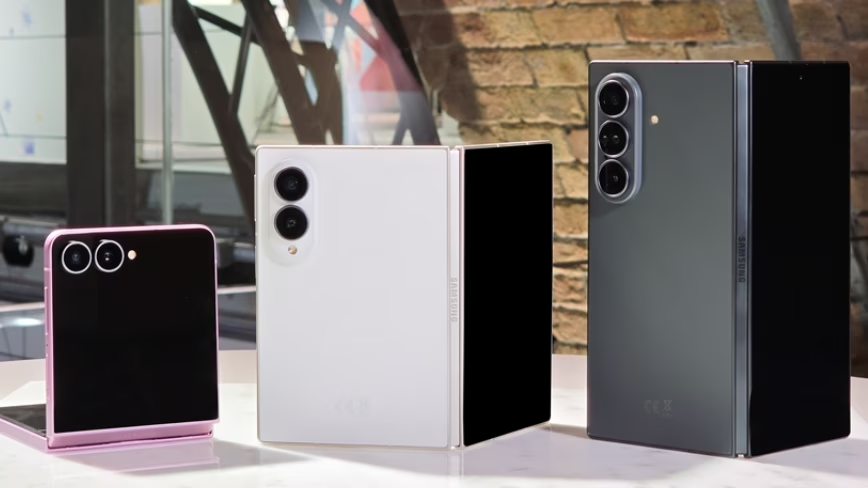
Image: courtesy of Thenextweb
Samsung's Dual Bet: Ultra-Premium Foldables and AI Eyewear Chart a New Course
Samsung unveiled its latest lineup of foldable smartphones, including the high-end Galaxy Z Fold8 Ultra, alongside its first AI-powered smart glasses at the Galaxy Unpacked event in London on Wednesday. The move signals a dual strategy: pushing the boundaries of premium smartphone technology while venturing into the nascent, yet potentially transformative, market for intelligent wearables. With a 200-megapixel camera and a starting price of $1,850, the Z Fold8 Ultra positions itself as a luxury device in an increasingly competitive foldable segment. Simultaneously, the introduction of AI-integrated eyewear suggests Samsung's ambition to weave artificial intelligence more deeply into daily consumer interactions, extending the reach of its Galaxy ecosystem beyond conventional mobile devices. The new products are set to launch on August 7, 2026.
Outlook
Background
The technology industry has been searching for the 'next big thing' beyond the traditional smartphone for years. Foldable phones, while still a niche category, represent one of the most significant form factor innovations in mobile devices. Samsung has been a pioneer in this space, consistently iterating on its Z Fold and Z Flip series. The launch of the Z Fold8 Ultra, with its top-tier specifications like a 200-megapixel main camera and a 5,000 mAh battery, and a starting price of $1,850, indicates Samsung's intent to cement its leadership in the premium foldable segment. This pricing strategy places the Ultra model firmly in the luxury electronics bracket, appealing to early adopters and users seeking the absolute best in mobile innovation. The Z Fold8 also introduces a wider design, addressing a common user feedback point for previous generations.
More consequentially, the unveiling of Samsung's first AI-powered smart glasses marks a significant expansion of its hardware ambitions. This move places Samsung in a direct, albeit early, competition with other tech giants exploring similar 'intelligent eyewear' concepts. The core idea behind these glasses is to integrate AI capabilities directly into a wearable form factor, allowing for more natural and proactive interactions with digital information and services. This aligns with Samsung's stated goal of making artificial intelligence a more seamless and proactive part of consumers' daily lives, extending the reach of the Galaxy ecosystem beyond smartphones, tablets, and watches.
See also
Precedents
Samsung's strategy of launching a higher-tier 'Ultra' model within its flagship lines is a well-established pattern, seen previously with its Galaxy S series. The 'Ultra' designation historically comes with enhanced camera capabilities, larger batteries, and a higher price point, designed to appeal to users who demand the absolute best specifications and are less price-sensitive. This approach has allowed Samsung to capture a significant share of the premium smartphone market, even as overall smartphone sales have matured.
In the realm of new device categories, Samsung has a history of both pioneering and patiently iterating. Its early forays into smartwatches and even larger-screen phones (the original 'phablets') faced initial skepticism but eventually carved out significant market share. However, the smart eyewear market has proven to be a particularly challenging one for the industry as a whole. Previous attempts by various companies to launch smart glasses have often struggled with consumer adoption due to concerns over privacy, design aesthetics, battery life, and a clear 'killer app.' Google Glass, for example, faced significant headwinds in the early 2010s. For Samsung, entering this space now, with a clear emphasis on 'AI-powered' features, suggests a belief that advancements in artificial intelligence and miniaturization may finally unlock the potential for a more compelling and socially acceptable smart eyewear experience. The success of such products often hinges on practical utility, seamless integration, and overcoming privacy perceptions, rather than just raw technological capability.
The decisions Samsung made at Galaxy Unpacked carry significant implications for its competitive standing and the broader technology market. The introduction of the Z Fold8 Ultra reinforces Samsung's commitment to leading the foldable phone segment, a crucial area for growth and differentiation in a saturated smartphone market. By pushing the price and feature set higher, Samsung aims to capture maximum value from early adopters and establish foldables as a true premium category, rather than a niche experiment. This puts pressure on rivals like Google, Xiaomi, and Huawei to match or exceed Samsung's innovations in both hardware and pricing.
However, the more consequential play is the AI-powered smart glasses. This is not merely an incremental update; it is an expansion into a new, unproven device category that could redefine how people interact with technology. If Samsung can successfully integrate AI capabilities into a wearable form factor that offers genuine utility and overcomes consumer hesitations, it could open up a significant new revenue stream and solidify its position as an innovator beyond traditional mobile. The success or failure of these glasses could influence whether other major tech players accelerate or pull back their own smart eyewear initiatives. This represents a long-term strategic move by Samsung to diversify its hardware portfolio and ensure its relevance in a future where computing may become more ambient and less screen-centric. For consumers, it means a potential glimpse into a more integrated, AI-driven daily life, but also raises questions about data privacy and the social implications of always-on wearable technology.
Scenarios
AnalysisOne potential outcome is that the Galaxy Z Fold8 Ultra successfully carves out a new ultra-premium tier within the foldable market. Its advanced camera and robust battery, combined with the wider design of the Z Fold8, could attract a segment of high-end consumers and further solidify Samsung's market leadership in foldables. This could lead to increased average selling prices for Samsung's mobile division, even if overall unit sales for foldables remain smaller than traditional smartphones.
Conversely, the high price point of $1,850 for the Z Fold8 Ultra could limit its appeal, even within the premium segment. While the specifications are impressive, the market for such expensive devices is finite, and competition from other premium flagships (both foldable and traditional) remains intense. If the perceived value does not align with the cost, sales could underperform, potentially forcing Samsung to reconsider its pricing strategy for future 'Ultra' foldable models.
For the AI-powered smart glasses, a significant outcome could be a gradual but steady adoption, driven by specific use cases where AI assistance provides clear, tangible benefits. If Samsung can deliver compelling software features and seamless integration with its Galaxy ecosystem, these glasses could become a valuable accessory for productivity, navigation, or hands-free communication, slowly building a new market for ambient computing devices. This would position Samsung as a leader in a potentially transformative category.
However, the smart eyewear market has historically been challenging. Consumer privacy concerns, ergonomic issues, and the lack of a clear 'must-have' application could hinder widespread adoption of Samsung's AI glasses. If the initial reception is lukewarm, Samsung may need to invest heavily in educating consumers, refining the product design, and developing more compelling software experiences, potentially leading to a slower return on investment for this new product line.
Timeline
Frequently Asked Questions
Discussion
Be the first to share your thoughts.