
Veridact
TechSportsFinanceGaming🎯 PredictionsAbout
Sign InSign Up
Veridact

AI-powered anticipation analysis. We cover tech, sports, finance, and gaming events before they happen — with historical context, scenario modeling, and evolving coverage.

Stay ahead of the story

Analysis delivered before events unfold.

Coverage

  • Tech
  • Sports
  • Finance
  • Gaming

Company

  • About Us
  • Privacy Policy

© 2026 Veridact. AI-assisted analysis platform.

Analysis is AI-generated and not professional financial, legal, or medical advice.

Tech
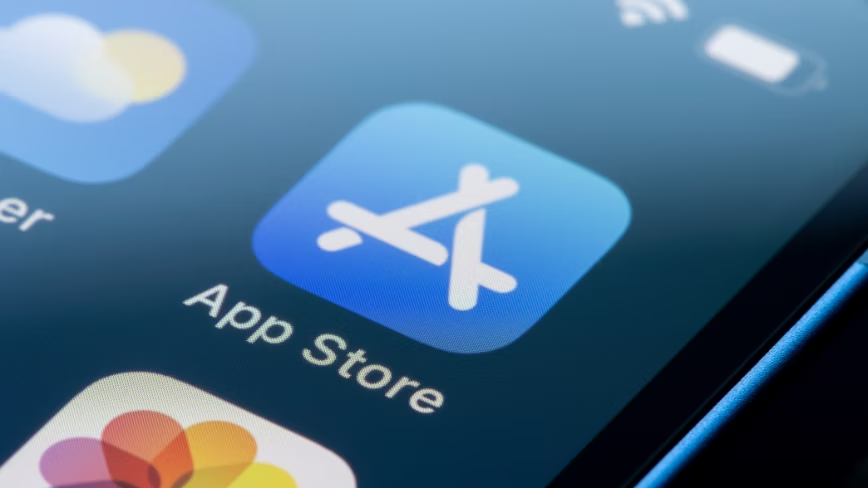
Apple opens iOS to rival app stores in Brazil after antitrust settlement with CADE

Image: courtesy of Thenextweb

techJune 19, 2026By Veridact EditorialUpdated Jun 19

Apple Opens iOS to Rival App Stores and Payments in Brazil After Antitrust Settlement

Apple has begun allowing alternative app stores and third-party payment methods on iOS devices in Brazil, following a December 2025 antitrust settlement with the country's competition regulator, CADE. The changes, which took effect in early 2026 with iOS 26.5, largely mirror the concessions Apple made in the European Union under the Digital Markets Act. This move represents a significant shift in Apple's long-standing policy of maintaining a closed ecosystem, driven by regulatory pressure in a major global market.

What to Expect

Brazilian iPhone and iPad users will now find a more open digital environment. Developers can distribute their applications through alternative app marketplaces, rather than being restricted solely to Apple's App Store. This means new app stores, potentially offering different selections or pricing models, can emerge. Crucially, developers are also permitted to use third-party payment processors for in-app purchases, or even direct users to external websites to complete transactions, bypassing Apple's own payment system.

Apple has confirmed that these changes are accompanied by new fee structures. While the specifics were not fully detailed in the immediate announcement, similar regulatory changes in other regions have seen Apple introduce a 'core technology fee' for apps distributed outside its own store, alongside reduced commissions for external payment processing. This indicates that while developers gain more freedom, Apple still intends to capture a portion of the revenue generated within its ecosystem, albeit through different mechanisms. The agreement with CADE is set to last three years, which suggests a period of monitoring and potential adjustments as the new market dynamics unfold.

Key Context

The path to this settlement began in 2022 when MercadoLibre, a major Latin American e-commerce and fintech company, filed a complaint with Brazil's Administrative Council for Economic Defense (CADE). MercadoLibre argued that Apple's strict control over its App Store and payment systems stifled competition and innovation, particularly for services like its own Mercado Pago. This initiated a three-year antitrust investigation by the Brazilian regulator.

In July 2025, CADE's General Superintendence formally recommended that Apple be convicted of antitrust violations. Faced with a potential adverse ruling, Apple entered into a Termo de Compromisso de Cessação (TCC), or cease-and-desist agreement, with CADE on December 29, 2025. This agreement compelled Apple to implement the changes, with a deadline of 105 days from the approval date, meaning they were active by early April 2026.

The regulatory pressure in Brazil is not an isolated incident. Regulators worldwide have increasingly scrutinised the market power of tech giants like Apple. The European Union's Digital Markets Act (DMA), which came into full effect in March 2024, imposed similar requirements on Apple to open its iOS ecosystem to alternative app stores and payment systems. CADE Commissioner Victor Fernandes explicitly stated that the Brazilian proposal aligns with these broader international efforts to introduce more competition into Apple's mobile ecosystem.

Related Coverage

Why Apple Might Put Cameras Into Its Next AirPods→Apple destroyed the mid-tier watch market. Now it’s coming for the $200 billion eyewear industry.→Apple is building a bill-splitting feature that photographs receipts and assigns items to friends→

Historical Patterns

Apple has historically maintained one of the most tightly controlled digital ecosystems in the tech industry. For years, the company has argued that its 'walled garden' approach is essential for user security, privacy, and a consistent user experience. This philosophy has meant that all apps on iOS devices had to be distributed through the App Store, and nearly all in-app purchases were processed using Apple's payment system, subject to a commission that typically ranged from 15% to 30%.

This model has been immensely profitable for Apple, generating billions in revenue from its Services division. However, it has also placed Apple at the center of numerous antitrust complaints and lawsuits globally. High-profile cases, such as the legal battle with Epic Games over Fortnite, have challenged the legality of Apple's App Store policies, albeit with mixed results in different jurisdictions. Regulators in South Korea, the Netherlands, and Japan have also pushed for changes to Apple's payment policies, often forcing the company to allow alternative payment methods in specific contexts or app categories.

The settlement in Brazil, following closely on the heels of the DMA in Europe, indicates a clear pattern: the era of Apple's absolute control over its iOS ecosystem is gradually eroding under concerted international regulatory pressure. While Apple has consistently pushed back against these changes, citing security and user experience concerns, the growing number of countries demanding openness suggests a systemic shift in how platform owners are expected to operate.

This settlement holds significant implications, extending beyond Brazil's borders. For Apple, it represents another crack in its highly lucrative 'walled garden.' While Brazil is not the largest market globally, it is substantial, and the precedent set here could embolden regulators in other countries to pursue similar actions. Any erosion of Apple's commission-based revenue model, even if partially offset by new fee structures, could impact its Services growth, a key driver of its valuation in recent years.

For developers, particularly smaller ones and those in Brazil, this opens up new avenues for distribution and potentially more favorable economic terms. They might be able to reach users without paying Apple's traditional commission, or they could experiment with different pricing strategies through third-party payment processors. This could foster greater innovation and competition within the Brazilian app market, as new services and business models become viable.

Consumers in Brazil stand to gain from increased choice and potentially lower prices. With more app stores and payment options, developers might pass on savings from reduced fees, or competition could drive down app and in-app purchase costs. However, there are also questions about potential fragmentation of the user experience and whether the security and privacy protections, often cited by Apple as reasons for its closed system, will be maintained across alternative platforms.

Ultimately, this is a test case. How the market evolves in Brazil, how developers adapt, and how Apple manages its new fee structures will be closely watched by regulators, developers, and consumers in other parts of the world. It signals a potential future where digital platforms face increasing mandates to foster competition, rather than simply dominating it.

Potential Outcomes

Analysis

1. Increased Competition and Innovation in Brazil: The most direct outcome could be a surge in new app stores and diverse payment solutions within Brazil. This might lead to lower prices for consumers and greater revenue retention for developers, fostering a more dynamic local app economy. New Brazilian-specific apps and services, previously hindered by Apple's fees, could find a viable path to market. This would validate CADE's intervention and potentially serve as a model for other emerging markets.

2. Limited Real-World Impact Due to New Fee Structures: Apple's new fee models, such as core technology fees or reduced commissions, could still make it economically challenging for many developers to fully bypass the App Store's revenue share. If the new fees are perceived as too high, or if the operational complexities of managing multiple distribution channels outweigh the benefits, developers might continue to rely primarily on Apple's App Store. This would mean that while the option for alternatives exists, their practical adoption remains limited, leading to calls for further regulatory adjustments.

3. Global Ripple Effect and Intensified Regulatory Pressure: The Brazilian settlement, combined with the EU's DMA, could accelerate similar antitrust investigations and regulatory actions in other countries, particularly in regions where Apple holds significant market share. This could force Apple to adopt a more globally consistent, open approach to its iOS ecosystem, moving away from a country-by-country adaptation strategy. Such a scenario would represent a fundamental shift in the economics and operational model of major digital platforms, with long-term consequences for Apple's Services revenue and overall business strategy.

Timeline

2022
MercadoLibre Files Complaint
MercadoLibre initiates an antitrust complaint with Brazil's Administrative Council for Economic Defense (CADE), alleging Apple's App Store policies stifle competition.
2025-07
CADE Recommendation
CADE's General Superintendence formally recommends convicting Apple of antitrust violations after a three-year investigation.
2025-12-23
CADE Approves Settlement
Brazil's Administrative Council for Economic Defense (CADE) approves Apple's proposed settlement agreement.
2025-12-29
Agreement Signed
Apple enters into a Termo de Compromisso de Cessação (TCC), or cease-and-desist agreement, with CADE.
2026-04
Changes Take Effect
Apple implements the required changes, allowing alternative app stores and third-party payment methods on iOS in Brazil, with iOS 26.5.

Frequently Asked Questions

iPhone and iPad users in Brazil can now download apps from alternative app stores, not just Apple's App Store. Developers can also offer alternative ways to pay for in-app purchases, potentially outside of Apple's own payment system.

Discussion

0/100
0/1000

Be the first to share your thoughts.

Related Coverage

tech

Pentagon Reviews Secret Chinese Stakes in SpaceX as National Security Fears Mount

Jun 19
tech

Google Confirms Android Developer Verification Timeline, Signaling a More Controlled App Ecosystem

Jun 19
tech

Ford Shifts $2 Billion Kentucky Plant From EVs To AI Data Center Power

Jun 19
tech

Moderna's mRNA Flu Shot Nears Approval After Unanimous FDA Advisory Vote

Jun 19

Stay ahead of the story

AI analysis delivered before events unfold. No spam.

ⓘ

Disclosure: This article contains AI-assisted analysis based on publicly available information.