
The chaotic scenes from the New York Knicks' championship parade, particularly the near-arrest of player Tyler Kolek, are likely to prompt a re-evaluation of security protocols for major public events in New York City. City officials and the NYPD will face scrutiny over how a heavily policed celebration could still result in dozens of arrests and officer injuries. There may be discussions about improving communication and identification measures for participants in future parades to prevent similar incidents. For the Knicks organization, the incident could serve as a unique, albeit challenging, anecdote from their historic win.
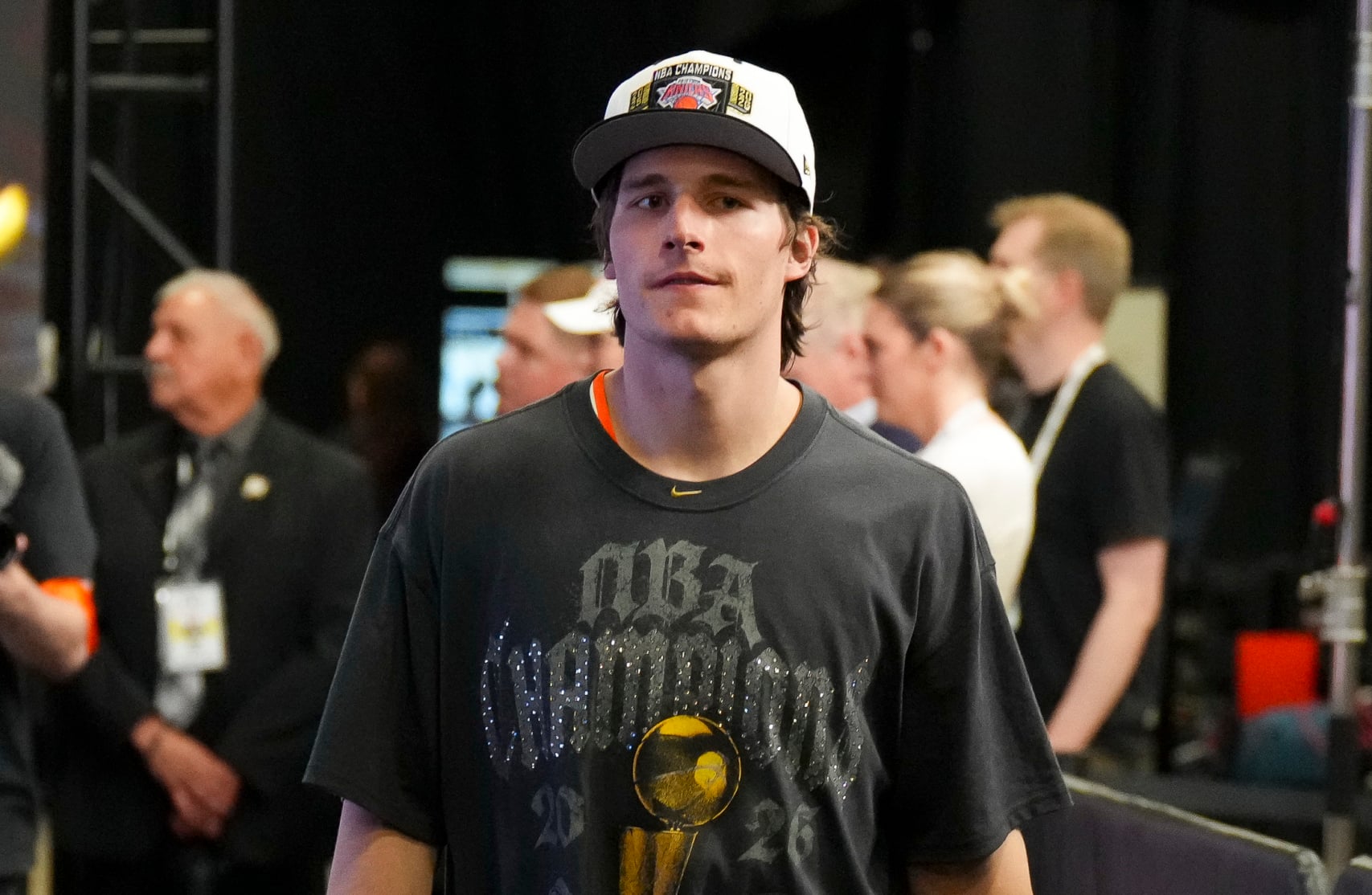
Image: courtesy of Sportsnaut
Knicks' Championship Parade Marred By Chaos, Player's Near-Arrest
New York City's celebration of the Knicks' NBA championship on June 18, 2026, devolved into widespread disorder, leading to 63 arrests and injuries to 10 NYPD officers. Amidst the chaos, Knicks player Tyler Kolek was nearly arrested by officers who mistook him for a fan, highlighting the challenges of managing large-scale public events and the disconnect that can emerge between security forces and the very participants they are meant to protect.
Outlook
Background
The New York Knicks secured the NBA Championship on June 18, 2026, marking a significant moment for the city and its long-suffering fanbase. The victory triggered immediate, fervent celebrations across New York City, culminating in a large-scale parade. The NYPD had already anticipated potential crowd control issues, having increased its presence around Madison Square Garden days earlier after unruly fan behavior following the team's Game 4 victory. Reports from that earlier celebration noted 56 arrests. Even after Game 2, 17 arrests and one officer injury were recorded. This history set a tense backdrop for the championship parade, where thousands of fans gathered to see their team. The parade itself featured classic cars and double-decker buses carrying the players, including Mayor Zohran Mamdani who was seen celebrating with Karl-Anthony Towns.
See also
Precedents
Large-scale public celebrations, especially those involving sports championships, frequently test the limits of urban crowd control. Cities like Boston, Los Angeles, and Philadelphia have seen similar patterns of jubilant fan gatherings escalating into property damage, arrests, and confrontations with law enforcement. The underlying tension often arises from the sheer volume of people, the emotional intensity of the moment, and the consumption of alcohol, which can combine to overwhelm even well-planned security measures. New York City, with its dense population and history of passionate sports fans, is particularly susceptible to these dynamics. Previous Knicks celebrations, even for playoff wins, have shown a tendency towards disorder, indicating a recurring challenge for city authorities in managing these events.
The incident involving Tyler Kolek, while seemingly minor, points to a broader systemic issue in managing high-profile public celebrations. The fact that a participating player could be mistaken for a disruptive fan underscores a failure in operational communication or recognition protocols within the security apparatus. This isn't just about one player's inconvenience; it raises questions about the efficiency and preparedness of the NYPD's crowd control strategy, especially given the significant resources dedicated to the event. With 63 arrests and 10 officers injured, the cost, both human and financial, of such disorder is substantial. For New York City, a global hub for public events, these incidents serve as a critical reminder of the complexities involved in balancing public celebration with public safety, and the institutional limitations that can emerge even with extensive planning. It also affects the public perception of both the team's victory and the city's ability to host such events safely.
Scenarios
AnalysisOne immediate outcome is that the New York Police Department will likely face pressure to review and potentially revise its security protocols for large-scale public events. This could include new training modules for officers on identifying key personnel, or improved coordination with event organizers to provide clear identification for participants.
Another potential outcome is a public discussion about the culture of sports celebrations in New York City. The repeated instances of unruly behavior, even for earlier playoff victories, might lead to calls for stricter enforcement or more proactive messaging from the city and team organizations to encourage responsible fan conduct.
For the Knicks, the incident may become a peculiar part of their championship lore, a story that highlights the intense, sometimes chaotic, nature of winning in New York. While not directly impacting the team's performance, it could shape how the organization engages with future public appearances and security planning.
Timeline
2026-06-12
Knicks Win Game 2 of NBA Finals
Celebrations in New York City lead to 17 arrests and one NYPD officer injury, signaling early crowd control challenges.
2026-06-16
Knicks Win Game 4 of NBA Finals
Unruly fan behavior outside Madison Square Garden results in 56 arrests. The NYPD announces an increased presence for future celebrations.
2026-06-18
Knicks Win NBA Championship
The Knicks secure the NBA title, triggering city-wide celebrations and a championship parade.
2026-06-18
Championship Parade Chaos
During the parade, 63 people are arrested and 10 NYPD officers are injured due to widespread disorder. Player Tyler Kolek is nearly arrested after being mistaken for a fan by police.
Frequently Asked Questions
Tyler Kolek is a player for the New York Knicks, part of the team that won the NBA Championship. He was reportedly almost arrested by NYPD officers during the championship parade after being mistaken for a fan.
Discussion
Be the first to share your thoughts.