
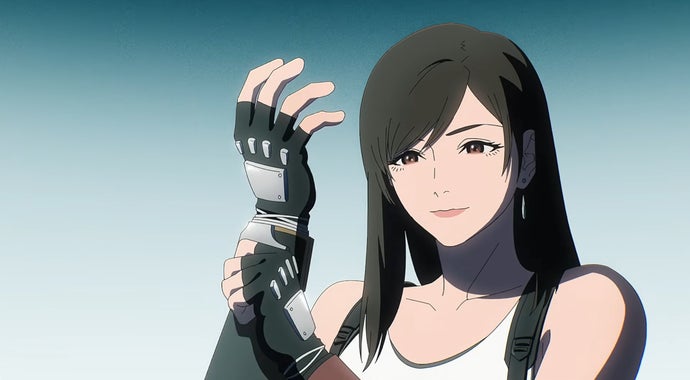
Image: courtesy of EuroGamer
Capcom's Final Fantasy Crossover Is a Brilliant Business Move That Exposes Fighting Game Fandom's Deepest Rift
On June 7, 2026, Capcom stunned the gaming industry during its summer showcase by announcing that Final Fantasy VII's iconic brawler, Tifa Lockhart, will join the Street Fighter 6 roster as a guest character in the upcoming Year 3 character pass. While the reveal generated massive mainstream excitement, it has simultaneously reignited an intense, long-simmering debate within the fighting game community (FGC). For casual players and general RPG fans, Tifa's inclusion is a dream crossover, uniting two of Japanese gaming's most legendary franchises. However, competitive purists are expressing frustration, arguing that guest characters occupy valuable roster slots that should instead go to classic, long-absent Street Fighter veterans. This tension highlights the delicate balancing act Capcom must perform as it attempts to sustain Street Fighter 6 as both a highly technical esport and a mass-market live-service product.
What to Expect
When Tifa Lockhart makes her playable debut in Street Fighter 6, players can expect a character designed to bridge the mechanical gap between Square Enix's turn-based-turned-action RPG and Capcom's precise 2D fighting engine. Unlike previous guest characters in other fighting games who rely heavily on weapons, Tifa is a natural fit for Street Fighter's hand-to-hand combat system. Her signature martial arts style, defined by rapid-fire punches, high kicks, and acrobatic maneuvers, translates seamlessly into Capcom's frame-data-driven environment.
Capcom's development team will adapt her classic limit breaks—such as Beat Rush, Somersault, and Dolphin Blow—into special moves and Super Arts. The implementation of Street Fighter 6's core mechanic, the Drive System, will be particularly interesting to watch. How will Tifa's offensive pressure interact with Drive Rushes and Drive Impacts? Fighting game analysts expect her to be a high-mobility, rushdown character with strong corner-carry potential, designed to appeal to players who enjoy aggressive, close-quarters combat.
Visually, Tifa will be rendered in Capcom's proprietary RE Engine, marking the first time the character has been depicted in a high-fidelity engine outside of Square Enix's internal tools. This transition will likely result in a slightly more grounded, muscular design consistent with the art style of Street Fighter 6. Players can also expect a dedicated stage, likely inspired by Midgar's Seventh Heaven bar, and a remixed soundtrack featuring iconic Final Fantasy VII battle themes. The character is scheduled for release in late 2026, anchoring the first half of the Year 3 roadmap.
Key Context
To understand the mixed reaction to Tifa's reveal, one must examine the shifting economics of the fighting game genre. Historically, fighting games were self-contained releases. Today, they operate as multi-year live-service platforms supported by seasonal character passes, cosmetic microtransactions, and battle passes. Street Fighter 6, which has sold over 4.5 million copies since its launch in June 2023, relies heavily on these seasonal updates to maintain active player counts and generate recurring revenue.
Guest characters are the single most effective tool for driving sudden spikes in player acquisition and DLC sales. Capcom first crossed this bridge in Year 2 by introducing Terry Bogard and Mai Shiranui from SNK's Fatal Fury franchise. That move was a calculated test of the community's appetite for external IP. The financial success of the SNK crossover paved the way for negotiations with Square Enix, a publisher notoriously protective of its intellectual property.
For Square Enix, licensing Tifa to Capcom is a highly strategic branding exercise. With the Final Fantasy VII remake trilogy driving sustained interest in the franchise, placing one of its most recognizable characters in the premier modern fighting game keeps the IP relevant to a broader gaming audience. However, this commercial logic often clashes with the desires of the hardcore competitive community. Every guest character added is a legacy Street Fighter character left on the cutting room floor. Fans who have spent years waiting for the return of classic fighters like Sakura, Dudley, C. Viper, or Cody view guest characters as a distraction from the franchise's rich history.
Related Coverage
Historical Patterns
The inclusion of guest characters in fighting games is a highly successful, decades-old industry tradition, though its execution has evolved significantly. Bandai Namco's Tekken 7 famously integrated Akuma from Street Fighter into its core storyline, alongside guest appearances from SNK's Geese Howard, Final Fantasy XV's Noctis, and even Negan from AMC's The Walking Dead. While these additions drove massive casual interest and record-breaking sales for Tekken 7, they also introduced severe balancing challenges. Akuma's 2D fireballs and jump arcs fundamentally disrupted the 3D movement mechanics of Tekken, leading to years of competitive complaints and tournament dominance.
Similarly, Super Smash Bros. Ultimate achieved legendary status by becoming a museum of gaming history, featuring characters from Sega, Capcom, Konami, and Square Enix. However, Smash Bros. is fundamentally a platform fighter designed around crossover appeal. Traditional 2D fighters have historically been much more conservative with their rosters.
Capcom itself has a long history of crossover titles, such as the Marvel vs. Capcom series and Capcom vs. SNK. However, mainline Street Fighter entries remained strictly self-contained for nearly three decades. The pivot to guest characters in Street Fighter 6 represents a permanent shift in Capcom's design philosophy. By analyzing the trajectory of Tekken 7 and NetherRealm's Mortal Kombat series—which relies heavily on action-movie guest stars—Capcom is attempting to replicate the massive sales lift of these crossovers while avoiding the severe balance issues that plagued competitive play in those titles.
The real stakes of this crossover extend far beyond a simple roster update. This development represents a critical moment in the ongoing battle between competitive purity and mass-market commercialization. Fighting games are unique in the esports ecosystem; they are built on a grassroots community that values legacy, execution, and mechanical consistency. When a publisher introduces a character from an entirely different universe, it risks breaking the aesthetic and thematic cohesion of the game, turning a respected competitive esport into a commercial billboard.
Yet, the reality of modern game development is that hardcore competitive players do not buy enough DLC to sustain a AAA live-service budget. To fund continuous balance patches, server maintenance, and million-dollar tournament prize pools like the Capcom Cup, publishers must continuously attract casual players who are willing to purchase individual character packs. Tifa Lockhart is perhaps the most universally recognizable female character in RPG history. Her presence in Street Fighter 6 will inevitably draw in thousands of players who have never touched a traditional fighting game before.
So, how does a developer satisfy both audiences? The answer lies in execution. If Capcom can deliver a character that is mechanically deep and balanced for high-level tournament play, while still retaining the visual flair and personality that Final Fantasy fans expect, they will have successfully bridged the gap. If they fail, and Tifa is either competitively unviable or overwhelmingly dominant, they risk alienating both the hardcore community and the newcomers who came to play as their favorite heroine.
Potential Outcomes
AnalysisUnder a positive scenario, Tifa's release triggers a massive resurgence in Street Fighter 6's active player base, setting new concurrent player records on Steam and consoles for a DLC launch. The character is balanced carefully, fitting into the mid-tier competitive bracket where she is viable in tournaments but not dominant enough to draw the ire of pro players. This success solidifies Capcom's guest-character strategy, leading to a highly anticipated reciprocal crossover where a Street Fighter character appears in a future Square Enix project.
Alternatively, a more complicated scenario could emerge where Tifa's unique combat mechanics—perhaps an implementation of her ATB (Active Time Battle) gauge or limit break system—prove incredibly difficult to balance within the Street Fighter 6 engine. She could launch with game-breaking infinite combos or defensive options that disrupt the competitive meta, leading to widespread bans in community-run tournaments. This would deepen the rift between the casual audience, who love her flashy moves, and the competitive community, who demand immediate nerfs.
In a third scenario, the financial success of the Tifa DLC is so pronounced that Capcom shifts its Year 3 and Year 4 plans to focus almost exclusively on high-profile guest characters from other media properties. This decision permanently alters the identity of the Street Fighter franchise, turning it into a general pop-culture crossover platform and leading to a quiet exodus of legacy competitive players who feel the game has lost its identity.
Timeline
Frequently Asked Questions
Discussion
Be the first to share your thoughts.