
The gaming industry should anticipate a more disciplined, less expansive approach from Hasbro regarding its intellectual properties. Instead of developing a broad portfolio of in-house games, the company is expected to concentrate its resources on a select few high-conviction projects, often through strategic partnerships. This shift likely means fewer experimental titles and a stronger emphasis on proven franchises that can deliver consistent returns, moving away from the 'splurge' seen in the wake of 'Baldur's Gate 3's' breakout success.
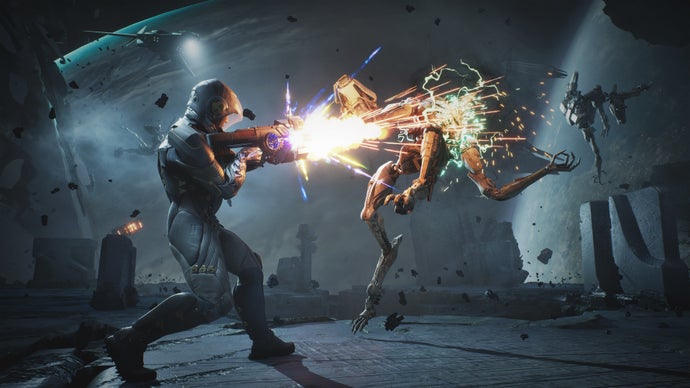
Image: courtesy of EuroGamer
Hasbro's $56 Million Reality Check: Scaling Back Gaming Dreams After Baldur's Gate 3's Success
Hasbro, the toy and entertainment giant, has announced a $56 million loss stemming from canceled video game projects, signaling a significant pullback from its once-ambitious gaming expansion. This move comes despite the runaway success of 'Baldur's Gate 3,' which generated substantial revenue for the company's Dungeons & Dragons IP. Hasbro's CEO Chris Cocks has confirmed a new strategy focusing on its strongest franchises and external development partners, while key projects like 'Warlock' and the 'Mass Effect-like Exodus' remain safe.
Outlook
Background
Just a few years ago, Hasbro appeared poised to become a major player in the video game sector. Buoyed by the critical and commercial triumph of Larian Studios' 'Baldur's Gate 3,' which brought in $90 million for Hasbro in 2023 through its Dungeons & Dragons licensing, the company had significantly ramped up its digital entertainment efforts. In 2022, Hasbro reportedly managed a half-dozen internal game studios. By 2024, Dan Ayoub, head of digital product development at Hasbro-owned Wizards of the Coast, publicly stated the company had over '$1 billion in games right now being developed,' declaring video games an 'integral part of Hasbro's strategy going into the next 100 years.'
However, this ambitious expansion has proved challenging. During its second-quarter 2026 financial results, announced on July 23, 2026, Hasbro recorded a $56 million 'impairment charge' across its games portfolio. An impairment charge is a financial accounting term that means an asset, in this case, various video game projects, has lost some of its value and the company must record that loss. This write-down stretches into 2028, indicating that the financial impact is not just from immediate cancellations but also from reassessing the value of ongoing projects.
Specific projects have faced trouble. A big-budget G.I. Joe game, initially announced in 2021, is reported to be in difficulties. Earlier in 2026, a deal for a new Dungeons & Dragons game with Stig Asmussen's Giant Skull studio was canceled. These setbacks highlight the operational complexities and financial risks inherent in large-scale game development, even for a company with a rich catalog of intellectual property like Hasbro.
Despite the significant write-down, Hasbro CEO Chris Cocks has reiterated the company's commitment to gaming. The strategy, however, has pivoted. Hasbro will now focus on its 'strongest franchises and partners.' This implies a more selective approach, prioritizing projects with higher certainty of success and collaborating with established developers. Notably, two major titles — 'Warlock' and 'Exodus,' which has been described as 'Mass Effect-like' — are confirmed to be safe and are still moving forward.
Precedents
Hasbro's experience reflects a common challenge for intellectual property (IP) holders attempting to translate their franchises into successful video games. Historically, companies rich in popular IPs, from comic book publishers to toy manufacturers, have often struggled to consistently replicate the magic of their core products in the highly specialized and capital-intensive video game market. The path is littered with examples of ambitious projects that failed to meet expectations, either creatively or financially.
One recurring pattern involves the tension between licensing IP to external studios, which offers lower risk and upfront cost but less creative control, versus developing games in-house, which promises greater integration and vision but demands significant investment, talent acquisition, and operational expertise. Hasbro's initial post-'Baldur's Gate 3' strategy leaned heavily into internal development and a broad portfolio, a path that many companies find difficult to sustain without deep, established gaming infrastructure.
Even with a massive hit like 'Baldur's Gate 3,' which was developed by Larian Studios and published under a licensing agreement, the success does not automatically guarantee that other IP-driven projects will follow suit. 'Baldur's Gate 3' stood out not just because of the D&D brand, but due to Larian's specific development philosophy, deep genre expertise, and years of iterative refinement. Attempting to replicate that formula across multiple internal studios, with varying levels of experience and creative alignment, often proves to be an expensive lesson in market realities and execution risk. This pattern suggests that while IP is valuable, its conversion into successful interactive entertainment requires a specific and often elusive blend of talent, time, and strategic discipline that few companies outside dedicated game publishers possess.
The $56 million loss and subsequent strategic pivot at Hasbro are more than just a financial blip for a single company; they represent a significant recalibration in the broader entertainment industry's approach to video games. For years, the allure of the gaming market, with its massive revenue potential and engaged audiences, has drawn traditional IP holders to invest heavily. Hasbro's initial '$1 billion in games' ambition was a prime example of this trend.
This pullback serves as a stark reminder of the inherent volatility and high costs associated with game development. It tells other IP owners, and indeed investors, that even with a monumental success like 'Baldur's Gate 3' in their portfolio, building a consistent, profitable gaming division from scratch is incredibly difficult. The market demands not just recognizable brands, but also exceptional execution, which often requires deep industry experience or highly specialized partnerships.
For game developers, this shift could mean a more conservative commissioning environment from large IP holders. Hasbro's renewed focus on 'strongest franchises and partners' suggests that smaller, unproven studios or more experimental concepts might find it harder to secure funding or licensing deals. Instead, established developers with a track record of delivering quality titles, particularly within specific genres, may become preferred collaborators.
Ultimately, Hasbro's experience highlights the need for strategic patience and realistic expectations when venturing into the complex world of video game production. It demonstrates that while the rewards can be immense, the risks are equally substantial, even for a company with a century of brand building behind it.
Scenarios
AnalysisHasbro's decision to scale back its gaming ambitions could lead to several distinct outcomes, each with implications for its financial health, its brand, and the broader gaming market.
One possible outcome is that this more focused approach yields higher-quality, more profitable games. By concentrating resources on fewer, more promising projects like 'Warlock' and 'Exodus,' and leveraging established development partners, Hasbro could reduce its overall risk and potentially deliver a string of critical and commercial successes. This would validate CEO Chris Cocks's pivot, demonstrating that strategic discipline, rather than sheer volume, is the key to unlocking value from its IPs in the gaming space. This could lead to a more stable, albeit smaller, gaming revenue stream that complements its core toy and entertainment businesses.
Conversely, the pullback could lead to missed opportunities and a perception of timidity. By reducing its internal development footprint and becoming more selective, Hasbro might overlook innovative concepts or emerging talent. If 'Warlock' and 'Exodus' fail to meet expectations, or if other key IPs struggle to find suitable external partners, the company could find itself further behind in the competitive gaming market. This could result in its valuable intellectual properties being underutilized in a crucial modern entertainment medium, potentially diminishing their long-term cultural relevance.
A third outcome is a mixed scenario, where Hasbro achieves moderate success with its focused projects but struggles to scale its gaming division beyond a niche role. This would see a few well-received titles, but without the sustained growth or broad market penetration that the company initially aimed for. In this scenario, Hasbro's gaming segment might become a consistent but minor contributor to its overall revenue, reflecting the inherent difficulties of translating diverse IP into blockbusters across different media.
Timeline
2021
G.I. Joe Game Announced
A big-budget video game based on the G.I. Joe franchise was announced, marking an early step in Hasbro's expanded gaming ambitions. This project is now reported to be in trouble.
2022
Hasbro Expands Internal Studios
Hasbro reportedly had a half-dozen internal game studios actively working on various projects, indicating a significant investment in in-house game development.
2023
Baldur's Gate 3 1.0 Release and Revenue
Larian Studios released 'Baldur's Gate 3' to massive critical and commercial success. The game, based on Hasbro's Dungeons & Dragons IP, generated $90 million in revenue for Hasbro in 2023.
~2024
One Billion Dollar Development Pipeline
Dan Ayoub, head of digital product development at Hasbro-owned Wizards of the Coast, stated that the company had over '$1 billion in games right now being developed,' reinforcing its long-term commitment to video games.
Earlier 2026
Giant Skull D&D Game Canceled
A deal for a new Dungeons & Dragons game from Stig Asmussen's Giant Skull studio was canceled, signaling early challenges in Hasbro's expansive gaming strategy.
2026-07-23
$56 Million Write-Down Announced
Hasbro announced a $56 million impairment charge across its games portfolio during its second-quarter 2026 financial results call, attributed to game cancellations and a reassessment of project values. CEO Chris Cocks confirmed a shift to focus on core franchises and partners, with 'Warlock' and 'Exodus' remaining on track.
Frequently Asked Questions
An impairment charge is an accounting term. It means Hasbro determined that the value of some of its assets – in this case, various video game projects – had fallen below the value recorded on its books. When this happens, a company must record a loss to reflect the asset's true, lower value. For Hasbro, this $56 million charge reflects the costs associated with canceled games and the reduced value of other projects.
Discussion
Be the first to share your thoughts.