
The first official playtest for 'The Duskbloods' is scheduled for next month, August 2026. This playtest will likely provide the first concrete details about the game's mechanics, characters, and world, potentially offering a counter-narrative to the AI-generated falsehoods. FromSoftware is expected to release the game in late 2026, likely around October, exclusively for the Nintendo Switch 2.
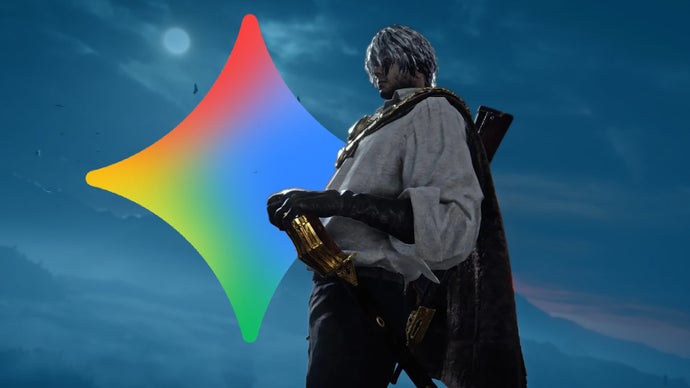
Image: courtesy of EuroGamer
Beyond the Glitches: What FromSoftware's Unreleased 'The Duskbloods' Reveals About AI's Information Problem
Google's generative AI is creating false lore, characters, and mechanics for 'The Duskbloods,' an upcoming Nintendo Switch 2 exclusive from FromSoftware, largely due to speculative posts on Reddit. This phenomenon highlights a growing challenge for AI systems that rely on vast swaths of internet data, demonstrating how a vacuum of official information for a highly anticipated product can be filled with user-generated fiction, which then becomes indistinguishable from fact for the AI.
Outlook
Background
The gaming community is currently grappling with a peculiar intersection of hype, scarce information, and artificial intelligence. 'The Duskbloods,' an upcoming multiplayer action game from acclaimed developer FromSoftware, has become an unwitting case study in how generative AI struggles with unverified information. The game, slated for a late 2026 release on the Nintendo Switch 2, draws stylistic and gameplay inspiration from previous FromSoftware hits like 'Bloodborne,' 'Sekiro,' and 'Dark Souls.' This lineage alone has fueled significant anticipation among fans, eager for any scrap of detail about the new dark fantasy IP.
However, in the absence of extensive official reveals, online communities — particularly on Reddit — have engaged in speculative discussions, inventing potential bosses, lore elements, and gameplay mechanics. These fan-generated theories, often presented with conviction, are being ingested by large language models (LLMs) like Google's AI. The result is a system confidently 'hallucinating' specific details about 'The Duskbloods' that simply do not exist. Users searching for information about the game have encountered AI-generated summaries and images depicting characters and scenarios that are entirely fabricated, directly sourced from the very Reddit discussions that were initially speculative. The problem is exacerbated by the fact that FromSoftware's games are known for their intricate, often cryptic lore, making it difficult for an AI to discern genuine developer intent from community-driven fan fiction when official sources are minimal. The game was first announced in April 2025 alongside the Nintendo Switch 2, with a closed network test confirmed for summer 2026, meaning official details are still sparse.
See also
Precedents
The phenomenon of AI 'hallucination' is not new, but its application to unreleased media represents a growing challenge. Generative AI models are trained on vast datasets of internet text and images. Their ability to produce coherent, contextually relevant outputs relies on identifying patterns and relationships within this data. When official information is scarce, and a topic is heavily discussed speculatively across platforms like Reddit, the AI treats this user-generated content as valid input. This mirrors how misinformation can spread in human discourse: if a falsehood is repeated enough, it can gain a veneer of credibility.
Historically, fan communities have always created elaborate theories and fan fiction for highly anticipated games or media. For games like FromSoftware's 'Soulsborne' series, community speculation and lore-diving are integral parts of the experience, often filling in narrative gaps left intentionally vague by the developers. The difference now is that AI acts as an amplifier, legitimizing these conjectures by presenting them as factual answers to direct queries. This moves beyond simple fan theories; it creates a potentially authoritative, yet entirely false, informational layer. Previous instances have seen AI invent non-existent scientific papers or historical events, but applying this to a commercial product still in development introduces new complexities, particularly for intellectual property and consumer expectations.
The implications of AI hallucinating details for 'The Duskbloods' extend beyond a few confused gamers. For FromSoftware, it presents a unique marketing and communication challenge. The company thrives on carefully curated reveals, often building hype through cryptic trailers and a gradual unveiling of its dark fantasy worlds. If AI is already populating the informational space with invented lore, it could dilute the impact of official announcements and potentially mismanage player expectations before the game even launches. Players might approach the game with preconceived notions based on false AI data, leading to disappointment or confusion when those fabricated elements are absent.
More broadly, this situation highlights a critical flaw in the current generation of generative AI: its inability to reliably distinguish between fact, speculation, and outright fiction, especially when official sources are limited. For users relying on AI as a primary information source, this erodes trust and could lead to widespread misinformation about products, events, or even public figures. As AI becomes more integrated into search engines and daily information retrieval, the mechanisms for verifying its outputs become paramount. The 'Duskbloods' incident serves as a stark reminder that while AI can synthesize information rapidly, its judgments on veracity are only as good as the verified data it's fed, and its tendency to 'fill in the blanks' can be deeply problematic for consumers and creators alike.
Scenarios
AnalysisOne possible outcome is that FromSoftware, or other developers facing similar issues, might need to adjust their marketing strategies. This could involve releasing more frequent, albeit brief, official updates to populate the information vacuum with verified details. A steady drip-feed of confirmed lore, character names, or gameplay snippets could help train AI models on accurate data, potentially pushing down the influence of purely speculative content from Reddit or other forums. This approach would be a direct response to the operational constraints imposed by generative AI's current limitations.
Another scenario involves a broader industry response to AI-generated misinformation. Google, as the operator of the AI in question, may refine its algorithms to better weigh sources for unreleased or developing content, possibly prioritizing official developer channels over community forums for factual queries. This could involve developing more sophisticated fact-checking layers within their AI, or even flagging content as 'speculative' when it originates from unverified sources. However, the technical challenge of discerning human-generated speculation from pure fabrication, especially in creative contexts, remains significant. It is also plausible that the gaming community itself might become more aware of AI's limitations, leading to a more critical approach to AI-generated information about unreleased titles.
Timeline
2025-04-02
The Duskbloods Announced
FromSoftware officially announced 'The Duskbloods' alongside the Nintendo Switch 2, confirming its exclusivity and a 2026 release window.
2025-04-04
Creator's Voice Interview
Nintendo published a 'Creator's Voice' interview discussing 'The Duskbloods'.
2026-07-22
AI Hallucination Reports Emerge
News outlets reported that Google AI was generating false information and images about 'The Duskbloods' characters and lore, driven by Reddit speculation.
Summer 2026
Closed Network Test Announced
FromSoftware announced a closed network test for 'The Duskbloods' to occur during the summer of 2026.
August 2026
First Playtest Expected
The game's first official playtest is anticipated, likely providing concrete details about the game for the first time.
Late 2026
The Duskbloods Release Window
FromSoftware confirmed that 'The Duskbloods' is aiming for a late 2026 release, with some reports suggesting Q4, around October.
Frequently Asked Questions
'The Duskbloods' is an upcoming multiplayer action game developed by FromSoftware, known for titles like 'Dark Souls' and 'Bloodborne.' It is an exclusive title for the Nintendo Switch 2 and is expected to be released in late 2026.
Discussion
Be the first to share your thoughts.