
Consumers should prepare for a new wave of 'AI-native' marketing as manufacturers like Dell, HP, and Lenovo scramble to integrate the RTX Spark into their flagship models. You can expect these devices to carry a premium price tag, justified by the promise of running large language models and real-time generative software locally rather than through the internet. However, the initial experience may be uneven, as the industry currently lacks a unified software ecosystem that fully leverages these dedicated neural cores. Users will likely encounter a mix of 'killer' AI features and underutilized hardware that may impact battery life if not optimized correctly. Ultimately, the market is bracing for a period of confusion where the definition of a 'high-end' computer shifts from raw clock speed to 'AI-inference capacity.'
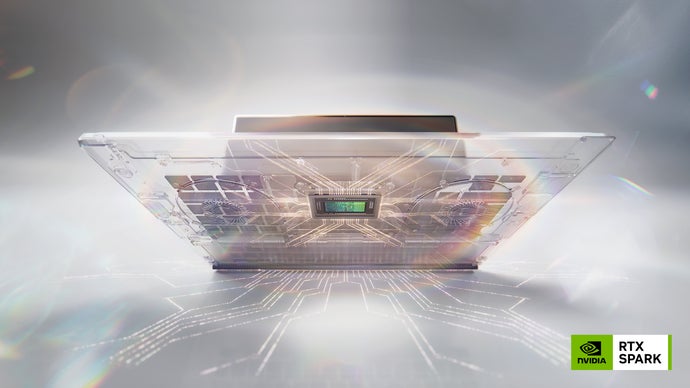
Image: courtesy of EuroGamer
Nvidia’s RTX Spark: The Risky Bet to Make Your Laptop an AI Engine
Nvidia is attempting a radical transformation of the portable computer with its new RTX Spark chip, moving beyond gaming performance to prioritize dedicated, local AI processing. By embedding specialized neural cores directly into mobile architecture, the company aims to force a hardware-level shift that makes generative AI tasks standard on every high-end laptop. This move puts Nvidia in direct competition with CPU giants while attempting to solve the latency and privacy issues inherent in cloud-based AI. The success of this strategy hinges on whether developers can create software that makes these hardware capabilities truly indispensable to the average user.
Outlook
Background
The semiconductor industry is currently locked in a race to solve the problem of on-device AI, which aims to reduce reliance on distant, costly server farms. Nvidia, traditionally the king of gaming graphics, is moving to protect its market dominance by positioning the RTX Spark as the foundational layer for this shift. This is a defensive maneuver against the rise of ARM-based chips and integrated AI accelerators from rivals like AMD and Intel. If Nvidia can cement the RTX Spark as the standard for enterprise and creative laptops, they will effectively gatekeep the future of PC software development. The stakes are immense, as a failure here could relegate Nvidia to a secondary role in the next generation of mobile computing.
Precedents
This pivot mirrors the 'Centrino' moment of the early 2000s, where Intel successfully mandated Wi-Fi integration to transform the utility of the laptop. Before that, connectivity was a luxury; after, it was an expectation. Nvidia is attempting to replicate this by making local AI processing a 'check-the-box' requirement for professional machines. However, history also warns of the 'feature bloat' trap, where hardware manufacturers add specialized components that lack software support, leading to consumer frustration. Just as early 3D accelerators sat idle in many machines before gaming caught up, the RTX Spark risks being an expensive, power-draining component if the software market doesn't evolve in lockstep with the silicon.
The shift to local AI processing represents the first fundamental change to PC architecture in two decades. By moving heavy computation from the cloud to the device, we are addressing critical issues like latency, data privacy, and the prohibitive costs of server-side inference. For the user, this means the difference between an AI that is a sluggish, internet-dependent tool and one that is a responsive, private, and always-available assistant. For the tech sector, it dictates the next phase of software development; if the hardware is ubiquitous, developers will stop hesitating to build complex, local AI features into their applications. If this transition succeeds, the laptop will no longer just be a display device, but an active 'thinking' machine that processes information in real-time.
Scenarios
AnalysisOutcome 1: The New Baseline. The RTX Spark becomes the industry standard for workstations, leading to a surge in creative and enterprise software that requires local neural processing to function. Nvidia successfully cements its dominance in the mobile space, forcing competitors to follow their architectural lead. Outcome 2: The Overkill Failure. The market rejects the chip due to a poor cost-to-benefit ratio, with users finding that cloud-based AI is 'good enough.' Laptop manufacturers pivot away from Nvidia’s specialized approach, favoring cheaper, generic AI accelerators integrated into the main CPU, marking a significant strategic defeat for Nvidia. Outcome 3: The Hybrid Compromise. The chip succeeds as a luxury tier feature for power users while the mainstream market settles for 'good enough' integrated AI, leading to a fragmented PC market with software optimized for two distinct tiers of AI capability.
Timeline
Frequently Asked Questions
Discussion
Be the first to share your thoughts.