
Veridact
TechSportsFinanceGaming🎯 PredictionsAbout
Sign InSign Up
Veridact

AI-powered anticipation analysis. We cover tech, sports, finance, and gaming events before they happen — with historical context, scenario modeling, and evolving coverage.

Stay ahead of the story

Analysis delivered before events unfold.

Coverage

  • Tech
  • Sports
  • Finance
  • Gaming

Company

  • About Us
  • Privacy Policy

© 2026 Veridact. AI-assisted analysis platform.

Analysis is AI-generated and not professional financial, legal, or medical advice.

Gaming
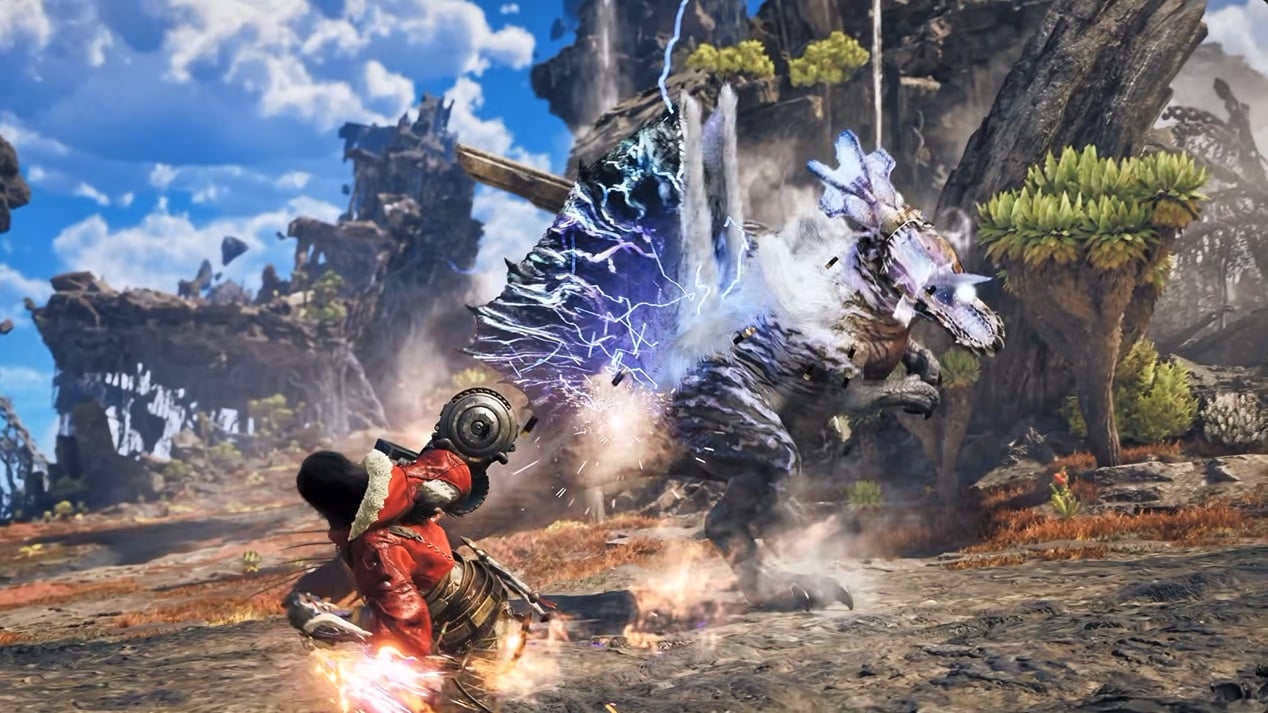
Monster Hunter Wilds Reveals The Elder Dragons Are Coming In A New Expansion And, Surprise, There’s A Switch 2 Port In The Works

Image: courtesy of Kotaku

gamingJune 7, 2026By Veridact EditorialUpdated Jun 7

Capcom Bridges the Generational Divide With Monster Hunter Wilds Expansion and Switch 2 Port

Capcom has announced a major expansion for Monster Hunter Wilds, bringing the franchise's iconic Elder Dragons to the latest installment alongside a surprise port for Nintendo's upcoming successor console, widely referred to as the Switch 2. The announcement, made on June 6, 2026, represents a dual-track strategy to maximize the lifecycle of its flagship title. By introducing classic high-end endgame content and simultaneously expanding its addressable market to Nintendo's next-generation portable hardware, Capcom is attempting to replicate the multi-platform dominance that made Monster Hunter World the best-selling game in the company's history. This decision highlights the growing technical capabilities of Nintendo’s new hardware, which is apparently capable of running a game built on Capcom’s demanding RE Engine that previously targeted only high-end home consoles and PCs.

What to Expect

Players can expect a significant shift in the endgame loop of Monster Hunter Wilds when the expansion launches. The addition of Elder Dragons—the apex ecological disasters of the Monster Hunter universe—traditionally introduces complex combat mechanics, elemental hazards, and the highest-tier armor sets in the game. Capcom's development team has indicated that these encounters will leverage the dynamic weather and environmental systems of Wilds, meaning fights could shift dramatically as sandstorms or lightning storms sweep across the maps.

On the technical front, the upcoming Switch 2 port is the real wildcard. While the original game was designed to push the PlayStation 5 and Xbox Series X to their limits with dense physics and seamless transitions, the Nintendo port will require substantial optimization. Industry analysts expect Capcom to utilize advanced upscaling technologies, likely Nvidia's DLSS, which is rumored to be a core feature of the new Nintendo hardware. This port will not simply be a scaled-down afterthought; Capcom is planning full cross-save functionality, allowing players to take their existing hunters on the road. The performance target is rumored to be a stable 30 frames per second in handheld mode, with a bump in resolution when docked, showcasing the raw power of Nintendo's new silicon.

Key Context

The relationship between Capcom and Nintendo has always been highly lucrative, yet structurally complicated. When Monster Hunter World bypassed the original Nintendo Switch due to hardware limitations, Capcom developed Monster Hunter Rise specifically to capture that massive portable market, utilizing a highly customized version of the RE Engine. Rise went on to sell over 15 million copies, proving that the portable audience is vital to the franchise's bottom line.

However, maintaining two distinct development pipelines—one for high-fidelity home consoles and another for lower-powered portables—is incredibly resource-intensive. With the Switch 2, Capcom is attempting to unify its player base under a single flagship title. This port serves as an early benchmark for Nintendo’s new system, demonstrating whether the hardware can bridge the gap between portable convenience and modern third-party performance. If successful, it removes the need for Capcom to split its development focus, allowing the company to consolidate its engineering talent on a single, continuously updated live-service platform rather than fragmenting its community across different game engines and design philosophies.

Related Coverage

CD Projekt Red reveals huge The Witcher 3 sales milestone, which helps explain why a third expansion is in development 11 years later→Dune Awakening is coming to consoles at long last, but for some reason, it will not have crossplay→

Historical Patterns

Historically, Capcom's post-launch support for the Monster Hunter series follows a highly disciplined, multi-year roadmap. Both Monster Hunter World and Monster Hunter Rise received massive, game-redefining expansions in Iceborne and Sunbreak, respectively, roughly one to two years after their initial launches. These expansions typically double the game's content, introducing a new difficulty tier, known as Master Rank, alongside entirely new locales and monster rosters.

The announcement of the Elder Dragons expansion for Wilds fits perfectly into this established commercial cadence. What is different this time is the timing of the hardware transition. In previous generations, a port to a less powerful console would occur years after the initial release, often handled by an external support studio and suffering from severe visual downgrades. Capcom's decision to develop the Switch 2 port alongside the new expansion suggests that Nintendo's hardware architecture was integrated into Capcom's long-term planning from the very beginning of Wilds' development cycle, reflecting a deeper level of strategic alignment between Osaka and Kyoto than previously observed.

This dual announcement represents a critical pivot point for the broader gaming industry's hardware transition. For Nintendo, securing a day-and-date style release of Capcom's premier action-RPG is an immense victory that addresses a historic weakness: the lack of parity for major third-party releases. The original Switch suffered from a generation gap that forced developers to either heavily compromise their games or skip the platform entirely. A successful launch of Monster Hunter Wilds on the Switch 2 signals to other major publishers that Nintendo's new system is a viable target for modern, current-gen multiplatform games.

For Capcom, the stakes are equally high. The publisher is managing rising development budgets by extending the lifecycle of its intellectual properties. By expanding Wilds to a portable platform that is expected to sell tens of millions of units in its first few years, Capcom secures a massive secondary wave of high-margin software sales. It also ensures that the franchise remains highly visible in Japan, where portable gaming completely dominates the domestic market and home console sales have historically lagged behind portable alternatives.

Potential Outcomes

Analysis

We can identify two primary scenarios for how this dual-track strategy unfolds over the next eighteen months.

In the optimistic scenario, the Switch 2 port launches with minimal technical compromises, aided by robust hardware-level reconstruction technologies. The inclusion of cross-play and cross-save triggers a massive migration of existing players who value portability, while attracting millions of new players who skipped the initial release due to the lack of a Nintendo version. This unified player base revitalizes the game's multiplayer matchmaking and drives record-breaking sales for the new Elder Dragons expansion, cementing Monster Hunter Wilds as a multi-year ecosystem that rivals major western live-service titles.

Conversely, a pessimistic scenario involves technical bottlenecks that cannot be fully resolved by software optimization. If the Switch 2 port suffers from severe frame-rate drops during chaotic multiplayer hunts or exhibits noticeable visual degradation in handheld mode, it could alienate core fans who demand precise inputs and visual clarity. A poorly received port would not only damage Capcom's reputation for technical excellence but also raise doubts about the Switch 2's ability to handle demanding third-party engines, forcing Capcom to return to its fragmented dual-development strategy for future iterations.

Timeline

2025-02-28
Monster Hunter Wilds Launches
Capcom releases Monster Hunter Wilds on PlayStation 5, Xbox Series X/S, and PC to critical acclaim and strong initial sales.
2026-06-06
Expansion and Switch 2 Port Revealed
Capcom officially announces the Elder Dragons expansion and confirms a native port is actively in development for Nintendo's next-generation platform.
2026-11-15
Beta Testing Phase
Anticipated public beta tests for the expansion's new mechanics and preliminary network stress tests for the upcoming console port.
2027-03-12
Target Release Window
The projected launch window for both the expansion and the Nintendo platform port, aligning with Capcom's fiscal year-end goals.

Frequently Asked Questions

Yes, Capcom has confirmed that full cross-save functionality will be supported, allowing players to transfer their hunter progress between PC, PlayStation 5, Xbox Series X/S, and the new Nintendo console.

Discussion

0/100
0/1000

Be the first to share your thoughts.

Related Coverage

gaming

Gears of War E-Day Confirms Horde and Versus as Xbox Rebuilds Its Legacy

Jun 9
gaming

Capcom's Monster Hunter: World Hits 30 Million Sales, Redefining Global Action-RPGs

Jun 9
gaming

Sega’s Subscription Playbook: Why Persona 4 Revival on Game Pass is More Than a Licensing Deal

Jun 8
gaming

Capcom's Final Fantasy Crossover Is a Brilliant Business Move That Exposes Fighting Game Fandom's Deepest Rift

Jun 8

Stay ahead of the story

AI analysis delivered before events unfold. No spam.

ⓘ

Disclosure: This article contains AI-assisted analysis based on publicly available information.