
The 'HR Violations' update for Dispatch introduces a new level of player control over content presentation on Nintendo Switch. Players can now enable some previously censored elements like nudity and gestures within the game's settings. However, certain graphic content, specifically depictions of genitalia and some audio related to character 'Invisigal's' dreams, will remain censored on the Switch. The developer has implemented creative visual filters, such as an 'oozing jam donut,' to obscure these specific areas, a move that has been interpreted as a subtle commentary on the platform's content policies. The more strictly censored version will continue to be sold in Asian territories, including Japan, where the DLC is not available.
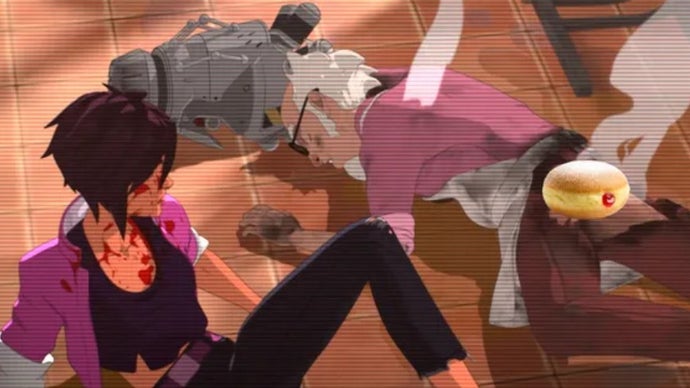
Image: courtesy of EuroGamer
Dispatch Developer Takes On Nintendo Censorship With 'HR Violations' Update, Offers Jam Donut Solution
AdHoc Studio, the developer behind the game Dispatch, has released a new update for the Nintendo Switch versions of its title. Dubbed 'HR Violations,' the patch aims to reduce some of the content censorship previously imposed on the game due to Nintendo's platform requirements. While players can now toggle certain nudity and gestures, some elements, notably genitalia and specific audio, remain censored, often with a distinct, tongue-in-cheek visual filter.
Outlook
Background
Content moderation on gaming platforms has long been a point of tension between developers and platform holders. Nintendo, in particular, maintains a reputation for stringent content guidelines, aimed at preserving its family-friendly image. This often means games with mature themes or explicit content must undergo significant alterations to be released on Nintendo's consoles, including the Switch and the recently mentioned Switch 2. For developers, this presents a dilemma: either compromise their creative vision to reach a wider audience on a popular platform or forgo that market segment entirely. AdHoc Studio's approach with Dispatch attempts to navigate this by offering a partially uncensored experience while still adhering to Nintendo's 'hard requirements.' The game's fully uncensored version remains available on other, less restrictive platforms.
Precedents
The history of video games is littered with examples of content being altered for specific platforms or regions. Nintendo's consoles, from the NES era onward, have consistently applied stricter content policies than many of their competitors. Historically, games like 'Mortal Kombat' on the Super Nintendo saw blood changed to 'sweat,' while the Sega Genesis version retained its gore. More recently, titles such as 'Wolfenstein II: The New Colossus' and 'DOOM Eternal' have seen minor visual adjustments for their Switch releases, though typically not involving outright censorship of core narrative elements. However, games with more explicit sexual or violent content, particularly visual novels or niche titles, frequently face more severe restrictions, leading to either heavily censored Switch ports or no release at all. Developers often resort to creative workarounds, as AdHoc Studio has, to maintain some semblance of their original intent while complying with platform demands. This tension highlights the ongoing struggle for creative freedom within commercially driven distribution models, a dynamic that has shaped the industry for decades.
The 'HR Violations' update for Dispatch is more than just a patch; it represents a tangible example of how developers are pushing back against, or at least creatively navigating, platform content restrictions. For players, it means increased agency over the content they consume, even if it's not a full, uncensored experience. For AdHoc Studio, it's a statement, using humor and direct naming to highlight the compromises required to publish on Nintendo's platforms. This situation underscores the power dynamic between console manufacturers and game creators. Nintendo's ability to dictate content directly impacts a developer's artistic vision and market reach. The update could set a precedent for how other developers of mature content approach the Switch, potentially encouraging more creative defiance within the confines of platform rules, rather than simply accepting blanket censorship. It also raises questions about the long-term sustainability of such strict policies in an increasingly interconnected and diverse gaming market.
Scenarios
AnalysisOne possible outcome is that other developers, emboldened by AdHoc Studio's approach, may adopt similar tactics. This could lead to more games on the Switch featuring 'clever' visual filters or humorous nods to censorship, creating a subtle, ongoing dialogue between creators and platform holders. This might force Nintendo to either clarify its content guidelines further or consider a more nuanced approach to adult content, possibly through an opt-in system or clearer age-gating for specific titles. Another scenario is that Nintendo could choose to tighten its enforcement, seeing such workarounds as undermining its brand image. This could result in stricter review processes for mature titles, potentially making it even harder for developers to publish on the Switch without significant content cuts. A third possibility is that this remains an isolated incident, with most developers continuing to either fully comply with Nintendo's demands or simply avoid the platform for their mature titles, viewing the effort of creative circumvention as not worth the operational complexity or potential pushback.
Timeline
2026-06-18
'HR Violations' Update Released
AdHoc Studio releases the 'HR Violations' update for Dispatch on Nintendo Switch, addressing previous censorship requirements.
2026-06-18
Partial Censorship Remains
The update reduces some censorship, allowing players to toggle nudity and gestures. However, genitalia and specific audio remain censored due to Nintendo's 'hard requirements.'
2026-06-18
Jam Donut Filter Implemented
Creative visual filters, including an 'oozing jam donut,' are introduced to obscure censored content on the Switch versions.
2026-06-18
Regional Restrictions Confirmed
The 'HR Violations' DLC is not made available in Japan and other Asian territories due to stricter regional censorship policies.
Frequently Asked Questions
The 'HR Violations' update is a patch released by AdHoc Studio for the Nintendo Switch versions of its game, Dispatch. It aims to reduce some of the content censorship previously applied to the game due to Nintendo's platform policies.
Discussion
Be the first to share your thoughts.