
Veridact
TechSportsFinanceGaming🎯 PredictionsAbout
Sign InSign Up
Veridact

Analysis before the headline. Veridact examines technology, finance, sports, and gaming events before they unfold through forecasting, probability modeling, historical precedent, and public prediction tracking.

Stay ahead of what's next

Forecasts, analysis, and prediction updates delivered to your inbox.

Coverage

  • Tech
  • Sports
  • Finance
  • Gaming

Company

  • About Us
  • Privacy Policy

© 2026 Veridact. Forecasting & analysis platform.

Content may include AI-assisted research and analysis. Predictions and opinions should not be considered financial, legal, medical, or investment advice.

gaming
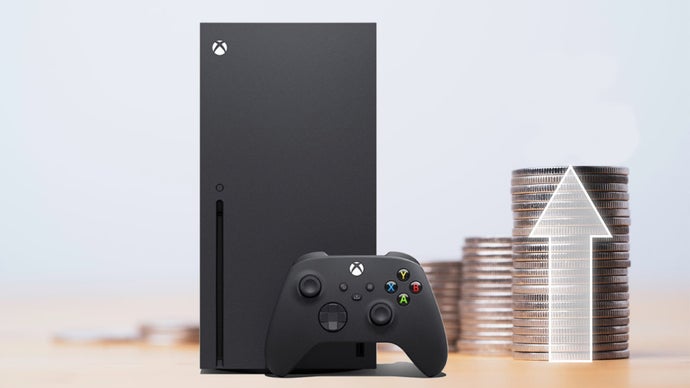
Xbox Series X/S is getting a major price increase, as Microsoft becomes the latest company to blame skyrocketing RAM and storage costs

Image: courtesy of EuroGamer

gamingJune 26, 2026By Veridact EditorialUpdated Jun 26

Microsoft Set to Hike Xbox Console Prices by Up to $150 in August, Citing Soaring Component Costs

Microsoft is preparing to implement significant price increases for its Xbox Series X and Series S consoles starting in August 2026. The move will see prices jump by $100 for the 512GB Series S and $150 for the 1TB Series X, with the company attributing the change directly to the rising costs of key components like RAM and storage. This marks another round of price adjustments for Xbox, following smaller increases over the past year and mirroring similar actions taken by rivals like Sony and Apple in a tightening hardware market.

Outlook

Consumers looking to purchase an Xbox Series X or Series S console will face considerably higher prices beginning August 1, 2026. The 512GB Xbox Series S, which recently saw its price rise to $399.99, will increase by another $100, pushing its retail cost to approximately $499.99. The 1TB Xbox Series X, which had previously moved to $599.99, is slated for a $150 increase, bringing its new price point to around $749.99. Microsoft has also confirmed that the 2TB model of the Xbox Series X will be discontinued as part of these changes.

This upcoming adjustment follows earlier, smaller price hikes that saw the Series S 512GB rise from its launch price to $379.99 and then to $399.99. The Series X Digital followed a similar path, moving from an initial price point to $549.99 and then to $599.99. The consistent upward pressure on pricing reflects a broader trend across the technology sector, where supply chain disruptions and increased demand for memory and storage components have driven up manufacturing expenses. For buyers, the immediate consequence will be a higher entry barrier for current-generation Xbox hardware, potentially impacting holiday season sales. Microsoft also recently confirmed that many new Xbox games will retail for $80 this holiday season, adding another layer of cost for consumers.

Background

The gaming console market operates on tight margins, often selling hardware at or near cost, with profits generated through software sales, subscriptions, and accessories. Microsoft's decision to raise console prices, particularly after initially committing to maintaining existing prices when PlayStation increased its PS5 costs, signals a shift in strategy driven by sustained economic pressure. The core issue, as stated by Microsoft, is the 'skyrocketing RAM and storage costs.' Both components are fundamental to modern consoles, enabling faster load times and more complex game worlds. The global demand for these components, fueled by the expansion of data centers, artificial intelligence, and other computing needs, has outpaced supply, leading to higher prices for manufacturers.

This is not an isolated incident. Sony's PlayStation 5 saw price increases in various markets, including the U.S., in late 2022. More recently, Apple also announced price hikes for some of its hardware, citing similar component cost pressures. Microsoft had, for a time, absorbed these rising costs, likely to maintain a competitive edge and drive adoption of its Xbox Game Pass subscription service. However, the magnitude and persistence of these cost increases appear to have made that position untenable. The discontinuation of the 2TB model also suggests a move to streamline inventory and production costs, focusing on the most popular configurations while potentially reducing exposure to volatile high-capacity storage markets. This context indicates a broader industry struggle to balance consumer affordability with the realities of global supply chain economics.

Precedents

Console pricing has historically followed a predictable pattern: launch at a certain price, often with a slight loss per unit, followed by periodic price cuts throughout the generation to stimulate sales. Mid-generation 'slim' or 'pro' models would sometimes launch at the original price point while the base model saw a reduction. The current generation, however, has largely bucked this trend. Inflationary pressures, exacerbated by global events and supply chain bottlenecks, have led to unprecedented price increases rather than decreases for consoles.

For Xbox specifically, its launch prices in November 2020 were $499 for the Series X and $299 for the Series S. The current wave of increases represents a significant departure from the historical strategy of maintaining or reducing prices to broaden market access. Microsoft's earlier stance in 2022, when it held Xbox prices steady while PlayStation raised theirs, was seen as a strategic play to gain market share. This upcoming August 2026 hike suggests that the economic realities have overridden that strategic advantage. The console market has seen instances of mid-cycle price adjustments, but rarely of this magnitude and frequency within such a short timeframe, making this a notable deviation from past patterns. It underscores how much the underlying economics of hardware manufacturing have shifted.

The impending Xbox price hike carries substantial implications for consumers, Microsoft's market position, and the broader gaming industry. For consumers, particularly those in price-sensitive markets or families planning holiday purchases, the increased cost makes current-generation gaming less accessible. A Series X at nearly $750, combined with $80 games, represents a significant investment, potentially pushing some buyers towards older generation consoles, PC gaming, or delaying their purchase altogether. This could dampen console sales, especially during crucial periods like the holiday season.

For Microsoft, the move is a delicate balancing act. While necessary to offset rising production costs and maintain profitability on hardware, it risks alienating potential customers and ceding ground to competitors or alternative entertainment options. The company's strategy has increasingly centered around Xbox Game Pass, a subscription service offering a large library of games for a monthly fee. A higher console price might make the initial hardware purchase more painful, but it could also implicitly push more users towards Game Pass as a way to access games without paying full retail for each title. The success of Game Pass becomes even more critical as the hardware entry point rises.

What truly remains to be seen is how this will affect the competitive dynamic with Sony's PlayStation. If Sony chooses not to implement further price increases, or if its existing prices are perceived as more stable, it could gain an advantage. Conversely, if PlayStation faces similar cost pressures and is compelled to follow suit, the entire console market could see a contraction in sales. The industry is watching closely to see if this is a temporary adjustment to market conditions or a sign of a more permanent shift in console pricing models.

Scenarios

Analysis

One possible outcome is a noticeable slowdown in Xbox Series X and Series S console sales. Higher prices typically lead to reduced demand, especially for discretionary purchases like gaming consoles. This could force Microsoft to re-evaluate its pricing strategy down the line or explore new ways to bundle hardware with Game Pass to soften the blow.

Another scenario is that the price hike accelerates the adoption of Microsoft's subscription services. With the upfront cost of hardware increasing, consumers might view Game Pass as a more financially attractive way to access a vast library of games, offsetting the higher console price. This could strengthen Microsoft's recurring revenue model, even if it means sacrificing some hardware sales volume.

A third potential consequence involves the competitive landscape. If Sony manages to avoid further significant price increases for the PlayStation 5, it could gain a market share advantage over Xbox. Conversely, if component costs continue to climb globally, Sony may be forced to implement similar hikes, leading to a broader industry-wide re-calibration of console pricing that impacts both major players.

Finally, the higher console prices, coupled with $80 game titles, could lead to a shift in consumer spending habits within gaming. Players might gravitate towards free-to-play games, digital-only purchases during sales, or simply extend the lifespan of their existing hardware. This could put pressure on third-party publishers to adapt their pricing and monetization strategies to suit a more cost-conscious consumer base.

Timeline

2020-11-10
Xbox Series X and Series S Launch
Microsoft launches the Xbox Series X at $499 and the Xbox Series S at $299.
2022-08-25
PlayStation 5 Price Increase
Sony announces price increases for the PlayStation 5 in various markets, including the U.S., while Microsoft commits to maintaining existing Xbox prices.
2025-09-19
U.S. Console Pricing Update Announced
Microsoft announces an update to recommended retailer pricing for Xbox Series S and X consoles, effective October 3, 2025. This likely refers to the initial smaller price bumps to $379.99 and $549.99 for the 512GB Series S and Series X Digital respectively.
2026-06-25
Microsoft Confirms Latest Price Hikes
Microsoft confirms further price increases, with the Xbox Series S 512GB rising from $379.99 to $399.99, and the Xbox Series X Digital from $549.99 to $599.99. The company also signals upcoming major increases and game price hikes.
2026-08-01
Major Xbox Price Increase Effective
Xbox Series S and Series X consoles will see significant price increases of $100 and $150 respectively, and the 2TB Series X model will be discontinued. New Xbox games are also expected to reach $80 this holiday season.

Frequently Asked Questions

The major price increases for the Xbox Series S and Series X are scheduled to become effective on August 1, 2026.

Discussion

0/100
0/1000

Be the first to share your thoughts.

Related Coverage

gaming

Nightdive’s Thief Remaster Adds Optional Weapon Wheel, Revamps UI: A Balancing Act for a Stealth Classic

Jun 26
gaming

Rockstar's GTA 6 Digital-Only 'Physical' Edition Puts Pressure on Game Developers to Clarify Disc Plans

Jun 26
gaming

SEGA Faces Backlash After Sonic ARG Quietly Sought Consent For AI Training Data

Jun 26
gaming

Xbox Quietly Tests Cloud Streaming Feature to Eliminate Day-One Game Downloads for Game Pass Ultimate

Jun 25

Stay ahead of the story

AI analysis delivered before events unfold. No spam.

ⓘ

Methodology: Veridact combines public data, historical precedent, and analytical models to evaluate the likelihood of future outcomes.