
The coming months will see Square Enix weigh the commercial realities of physical media against the vocal demand from a dedicated fanbase for 'Final Fantasy 7 Revelation'. Expect continued internal discussions regarding the game's 'SKU product line,' a term that encompasses all versions a game will be sold in. This period of uncertainty is likely to intensify speculation among collectors and preservationists, especially as the Spring 2027 release window draws closer. The eventual decision will provide a significant indicator of how major publishers intend to approach physical releases for their flagship titles in the years ahead.
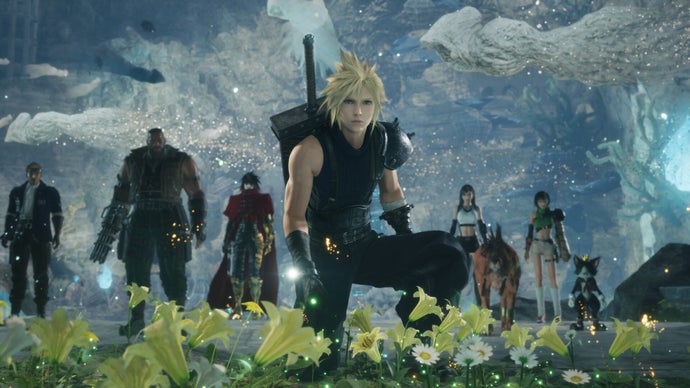
Image: courtesy of EuroGamer
The Physical Disc Dilemma: Why Final Fantasy 7 Revelation's Release Is a Bellwether for Gaming's Future
As the highly anticipated 'Final Fantasy 7 Revelation' approaches its Spring 2027 digital launch, publisher Square Enix has yet to confirm a physical disc version, sparking debate among fans and industry observers. Despite game director Naoki Hamaguchi actively advocating for a physical edition, the decision remains under internal discussion, highlighting the growing tension between traditional game distribution and the industry's accelerating shift towards digital-only releases.
Outlook
Background
The third and concluding chapter of the 'Final Fantasy 7' remake trilogy, titled 'Final Fantasy 7 Revelation,' is slated for a Spring 2027 release. This installment is expected to digitally launch across multiple platforms, including PlayStation 5, Xbox Series X/S, the forthcoming Nintendo Switch 2, and PC. While the digital distribution strategy is clear, Square Enix has not confirmed plans for a physical disc release.
Game director Naoki Hamaguchi has publicly stated his desire for 'some kind of physical edition' for the role-playing game. In an interview conducted at a recent 'Final Fantasy 14 Fan Festival' in Berlin, Hamaguchi acknowledged the significant challenges facing physical media in the current market. He confirmed that Square Enix is engaged in ongoing internal discussions regarding the 'exact SKU product line,' indicating that the decision on a physical version is still under active consideration within the company. This suggests a complex balancing act between production costs, distribution logistics, and consumer preferences for a franchise with a deep legacy of physical releases.
Precedents
The uncertainty surrounding 'Final Fantasy 7 Revelation's' physical release is not an isolated incident; it reflects a broader, accelerating trend within the video game industry. Over the past decade, major publishers have steadily shifted away from physical media in favor of digital distribution. Sony, for instance, has been noted by industry observers, including GamesRadar+, as a company increasingly leaning towards digital-first strategies. This move is driven by several factors.
From a publisher's perspective, digital distribution offers considerable advantages. It eliminates manufacturing costs for discs, packaging, and manuals. It reduces complex global supply chain logistics, cutting down on shipping, warehousing, and retail shelf space negotiations. Furthermore, publishers avoid the issue of unsold physical inventory, which can lead to costly returns and price reductions.
For consumers, the shift means a world of instant access and convenience, but it also carries implications for game ownership and preservation. Physical discs have historically served as a tangible form of ownership, allowing players to buy, sell, or lend games without digital rights management (DRM) restrictions. They also offer a measure of long-term preservation, independent of online storefronts or server availability. The gradual disappearance of physical media raises questions about how classic games will be accessed and played decades from now, a concern particularly acute for a series as historically significant as 'Final Fantasy'.
The trajectory is clear: while physical media once dominated, digital sales now account for the vast majority of game revenue. Even traditionally physical-centric console platforms like the PlayStation 5 offer a Digital Edition without a disc drive, signaling hardware manufacturers' acceptance, if not active promotion, of this transition.
The decision on a physical release for 'Final Fantasy 7 Revelation' carries weight far beyond a single product launch; it touches on fundamental shifts in the gaming industry and consumer culture. For Square Enix, a company deeply rooted in the history of console gaming, this choice represents a pivotal moment in how it balances legacy with modern business imperatives.
Firstly, there are the financial incentives. Digital distribution generally offers higher profit margins by cutting out intermediaries and physical production costs. For a multi-part, high-budget project like the 'Final Fantasy 7' remake trilogy, maximizing revenue streams is a clear priority. However, alienating a segment of its loyal fanbase, particularly collectors who value physical editions, could carry its own reputational and long-term sales risks.
For players, especially the dedicated 'Final Fantasy' community, a physical disc means more than just a game. It represents a collector's item, a piece of art, and a tangible connection to a beloved franchise. The absence of a physical option could be seen as a disregard for these traditional aspects of game ownership, potentially fostering resentment among long-time fans who have supported the series for decades. It also impacts game preservation; physical copies are often the last line of defense against games becoming unplayable if digital storefronts close or licenses expire.
Finally, this situation serves as a bellwether for the broader industry. If even a tentpole title like 'Final Fantasy 7 Revelation' struggles to secure a physical release, it signals an increasingly digital-first future for nearly all major game launches. This could accelerate the decline of physical game retailers and further entrench digital storefronts as the primary, if not sole, avenue for acquiring new titles.
Scenarios
AnalysisThe ongoing internal discussions at Square Enix regarding a physical release for 'Final Fantasy 7 Revelation' leave several paths open, each with distinct implications for the publisher and its audience.
One possible outcome is that Square Enix opts for a digital-only release. This would align with broader industry trends and potentially maximize profit margins by eliminating manufacturing and distribution costs. Such a decision would likely disappoint a significant portion of the 'Final Fantasy' fanbase, particularly collectors and those concerned with game preservation, but it would streamline the product launch and potentially reduce commercial risk.
A second scenario involves a limited physical release. This could manifest as a special collector's edition, perhaps sold directly through Square Enix's online store or as a timed exclusive with a specific retailer. This approach might cater to the most dedicated fans who are willing to pay a premium for a physical copy, while still keeping the overall physical production volume low. It would be a compromise, acknowledging fan demand without fully committing to a wide retail physical release.
Finally, Square Enix could decide on a full standard physical release. This outcome, while seemingly less probable given Hamaguchi's comments about the challenges of physical media, cannot be entirely ruled out. Strong fan outcry, coupled with the director's internal advocacy, could sway the decision. A full physical release would appease traditionalists and collectors, reinforcing the brand's connection to its heritage, but it would also reintroduce the complexities and costs associated with global physical distribution in a market increasingly moving away from it.
Timeline
2015
Final Fantasy VII Remake Announced
Square Enix announced the 'Final Fantasy VII Remake' project, confirming it would be a multi-part series, not a single game.
2020-04-10
Final Fantasy VII Remake Released
The first part of the remake project, 'Final Fantasy VII Remake,' launched globally.
2024-02-29
Final Fantasy VII Rebirth Released
The second installment of the remake trilogy, 'Final Fantasy VII Rebirth,' became available.
2026-07-30
Physical Disc Uncertainty Reported
Reports surfaced that Square Enix cannot confirm a physical disc for 'Final Fantasy 7 Revelation,' despite director Naoki Hamaguchi's push for one.
Spring 2027
Final Fantasy 7 Revelation Digital Release Window
The third and final part of the remake trilogy, 'Final Fantasy 7 Revelation,' is set for its digital launch on PS5, Xbox Series X/S, Switch 2, and PC.
Frequently Asked Questions
'Final Fantasy 7 Revelation' is the third and final game in Square Enix's remake project of the original 1997 'Final Fantasy VII.' It concludes the narrative arc started in 'Final Fantasy VII Remake' and continued in 'Final Fantasy VII Rebirth.'
Discussion
Be the first to share your thoughts.