
Players diving into Crimson Desert following the August 1, 2026 update will find a dramatically different trading landscape. The addition of 133 new trading posts means more opportunities for commerce, but the core change lies in the new supply and demand mechanics. Prices for goods will no longer be static; they will fluctuate based on what players are buying and selling, and how frequently. This introduces a layer of strategic thinking that was less prominent before, requiring players to understand market dynamics, identify profitable routes, and potentially specialize in trade. The patch notes confirmed that trading at harder-to-reach posts will yield higher profits, directly incentivizing exploration and risk. Expect a period of player adaptation as the community learns the new rhythms of the market and establishes optimal trade strategies.
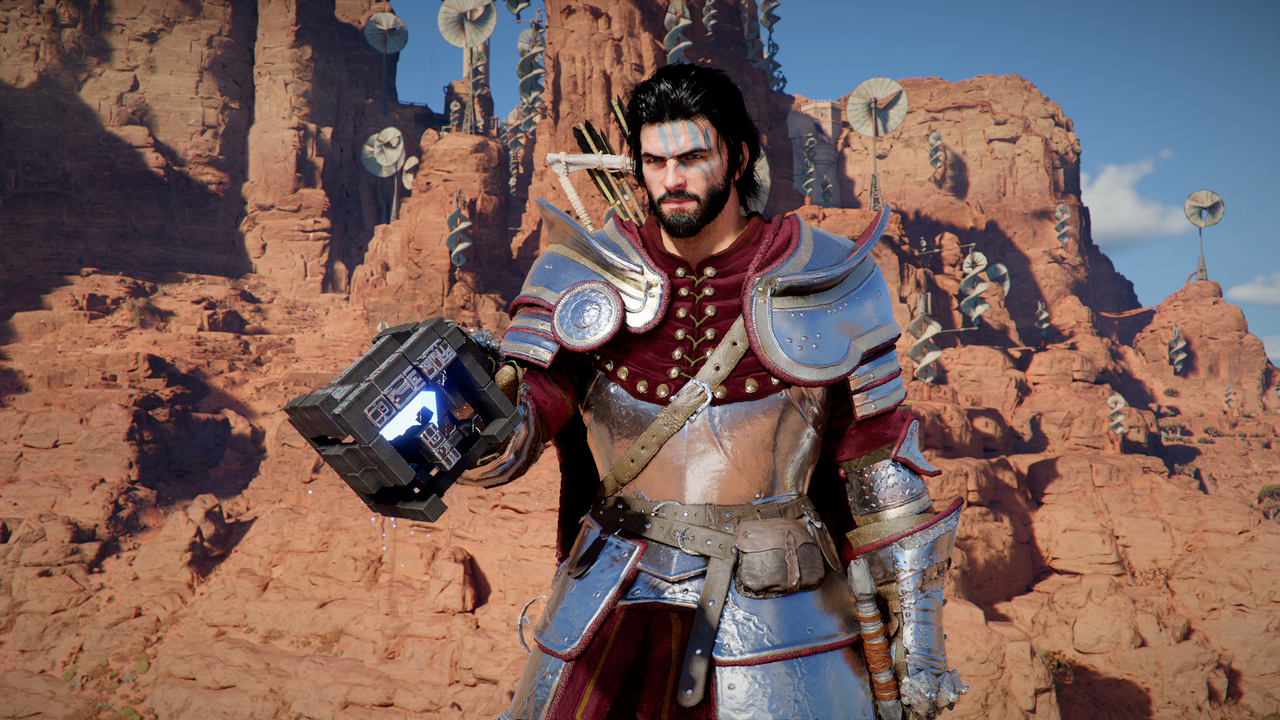
Image: courtesy of PC Gamer
Crimson Desert's Economic Reset: What 133 New Trading Posts Mean for the Game's Identity
Crimson Desert, Pearl Abyss's anticipated open-world action RPG, has rolled out a significant economic overhaul, introducing 133 new trading posts and implementing a dynamic supply-and-demand system. This update, which went live on August 1, 2026, aims to deepen the game's economic simulation by adjusting prices based on player activity and adding 24 new high-value trade goods. The move signals a potential shift in the game's focus, drawing parallels to the complex life skill systems seen in its predecessor, Black Desert Online, and raising questions about how players will adapt to the increased economic depth.
Outlook
Background
Crimson Desert has been a title shrouded in some ambiguity since its initial unveiling. Developed by Pearl Abyss, the same studio behind the visually striking and mechanically deep MMORPG Black Desert Online, Crimson Desert was first revealed under the codename Project CD in early 2019. Development began in early 2018, utilizing Pearl Abyss's proprietary game engine. While initially presented as an MMORPG, subsequent trailers and developer insights suggested a pivot towards a more action-focused open-world RPG with multiplayer elements, sometimes described as a 'quasi-critical darling' for its ambitious scope. This latest update, however, marks a significant re-emphasis on complex economic systems, a hallmark of Pearl Abyss's previous work. Black Desert Online is well-known for its intricate 'life skills' — activities like farming, crafting, fishing, and trading — which allow players to engage deeply with the world without constant combat. The introduction of 133 new trading posts, 24 high-value trade goods, and a full supply-and-demand economy in Crimson Desert suggests the developers are now weaving a similar, robust economic fabric into the newer title. This move is particularly interesting because it could redefine Crimson Desert's identity, pushing it closer to a 'trading simulator' experience alongside its core combat.
Precedents
Pearl Abyss has a well-established history of building games with deep, interconnected economic systems. Black Desert Online, their flagship MMORPG, is perhaps the strongest precedent. In Black Desert Online, players can spend hundreds, even thousands, of hours engaging solely with life skills like trading, crafting, and node management, often generating significant in-game wealth without ever setting foot in a high-level combat zone. The game's economy is notoriously complex, with fluctuating prices, regional specialties, and a sophisticated network of production and distribution. This isn't just a side activity; it's a core pillar of the game's design, appealing to a specific segment of the player base that enjoys strategic planning and economic simulation.
The company's approach to game design often prioritizes depth and player agency within these non-combat systems. The decision to introduce 133 new trading posts and a dynamic supply-and-demand model into Crimson Desert mirrors this philosophy. It's a clear signal that Pearl Abyss intends for economic engagement to be a meaningful, rewarding part of the Crimson Desert experience, not merely a minor feature. This historical pattern suggests that the economic overhaul is likely a foundational change rather than a temporary experiment, designed to foster a vibrant, player-driven market that can sustain long-term engagement.
The economic overhaul in Crimson Desert changes more than just how players buy and sell goods; it fundamentally alters the game's core loop and its long-term appeal. For players who enjoy the thrill of the market, this update provides a new, deep avenue for engagement, potentially creating a parallel progression system to traditional combat. The promise of higher profits for accessing difficult-to-reach trading posts incentivizes exploration and strategic planning, rewarding players who understand the game world's geography and its economic arteries.
However, this shift also carries broader implications for the player base. A complex, dynamic economy can be a double-edged sword. While it offers immense depth for dedicated traders, it can also create a steeper learning curve for casual players or those primarily interested in combat. If the in-game wealth generated through trading becomes disproportionately powerful, it could influence the balance of power between combat-focused and economy-focused players. The success of this overhaul will hinge on Pearl Abyss's ability to balance these systems, ensuring that economic activity feels rewarding without becoming mandatory or creating an insurmountable barrier for new players. This update is a statement about Crimson Desert's identity: it's not just an action RPG; it's an expansive world where economic prowess might be as valuable as combat skill.
Scenarios
AnalysisThe introduction of a dynamic supply-and-demand economy in Crimson Desert could lead to several distinct outcomes for the game and its community:
1. Enhanced Player Engagement and Specialization:
INFERRED: The overhaul is likely to foster a more engaged and diverse player base, as it provides a robust alternative to combat-centric gameplay. Players who prefer strategic planning, resource management, and market speculation will find new avenues for progression and wealth generation. This could lead to a natural specialization among players, with some focusing on combat and exploration, others on crafting and resource gathering, and a dedicated segment on trading. The increased profits for hard-to-reach posts suggest a direct incentive for players to explore the world and identify optimal trade routes, adding a layer of meta-gameplay that extends beyond typical questing.
2. Market Volatility and Potential for Economic Disparity:
INFERRED: A dynamic supply-and-demand system inherently introduces market volatility. While this can be exciting for some, it also means prices could fluctuate wildly, making long-term planning difficult for less experienced traders.
SPECULATIVE: This could lead to periods of high profitability for savvy players who understand market trends, but also potential losses for those who misread the market. There is a risk that a highly efficient trading network, once established by a dedicated player base, could create significant economic disparities, potentially making it harder for new or casual players to compete or accumulate wealth through trading. This could lead to a 'rich getting richer' scenario if not carefully managed through other in-game systems.
3. Redefined Game Identity and Player Retention:
INFERRED: By leaning into deep economic mechanics, Crimson Desert further solidifies its identity as an open-world RPG with significant 'life skill' elements, much like Black Desert Online. This move could attract players who appreciate complex virtual economies and long-term progression beyond linear questlines.
SPECULATIVE: The success of this redefinition will largely depend on player reception. If the economic systems are intuitive enough to learn but deep enough to master, it could significantly boost player retention and foster a vibrant in-game community. However, if the system proves too opaque, grindy, or prone to exploits, it could alienate players who were drawn to the game primarily for its action combat and simpler progression. Pearl Abyss will need to continuously monitor the economy and player feedback to ensure a healthy balance.
4. Opportunities for Content Creators and Community Tools:
INFERRED: The complexity of a dynamic economy often creates a demand for external resources.
SPECULATIVE: This could spur the creation of community-driven tools, guides, and content by players and third-party creators dedicated to tracking market prices, identifying trade routes, and optimizing profit. Such community engagement could further deepen the game's ecosystem, similar to how Black Desert Online has fostered extensive databases and community guides for its life skills. This organic growth of support content could in turn attract more players interested in delving into the economic aspects of the game.
Timeline
Frequently Asked Questions
Discussion
Be the first to share your thoughts.