
The immediate future for satellite operators is likely to involve prolonged delays and potentially higher costs for launching new spacecraft. Many companies have already secured launch deals stretching two years into the future, but even these arrangements often come with uncertain timelines. This scarcity is expected to intensify the competition for limited slots, potentially leading to a market where launch capacity becomes a critical differentiator for satellite service providers. Consolidation among smaller operators unable to secure reliable access to space is a distinct possibility, while larger players may seek to secure long-term, exclusive agreements with launch providers.
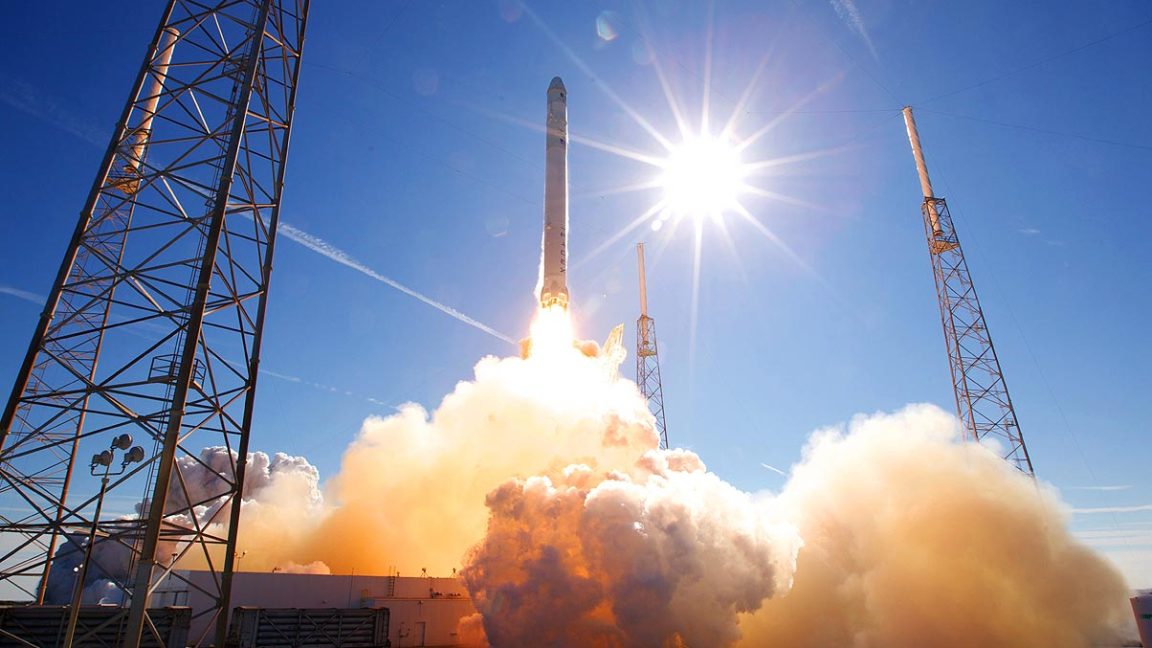
Image: courtesy of Ars Technica
The Satellite Launch Squeeze: Why SpaceX's Starship Shift Is Stranding Operators
Satellite operators are facing a deepening crisis in securing launch capacity, driven by a surge in demand that far outstrips available supply. At the heart of the problem is SpaceX's market dominance and its strategic pivot towards its next-generation Starship rocket, which appears to be limiting the availability of its workhorse Falcon 9 for commercial customers after 2028. This shift, combined with delays in new medium-lift rockets from other providers and the struggle of new entrants to scale, has left the industry in a state of 'panic mode' as launch backlogs grow and future plans hang in uncertainty.
Outlook
Background
The current launch crisis represents a sharp turn for an industry that, until recently, celebrated a period of unprecedented growth and competitive pricing. In the three years leading up to August 2026, the global average of orbital rocket launches reached about 270 annually, a more than threefold increase compared to a decade prior. Between 2023 and 2025 alone, the launch cadence surged by nearly 50%, from 223 to 330 launches. This expansion was largely powered by SpaceX, which accounts for a dominant 58% of all launches and an even more staggering 78% of the total mass lifted into orbit.
However, this dominance now presents a vulnerability. SpaceX's strategic focus is increasingly on its Starship program, a massive, fully reusable launch system designed for deep-space missions and large-scale satellite deployments. While Starship promises revolutionary capabilities, its development has implications for the existing Falcon 9 rocket fleet. Gwynne Shotwell, SpaceX's former president, had previously indicated the Falcon 9's operational life might extend to 2030 or 2032. More recent information suggests a different timeline for commercial clients: sources indicate that SpaceX has informed the U.S. government of its intent to cease commercial Falcon 9 launches after 2028, though it may continue flying Falcon 9 for government missions.
This impending reduction in commercial Falcon 9 availability creates a significant void. Other new medium-lift rockets, intended to offer alternatives, are experiencing their own development and certification delays. Furthermore, new launch companies entering the market are struggling to scale their operations quickly enough to meet the escalating demand. The result is a 'launch bottleneck' where the supply of available rockets simply cannot keep pace with the growing number of satellites needing to reach orbit. Satellite operators, who depend on predictable and affordable access to space, are now finding themselves in a scramble, with some reporting difficulties in even purchasing launches beyond 2028.
Precedents
The space industry has a history of cyclical trends, but the current launch crisis exhibits unique characteristics. For years, the narrative was one of declining launch costs and increasing accessibility, largely fueled by SpaceX's reusable Falcon 9 and its aggressive pricing strategy. This era saw a proliferation of satellite constellations, particularly for broadband internet, as the barrier to entry for space-based services lowered significantly. The dramatic increase in launch frequency, from dozens a decade ago to hundreds annually, underscores this trend. Companies like OneWeb, Starlink, and others committed to vast networks of satellites, all predicated on consistent and affordable access to orbit.
What is unfolding now is a reversal of that pattern, shifting from a buyer's market to a seller's market. The industry is moving from a period where launch capacity was relatively abundant and competitive to one where it is a scarce, strategic resource. This mirrors, in some ways, earlier periods in space history where only a few national agencies or large corporations controlled access to orbit, leading to long waits and high costs. However, the scale of today's commercial demand is unprecedented, making the current scarcity particularly acute. The reliance on a single dominant player, while efficient in driving down initial costs, has created a structural fragility now exposed by that player's strategic evolution.
The worsening launch crisis carries significant implications that extend far beyond the balance sheets of satellite companies. For consumers, particularly those in underserved rural areas, the promise of 'broadband for all' through satellite internet constellations could face substantial delays. Companies like AST SpaceMobile, which aim to deliver direct-to-device connectivity, rely on a steady cadence of launches to build out their networks. The recent failure of a Blue Origin rocket to place an AST SpaceMobile satellite into its proper orbit, necessitating its de-orbiting and reliance on insurance, illustrates the high stakes and inherent risks involved.
Beyond consumer services, this bottleneck affects critical infrastructure and national security. Governments worldwide increasingly depend on satellite imagery, communication, and navigation for defense, intelligence, and civilian applications like climate monitoring and disaster response. Delays in replacing aging satellites or deploying new capabilities could create strategic vulnerabilities. For investors, the uncertainty surrounding launch availability adds a layer of execution risk to companies in the burgeoning space sector, potentially impacting valuations and future funding rounds. Ultimately, a constrained launch market threatens to slow the pace of innovation and deployment across the entire space economy, from Earth observation to in-orbit servicing, hindering the realization of space's full commercial and societal potential.
Scenarios
AnalysisThe satellite launch crisis presents several potential paths forward, each with its own set of challenges and opportunities for the industry.
1. Market Consolidation and Higher Costs: One likely outcome is an acceleration of market consolidation. Smaller satellite operators, unable to secure consistent and affordable launch slots, may find themselves acquired by larger companies with greater leverage or deeper pockets to ink long-term deals. This could lead to a less diverse space economy, with fewer players controlling more assets. Simultaneously, the scarcity of launch capacity will almost certainly drive up prices, as demand continues to outstrip supply. Launch providers, no longer needing to compete aggressively on cost, could command higher premiums for their services, shifting the financial burden to satellite operators and, eventually, to end-users.
2. Emergence of New Launch Providers: The current crisis creates a strong incentive for alternative launch providers to accelerate their development and scale operations. Companies working on new medium-lift rockets, such as United Launch Alliance's Vulcan Centaur or Arianespace's Ariane 6, could see increased demand if they can overcome their current delays and prove reliable. The market also offers an opening for smaller, dedicated launch providers, or even international collaborations, to capture a share of the market, though scaling to meet the 'mass-to-orbit' requirements left by Falcon 9 is a significant challenge. Success here would diversify the launch market, reducing reliance on any single entity.
3. Strategic Government Intervention: Faced with potential impacts on national security and critical infrastructure, governments may step in more directly. This could involve increased funding for domestic launch capabilities, either through direct subsidies to private companies or by investing in national space agencies' launch programs. Another approach might be the creation of 'strategic launch reserves' – agreements with providers to guarantee a certain number of launches for government or critical commercial missions, even at higher costs, to ensure continuity of service. This would underscore the strategic importance of space access beyond purely commercial considerations.
4. Adaptation in Satellite Design and Deployment: The launch bottleneck could also force satellite operators to rethink their strategies for constellation design and deployment. This might mean designing larger, more capable satellites that can last longer in orbit, reducing the frequency of replacement launches. Alternatively, companies might focus on more modular or reconfigurable satellites that can be serviced in orbit, extending their lifespan without needing new launches. There could also be a greater emphasis on rideshare missions, where multiple satellites share a single rocket, to maximize the use of available capacity, even if it means less control over launch schedules and specific orbital parameters.
Timeline
Prior to 2016
Lower Launch Cadence
Global orbital rocket launches were significantly lower, with averages less than a third of current rates, indicating a less active space launch market.
2023
Global Launches Reach 223
The worldwide launch cadence for orbital rockets stood at 223, marking a period of growing activity in the space sector.
2023-2025
Launch Cadence Grows 50%
During this two-year period, the frequency of global orbital launches increased by approximately 50%, reaching 330 launches by 2025. SpaceX drove much of this growth.
2025
Global Launches Reach 330
The number of orbital launches worldwide hit 330, with SpaceX accounting for 58% of all launches and 78% of the total mass-to-orbit.
2026-08-17
Satellite Operators in 'Panic Mode'
News reports confirm satellite operators are experiencing a worsening launch crisis, citing demand far exceeding supply and limited availability from key providers.
After 2028
SpaceX Commercial Falcon 9 End Date
Sources indicate SpaceX intends to cease commercial Falcon 9 launches, though government missions may continue. This significantly reduces available commercial launch capacity.
2030 or 2032
Falcon 9 Operational Lifetime Estimate
Gwynne Shotwell, former SpaceX president, had previously stated the Falcon 9 rocket's operational life might extend to this period, though commercial availability is expected to end earlier.
Frequently Asked Questions
The launch crisis refers to a severe imbalance where the demand from satellite companies to send their spacecraft into orbit far exceeds the available supply of rockets. This leads to long waiting lists, uncertain launch dates, and potentially higher costs, creating significant challenges for operators trying to deploy or replace their satellite constellations.
Discussion
Be the first to share your thoughts.