
The success of Isar Aerospace's Spectrum rocket launch on September 5, 2026, marks the beginning of a new phase for Europe’s commercial space sector. Expect increased investment interest in other European launch startups and intensified efforts by the European Space Agency (ESA) and national governments to foster domestic launch capabilities. This event may also spur greater competition and potentially lower launch costs within the small satellite market, forcing established players to adapt their pricing and service models. The coming months will likely see Isar Aerospace moving towards more regular launch schedules, aiming to prove reliability and secure a larger share of the burgeoning small satellite market.
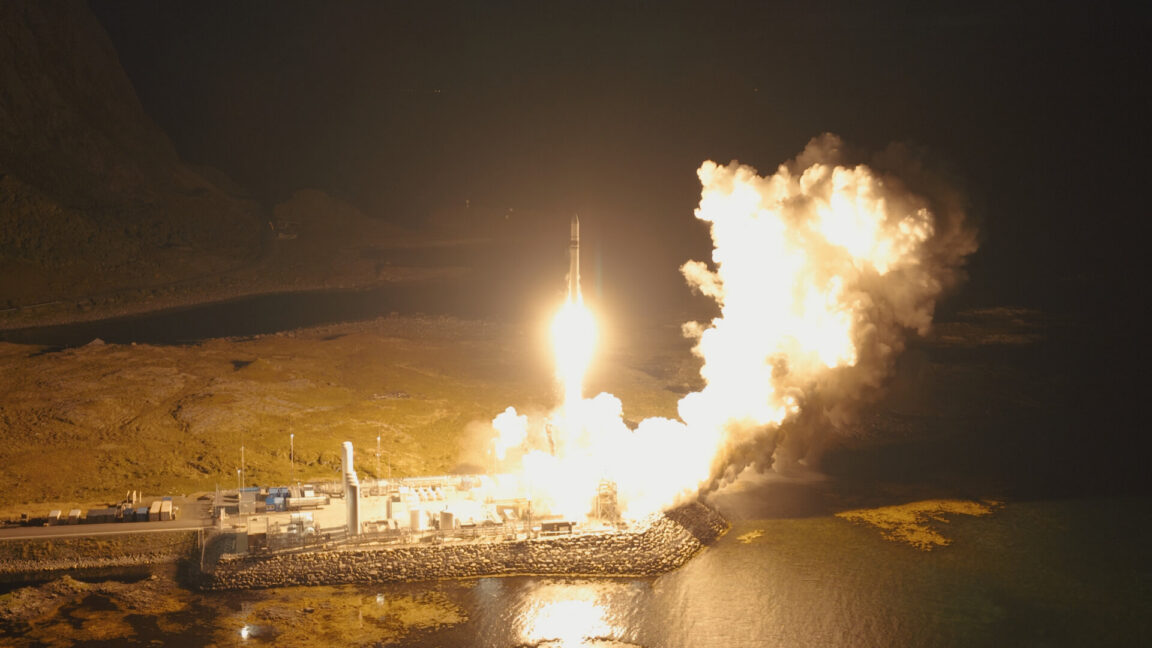
Image: courtesy of Ars Technica
Europe's Commercial Space Race: What Isar Aerospace's Rocket Launch Changes
A German startup, Isar Aerospace, successfully launched Europe's first fully commercial orbital rocket, Spectrum, from Norway on September 5, 2026. This milestone follows a previous failed attempt and signals a significant shift in Europe's ambition to reduce its reliance on foreign launch services, particularly from the United States. The launch carried five small satellites into orbit, opening a new chapter for independent European access to space and intensifying competition in the global small satellite market.
Outlook
Background
On September 5, 2026, a German company named Isar Aerospace made history by successfully launching its Spectrum rocket into orbit from the Andøya Spaceport in northern Norway. This event marked Europe's first fully commercial orbital rocket launch, a significant achievement for a continent that has long sought greater independence in its space endeavors. The Spectrum rocket carried five small satellites into orbit, demonstrating a new domestic capability for a rapidly growing segment of the space industry.
This successful mission was Isar Aerospace's second attempt. The company's initial launch, which occurred 18 months prior, ended in failure when the rocket plunged into the sea shortly after takeoff from the same Norwegian site. The fact that the team recovered from this setback and achieved orbit on the subsequent try speaks to the technical resilience and operational improvements made in the interim.
For years, Europe has relied heavily on launch services provided by other nations, most notably the United States. This dependence has raised concerns about strategic autonomy, particularly as geopolitical tensions shift and access to space becomes increasingly critical for both commercial and defense applications. The rise of the small satellite market — driven by the demand for large constellations providing services like global internet and Earth observation — has only amplified the need for flexible, cost-effective, and domestically controlled launch options. Isar Aerospace's success directly addresses this strategic gap, positioning Europe to 'buy European' for its space launch needs, as highlighted by comments from The Verge. The company's own statement, that they 'achieved within a few years what had taken the European space industry decades before,' underscores the pace and ambition of this new generation of space startups.
See also
Precedents
The journey to a commercial space industry has historically been defined by cycles of government-led innovation, followed by the gradual entry of private enterprise. The initial space race of the mid-20th century was almost entirely a state-funded endeavor, dominated by the United States and the Soviet Union, focused on prestige, military advantage, and scientific exploration. Large, complex rockets were developed at immense public expense, with commercial applications emerging much later, often piggybacking on existing government infrastructure.
The first wave of commercial space activity, beginning in the 1980s and 1990s, primarily centered on launching large, geostationary communications satellites. Even then, many of the launch vehicles were either direct descendants of government programs or heavily subsidized. Europe, through organizations like the European Space Agency (ESA) and companies like ArianeGroup, carved out a niche in this market with its reliable Ariane series of rockets, primarily catering to heavyweight payloads.
However, the early 21st century ushered in the 'New Space' era, fundamentally reshaped by technological advancements and a new approach to funding. Miniaturization of electronics allowed for the development of 'small satellites' – spacecraft weighing from a few kilograms to several hundred. This, combined with an influx of venture capital and the vision of entrepreneurs like Elon Musk with SpaceX, disrupted the established order. SpaceX, with its reusable Falcon 9 rockets, dramatically lowered launch costs and increased launch frequency, effectively creating a new standard for efficiency and accessibility.
Europe, while strong in satellite manufacturing and space science, found itself lagging in this new commercial launch paradigm, particularly for the small-to-medium lift market. Traditional European launchers, designed for larger payloads, often proved too expensive or inflexible for the burgeoning demand from small satellite operators. This led to a situation where European companies often had to rely on American or other foreign launchers for their smaller payloads, creating a strategic vulnerability. Previous attempts by European startups, such as Spain's PLD Space with its Miura 1, encountered significant technical hurdles, with early test flights failing to reach orbit or even the Karman line, which defines the edge of space.
Isar Aerospace's success follows a common pattern observed in rocket development: initial failures are often a crucial part of the learning process. SpaceX itself experienced multiple failures with its Falcon 1 rocket before achieving orbit. This history suggests that persistence, iterative design, and robust engineering are essential in the high-stakes world of orbital launches. Isar Aerospace's ability to learn from its March 2025 failure and execute a successful mission 18 months later aligns with this historical trajectory of innovation through perseverance.
Isar Aerospace's successful orbital launch carries implications far beyond a single technical achievement; it represents a fundamental shift in Europe's strategic position and economic outlook in the global space industry.
European Strategic Autonomy: For decades, Europe's access to space has been largely contingent on the capabilities of other nations. This reliance, particularly on American, Russian, or Chinese launch services, poses significant strategic risks. In an increasingly complex geopolitical landscape, the ability to independently launch satellites for defense, intelligence, and critical infrastructure purposes is paramount. Isar Aerospace's Spectrum rocket provides a domestically developed option, directly contributing to Europe's strategic autonomy. This means European governments and companies can pursue their space agendas without being subjected to the political or operational constraints of foreign providers. It is about sovereignty in space, ensuring that European data remains within European control and that critical missions can proceed unimpeded by external factors.
Economic Impact and Industrial Growth: The establishment of a viable commercial launch provider within Europe promises substantial economic benefits. It fosters a high-tech domestic space industry, creating skilled jobs in engineering, manufacturing, and operations across the continent. This success can attract further investment into European space startups, creating a virtuous cycle of innovation and growth. A local launch market also means that European satellite manufacturers and operators have more options, potentially reducing their launch costs and improving their competitive edge globally. This internal market development is vital for retaining talent and capital within Europe, rather than seeing it flow to dominant players in other regions.
Addressing the Small Satellite Market Gap: The small satellite market is one of the fastest-growing segments of the space industry. These smaller, often mass-produced satellites are used for everything from Earth observation and climate monitoring to global internet connectivity. For many years, small satellite operators either had to wait for 'rideshare' opportunities on larger rockets – often at the convenience of the primary payload – or turn to a limited number of dedicated small launch providers, predominantly American. Isar Aerospace’s Spectrum, designed specifically for this market, offers dedicated and flexible launch options. This addresses a critical market gap for European companies, allowing them to deploy their constellations more efficiently and on their own schedules, which is crucial for business models reliant on rapid deployment and constellation replenishment.
Intensified Global Competition: While Isar Aerospace's success is a win for Europe, it also intensifies competition across the global space industry. Established players like SpaceX and Rocket Lab, along with traditional giants like ArianeGroup, will face a new competitor vying for market share. This increased competition could drive further innovation, push down launch costs, and lead to more varied and tailored services for satellite operators worldwide. For consumers of satellite services, this could translate into more affordable and accessible data, communication, and imagery.
A Signaling Effect for European Innovation: Beyond the tangible benefits, Isar Aerospace’s achievement sends a powerful signal. It demonstrates that European startups, with the right vision, funding, and technical expertise, can compete and succeed on the global stage, even in highly complex and capital-intensive sectors like orbital launches. This success can inspire a new generation of entrepreneurs and engineers, encouraging further risk-taking and innovation within Europe's technology ecosystem. It challenges the perception that cutting-edge space technology is solely the domain of a few dominant nations, proving that a lean, agile startup can achieve what once seemed to require decades of institutional effort.
Scenarios
AnalysisThe successful launch of Isar Aerospace's Spectrum rocket opens up several distinct pathways for Europe's commercial space future, each with its own set of challenges and opportunities.
Outcome 1: Accelerated European Commercial Space Growth.
One possible outcome is that Isar Aerospace's success acts as a powerful catalyst, significantly accelerating the growth of the broader European commercial space sector. With Spectrum now proven capable of reaching orbit, Isar Aerospace could establish a more reliable and frequent launch cadence. This consistent operational record would be crucial for attracting additional customers beyond its initial five small satellite payloads. A steady stream of launches would build confidence among satellite operators, who prioritize reliability and timely deployment. This momentum could also inspire and validate other European launch startups, making it easier for them to secure vital funding from venture capitalists and government grants. The increased competition from multiple European providers could drive down launch costs within the continent, making 'buying European' an even more attractive proposition. If this scenario unfolds, Europe might become a much more significant player in the global small satellite launch market, reducing its historical launch deficit and turning it into a net exporter of launch services. This could fundamentally reshape the economics of space access for European companies, fostering a robust internal ecosystem that rivals those in the US and Asia.
Outcome 2: Continued Challenges Despite Milestone.
Alternatively, while the launch is a monumental step, Isar Aerospace may still face considerable hurdles in scaling its operations and achieving sustained profitability. The technical complexity of rocket manufacturing and frequent launch operations demands significant capital, a consistent supply chain, and a highly skilled workforce – all of which can be difficult for a startup to maintain. Competing on cost with highly established and vertically integrated players like SpaceX, which benefits from economies of scale and reusability, remains a formidable challenge. SpaceX's dominant market position and aggressive pricing strategies could make it difficult for new entrants, even successful ones, to capture a large enough market share to thrive. Furthermore, Europe's broader space sector, despite this milestone, might struggle to coordinate its efforts effectively. Policy fragmentation across different European nations, varying regulatory hurdles, and divergent national interests could lead to a less cohesive development strategy for the commercial space industry. This could result in slower growth than anticipated, maintaining a degree of reliance on foreign launchers for specific, high-value, or time-sensitive missions, even as domestic options become available.
Outcome 3: Catalytic Effect on EU Policy and Investment.
A third potential outcome is that Isar Aerospace's groundbreaking achievement strongly influences European Union policy and investment strategies. The successful demonstration of an independent commercial launch capability could prompt the European Commission and individual national governments to significantly increase direct funding and support for the commercial space sector. This might include more substantial research and development grants, preferential procurement policies for European launchers (a 'buy European' mandate for government and scientific missions), and streamlined regulatory processes that currently can be cumbersome for startups. Such a policy shift would provide a stronger institutional tailwind for nascent commercial space companies, making it easier for them to navigate the complex landscape of space development and commercialization. This could lead to a faster market penetration for European companies, not just in launch services but also across the entire space value chain, from satellite manufacturing to ground services and data analytics. Political will, galvanized by this success, could unlock new levels of public-private partnerships, accelerating technological advancements and ensuring Europe's long-term competitiveness in space.
Timeline
March 22, 2025
Isar Aerospace's First Spectrum Rocket Launch Attempt
Isar Aerospace conducted its initial launch attempt of the Spectrum rocket from Andøya Spaceport in Norway. The mission ended in failure when the rocket experienced an anomaly and plunged into the sea shortly after takeoff. No injuries were reported.
September 5, 2026
Europe's First Commercial Orbital Rocket Launch
Isar Aerospace successfully launched its Spectrum rocket into orbit from Andøya Spaceport in northern Norway. The rocket carried five small satellites, marking a historic achievement as Europe's first fully commercial orbital launch.
September 6, 2026
Global News Outlets Report Success
Major news organizations including Reuters, The Verge, DW, and Politico.eu widely reported on Isar Aerospace's successful launch, highlighting its significance for European space independence and the commercial space industry.
Frequently Asked Questions
A 'fully commercial orbital rocket' means that the rocket was developed, funded, and operated by a private company, Isar Aerospace, with the primary goal of launching commercial payloads—satellites—for paying customers. It is designed to operate without direct government funding for its development or specific missions, distinguishing it from state-funded programs or rockets developed primarily for governmental scientific or military purposes. 'Orbital' signifies that the rocket achieved sufficient velocity and altitude to place its payloads into a stable orbit around Earth, unlike suborbital test flights.
Discussion
Be the first to share your thoughts.