
This article explores the growing complexity of digital legacies, examining why so few individuals engage in formal planning for their online assets. We will look at the practical and emotional hurdles families face, the tools major tech companies offer, and the evolving threats — particularly from artificial intelligence — that make thoughtful digital estate planning more urgent than ever. Expect a deep dive into the human and institutional reasons behind this pervasive oversight and what it means for the future of our digital identities.
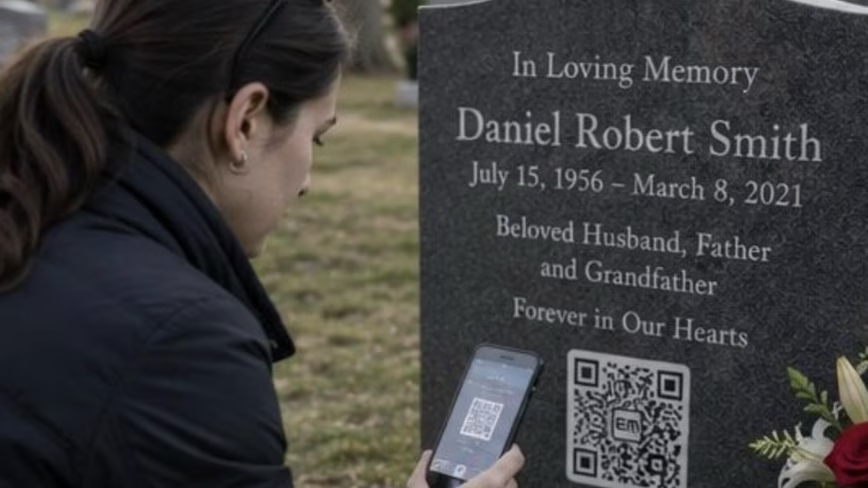
Image: courtesy of Thenextweb
The Unclaimed Digital Afterlife: Why Most People Fail to Plan, And What It Costs Their Families
As digital lives expand, the challenge of managing online assets after death has become a quiet crisis. Most people leave behind a vast 'digital legacy' — from cherished photos and social media memories to crucial financial accounts. Yet, despite the emotional and financial stakes, a significant majority fail to plan for what happens to this data when they are gone. This oversight leaves families in distress, financial assets unclaimed, and opens the door to identity theft and the concerning misuse of digital identities, a risk amplified by emerging AI technologies.
Outlook
Background
The average person today interacts with dozens of online platforms, creating a vast digital footprint that includes social media profiles, email accounts, cloud storage for photos and documents, streaming subscriptions, and various financial portals. When an individual dies, this digital presence does not simply vanish. Instead, it becomes a 'digital legacy,' a complex collection of data that can be difficult for surviving family members to access, manage, or close.
Evidence suggests a widespread disconnect between the recognition of this issue and proactive planning. According to a 2025 study by Caring.com, only 24% of Americans had a will, a notable drop from 33% in 2022. Further data from the Trust and Will 2025 Estate Planning Report indicated that 55% of Americans lacked any estate documents at all. This suggests a significant portion of the population is unprepared for the management of physical assets, let alone their more ephemeral digital counterparts.
The consequences of this lack of planning are multifaceted. Families often find themselves locked out of accounts containing precious memories, like family photos or videos, at a time when they are already grieving. Financially, assets held in online banks, cryptocurrency wallets, or trading platforms can become 'abandoned and unclaimed,' representing a multi-billion dollar global problem. Beyond these immediate concerns, there are growing security risks, including the theft of deceased individuals' online profiles and the potential for malicious use of their digital content, such as through deepfake technology. Major tech companies like Apple and Google have introduced tools to help users designate legacy contacts or manage their data post-death, but awareness and adoption of these features remain limited.
Precedents
For centuries, estate planning revolved around tangible assets: property, valuables, and physical documents. The legal frameworks and societal norms surrounding wills and inheritance developed in a world where a person's identity and wealth were largely physical. The advent of the internet and subsequent explosion of digital platforms in the early 21st century introduced an entirely new category of 'assets' and 'identity' that existing legal and social structures were not designed to handle.
Early digital legacies were often accidental — forgotten email accounts or defunct social media profiles. As digital life became more central, the problem slowly gained recognition. The initial response was largely reactive, with families struggling to gain access to accounts through cumbersome processes, often requiring death certificates and extensive verification. Tech companies, initially hesitant to grant third-party access due to privacy concerns, began developing specific 'legacy' features in the mid-2010s. This pattern mirrors the slow evolution of legal and social structures adapting to rapid technological change, from intellectual property rights in the age of mass media to data privacy in the internet era. The current situation, where tools exist but adoption is low, reflects a common historical pattern: technological solutions often outpace public awareness and behavioral change.
The real stakes of unmanaged digital legacies extend far beyond a forgotten password. For families, the immediate impact can be profoundly emotional. Access to a loved one's digital photos, videos, or messages can be a crucial part of the grieving process, offering comfort and connection. When these are locked away, it adds layers of frustration and distress to an already difficult time. Imagine trying to find a specific photo for a memorial, only to be blocked by two-factor authentication on a deceased parent's phone.
Financially, the problem represents a silent drain. Billions of dollars in unclaimed or abandoned digital assets sit in various online platforms, never reaching their rightful heirs. This isn't just about large investment portfolios; it includes smaller amounts in payment apps, loyalty programs, or even digital currencies, which collectively add up to significant sums. The administrative burden on executors and family members to track down and claim these assets can be immense, often requiring legal assistance and significant time.
Perhaps the most concerning aspect, and one increasingly amplified by AI, is the security and privacy risk. Deceased individuals' profiles are susceptible to theft and misuse. A report by Deeptrace, cited in the live context, estimated that deepfake videos were doubling every six months. This rapid proliferation of AI tools means that the digital footprint left behind could be manipulated, creating convincing but fake content that misrepresents the deceased, potentially causing immense pain and reputational damage to their families. The idea that a loved one's image or voice could be used without consent, post-mortem, for nefarious or commercial purposes, introduces a new and deeply unsettling dimension to digital legacy planning. This evolving threat transforms digital legacy from a matter of convenience into a critical security and ethical concern, demanding immediate attention from individuals, tech companies, and policymakers alike.
Scenarios
AnalysisThe current trajectory suggests several potential outcomes for the digital legacy problem, none of them simple:
* Increased Public Awareness and Tool Adoption: As the emotional and financial costs become more widely understood, and as tech companies continue to refine and promote their digital legacy tools, there could be a gradual increase in planning. This might be driven by educational campaigns from estate planners, legal professionals, or even public service announcements. The integration of digital legacy options directly into operating systems or social media platforms could also make it a more seamless process, pushing adoption rates upward. However, overcoming the natural human tendency to defer end-of-life planning remains a significant hurdle.
* Regulatory Intervention and Industry Standards: Governments and regulatory bodies, observing the scale of unclaimed assets and the emerging privacy risks, may step in. This could lead to new legislation mandating how digital service providers must handle accounts of deceased users, potentially requiring clearer pathways for designated heirs or a more standardized approach to account closure and data transfer. This would shift the burden from individual users to platform providers, creating a more uniform system across the digital sphere.
* Growth of Specialized Services: The market for third-party digital legacy management services is likely to expand. These companies offer comprehensive solutions that go beyond what individual tech platforms provide, including secure digital vaults for passwords, legal guidance, and proactive monitoring for misuse of digital identities. This outcome would cater to those willing to pay for a more robust and personalized solution, reflecting a growing recognition of the value and vulnerability of digital assets.
* Escalation of Risks Without Planning: If current trends persist, with low planning rates and rapid technological advancement, the problems of unclaimed assets, identity theft, and AI-driven misuse of digital likenesses will only intensify. This could lead to more public cases of digital trauma for families, increased legal disputes, and a growing 'digital ghost' problem where deceased individuals' online profiles remain active and vulnerable, creating a complex ethical and security challenge for society.
Timeline
Early 2000s
Initial Rise of Digital Footprints
The widespread adoption of personal computers and the internet begins, leading to the creation of early digital identities through email, forums, and nascent social media platforms. The concept of a 'digital legacy' is not yet widely recognized.
Mid-2010s
First Digital Legacy Tools Emerge
As social media matures and cloud storage becomes common, tech giants like Google and Facebook begin introducing features like 'Inactive Account Manager' and 'Legacy Contact' to allow users some control over their digital assets after death.
2022
Decline in Estate Planning Noted
Caring.com's Wills and Estate Planning Study reports that 33% of Americans have a will, indicating a significant portion of the population is unprepared for traditional estate planning, which often overlooks digital assets.
2025
Further Drop in Will Ownership, Deepfake Concerns Rise
Caring.com's study shows a further decline, with only 24% of Americans having a will. The Trust and Will report reveals 55% lack any estate documents. Simultaneously, estimates from Deeptrace highlight the rapid increase in deepfake videos, raising new concerns about the misuse of digital content, including that of deceased individuals.
2026-08-31
Current State: Tools Available, Planning Low
As of late August 2026, major tech companies like Apple and Google offer specific mechanisms for digital legacy management. However, despite these tools and the rising risks, a large majority of individuals still do not have a comprehensive plan for their digital afterlife, leading to ongoing challenges for families and institutions.
Frequently Asked Questions
A digital legacy refers to all the digital information an individual leaves behind after their death. This includes online accounts (social media, email, banking), digital photos and videos stored in the cloud, documents, cryptocurrency, subscriptions, and any other data stored or accessed online.
Discussion
Be the first to share your thoughts.