
Veridact
TechSportsFinanceGaming🎯 Predictions⭐ OpportunitiesAbout
Sign InSign Up
Veridact

Analysis before the headline. Veridact examines technology, finance, sports, and gaming events before they unfold through forecasting, probability modeling, historical precedent, and public prediction tracking.

Stay ahead of what's next

Forecasts, analysis, and prediction updates delivered to your inbox.

Coverage

  • Tech
  • Sports
  • Finance
  • Gaming

Company

  • About Us
  • Privacy Policy

© 2026 Veridact. Forecasting & analysis platform.

Content may include AI-assisted research and analysis. Predictions and opinions should not be considered financial, legal, medical, or investment advice.

tech
NASA's next "great observatory" begins mission to widen our view of the Universe

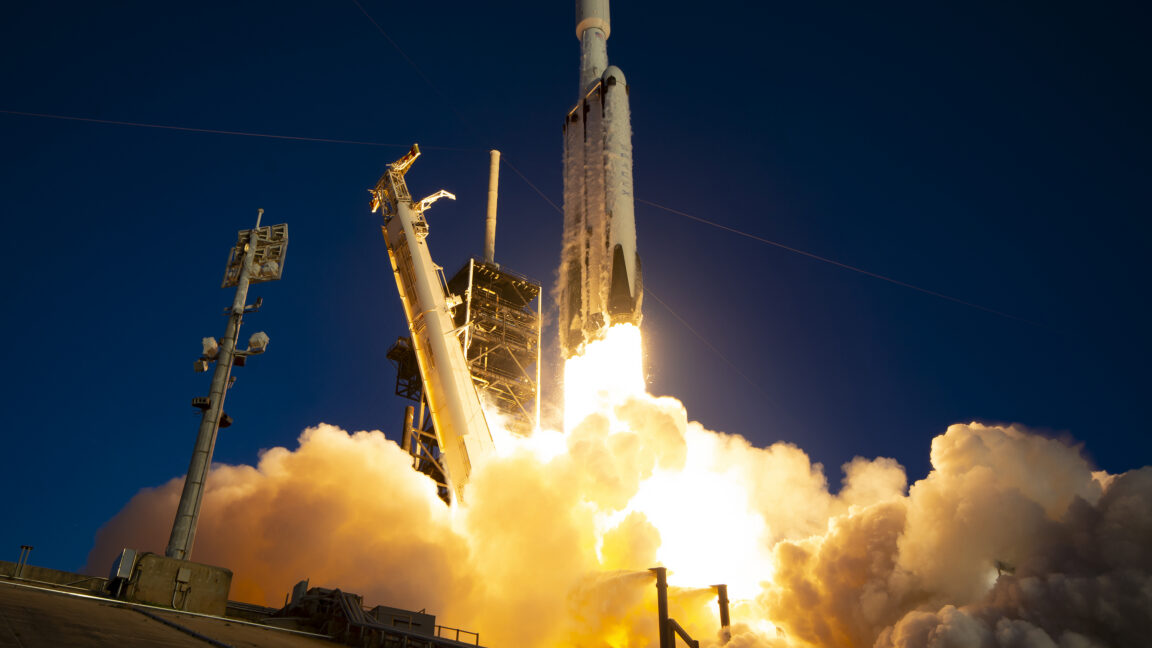
Image: courtesy of Ars Technica

techSeptember 1, 2026By Veridact EditorialUpdated Sep 1

NASA's New Cosmic Surveyor: How the Roman Telescope Will Map the Universe's Dark Energy

NASA's Nancy Grace Roman Space Telescope launched on August 31, 2026, from Kennedy Space Center, Florida. The $4.3 billion observatory, equipped with a 300-megapixel camera and a refurbished spy mirror, is designed to offer a panoramic view of the universe, specifically targeting the mysteries of dark energy and dark matter. It joins the ranks of the Hubble and James Webb Space Telescopes, but with a unique wide-field perspective.

Outlook

The Nancy Grace Roman Space Telescope is built to capture images of the universe in visible and near-infrared light, similar to the James Webb Space Telescope (JWST) and Hubble, but with a significantly broader sweep. Its Wide-Field Instrument (WFI) allows it to photograph sections of the sky roughly 50 times larger than what JWST can capture in a single image. This expansive view is crucial for large-scale surveys of galaxies, enabling scientists to map vast cosmic structures and trace the distribution of matter across billions of light-years.

This capability means Roman will act as a cosmic surveyor, creating comprehensive maps that reveal subtle distortions in spacetime caused by dark matter and the accelerating expansion driven by dark energy. The sheer volume of data it collects will be immense, with NASA suggesting a single Roman survey image could require over half a million 4K TVs to fully display. The mission's primary objective is not just to see more, but to see differently, providing the statistical power needed to tackle some of the most profound questions in cosmology.

Background

The Nancy Grace Roman Space Telescope is NASA's next "great observatory," a designation previously given to iconic missions like Hubble (visible and ultraviolet light), Chandra (X-ray), and Spitzer (infrared, now retired), alongside the active James Webb Space Telescope (infrared). Each observatory is designed to observe the universe in different wavelengths of light, providing complementary views that, when combined, offer a more complete picture of cosmic phenomena.

Roman's role is to bridge the gap between the deep, focused observations of Webb and the broader but less sensitive surveys from ground-based telescopes. While Webb excels at looking back to the earliest galaxies with extreme sensitivity, Roman will provide the necessary context by mapping immense swathes of the cosmos. This allows scientists to study statistical properties of galaxies and large-scale structures, which is critical for understanding the forces that shape the universe. It's about seeing the forest, not just the trees, in a way no other telescope can.

Precedents

Historically, each generation of space telescopes has profoundly reshaped our understanding of the cosmos. The Hubble Space Telescope, launched in 1990, delivered stunning images that confirmed the age of the universe and revealed the presence of exoplanets. More recently, the James Webb Space Telescope, launched in 2021, has pushed the boundaries of infrared astronomy, observing the universe closer to the Big Bang than ever before. These missions often take years from launch to full operational status and many more to yield their most significant discoveries.

The pattern suggests that Roman, as the next great observatory, will follow a similar trajectory, requiring an initial commissioning phase before it begins its primary scientific operations. Its design reflects a shift towards addressing specific, fundamental cosmological puzzles that require wide-field, high-resolution data that previous instruments could not provide. The lessons learned from the operational successes and challenges of Hubble and Webb have informed Roman's development, aiming for robust data collection and long-term mission stability.

The universe is expanding at an accelerating rate, a phenomenon attributed to dark energy, a mysterious force that makes up about 68% of the cosmos. Dark matter, which accounts for another 27%, influences galaxies and clusters through gravity but does not interact with light. Together, these two invisible components dominate the universe, yet their nature remains largely unknown.

The Roman Space Telescope is specifically designed to probe these elusive components. By mapping the distribution of galaxies and observing how light from distant objects is subtly distorted by gravity (a process called gravitational lensing), Roman will provide critical data points. This data will help scientists refine models of cosmic expansion, test theories about the nature of dark energy, and create the most detailed maps yet of the universe's dark matter scaffolding. The insights gained could fundamentally alter our understanding of physics, revealing whether dark energy is a constant property of space or a dynamic field.

Success in this mission could lead to a Nobel Prize-level discovery, challenging or confirming Einstein's theory of general relativity on cosmic scales. Conversely, failure to find expected patterns could equally force a complete rethinking of fundamental physics, pushing scientists to develop entirely new theoretical frameworks for the universe.

Scenarios

Analysis

One potential outcome is that Roman successfully executes its wide-field surveys and precisely measures the expansion history of the universe.

This outcome would provide unprecedented statistical data on dark energy, potentially narrowing down its possible explanations. It could confirm existing cosmological models or reveal subtle deviations that refine our understanding of cosmic evolution. The detailed maps of dark matter distribution would also enhance our grasp of galaxy formation and the large-scale structure of the universe.

Another possible scenario is that technical or operational challenges limit Roman's full scientific potential.

While every effort is made to ensure mission success, space missions carry inherent risks. Unforeseen instrument malfunctions, operational constraints, or budget limitations could reduce the scope or duration of Roman's primary surveys. Such an outcome might delay or limit the definitive answers sought regarding dark energy and dark matter, forcing scientists to rely on less comprehensive data or await future missions. However, even partial success could yield valuable data, as has been the case with other observatories facing initial hurdles.

Timeline

2026-08-31
Nancy Grace Roman Space Telescope Launches
NASA's Nancy Grace Roman Space Telescope launched from Kennedy Space Center in Florida, beginning its mission to study dark energy and the universe's expansion.
Late 2026 - Early 2027
Commissioning and Calibration Phase
The telescope undergoes initial commissioning and calibration of its instruments, a standard procedure for new space observatories to ensure all systems are fully operational and precise.
Mid-2027
Primary Scientific Observations Begin
Roman is expected to begin its wide-field surveys, focusing on its core mission of mapping dark energy, dark matter, and exoplanets across vast stretches of the cosmos.
2028-2030
First Major Data Releases and Discoveries
Scientists are anticipated to begin releasing the first significant datasets and publishing initial findings from Roman's extensive surveys, potentially revealing new insights into the universe's fundamental forces.

Frequently Asked Questions

The Nancy Grace Roman Space Telescope is NASA's newest 'great observatory,' launched on August 31, 2026. Its primary mission is to study the mysteries of dark energy and dark matter by providing an expansive, panoramic view of the universe in visible and near-infrared light.

Discussion

0/100
0/1000

Be the first to share your thoughts.

Related Coverage

tech

The Unclaimed Digital Afterlife: Why Most People Fail to Plan, And What It Costs Their Families

Sep 1
tech

Beyond the Test Drive: What a Solar Mobile Clinic's Kenyan Success Means for Off-Grid Healthcare

Sep 1
tech

Apple's App Store Shake-Up: Eddy Cue Returns to the Helm Amid Regulatory Pressures and Leadership Transition

Sep 1
tech

The Irony of Physical AI: Its Future Hinges on Magnets, Not Just Models, But AI Is Now Fighting Back

Sep 1

Stay ahead of the story

AI analysis delivered before events unfold. No spam.

ⓘ

Methodology: Veridact combines public data, historical precedent, and analytical models to evaluate the likelihood of future outcomes.