
The return of the App Store to Eddy Cue's services division signals a potential shift in Apple's strategy for its highly lucrative, yet heavily scrutinized, digital marketplace. With John Ternus poised to take the top leadership role, this change suggests a move towards a more integrated services approach for the App Store, possibly with a renewed focus on navigating global regulatory challenges. Developers and regulators will likely watch for any immediate changes in App Store policies, fee structures, or enforcement, especially concerning third-party payment options and app distribution mechanisms. Apple's public posture regarding antitrust concerns may also evolve, potentially leading to more proactive engagement or concessions to avoid further legal battles.
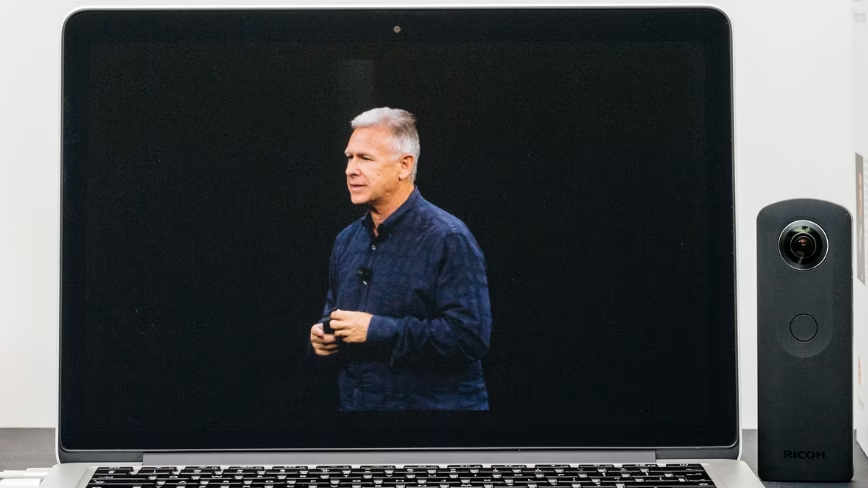
Image: courtesy of Thenextweb
Apple's App Store Shake-Up: Eddy Cue Returns to the Helm Amid Regulatory Pressures and Leadership Transition
Phil Schiller, a long-serving and highly visible Apple executive, stepped down yesterday from his responsibilities overseeing the App Store and Apple's product events. These critical roles have been transferred to Eddy Cue, Apple's Senior Vice President of Internet Software and Services. Schiller will retain his title as an Apple Fellow, a role he transitioned to in 2020. This move places the App Store back under Cue's services division, a position he held prior to 2015, and comes at a pivotal moment for Apple as it navigates increasing regulatory scrutiny, particularly from the Digital Markets Act in Europe, and prepares for a leadership transition with John Ternus reportedly on the eve of becoming chief executive.
Outlook
Background
The App Store has been a cornerstone of Apple's services revenue, generating billions annually and fostering a vast ecosystem of developers. However, its operational model, particularly the 15-30% commission on in-app purchases and strict control over app distribution, has drawn intense criticism and legal challenges from developers, regulators, and rival companies globally. The European Union's Digital Markets Act (DMA), which came into full effect earlier this year, specifically targets Apple's App Store as a 'gatekeeper' service, demanding greater openness, allowing alternative app stores, and prohibiting anti-steering provisions that prevent developers from directing users to cheaper payment options outside the App Store.
Phil Schiller, who took over the App Store in 2015, has been the public face of Apple's defense against these challenges, often testifying in court cases and defending the company's policies as essential for security and user experience. Notably, a US judge found last year that Schiller had internally advocated for greater compliance with regulatory demands, a position that was ultimately overruled within Apple. Eddy Cue previously oversaw the App Store until 2015, when it was shifted to Schiller's marketing department. His return to this critical role, along with Carson Oliver taking over day-to-day operations, implies a strategic realignment. This executive shuffle occurs as John Ternus is reportedly preparing to take over as Apple's chief executive, suggesting a broader restructuring of responsibilities and a re-evaluation of key business units as the company enters a new era of leadership.
See also
Precedents
Apple has a history of adjusting leadership roles and organizational structures in response to market shifts, technological advancements, and internal strategic priorities. The App Store itself has seen its oversight move between different executive divisions. When Eddy Cue initially oversaw the App Store, its primary focus was rapid growth and establishing a robust developer ecosystem. The shift to Phil Schiller's marketing division in 2015 coincided with the App Store's maturation into a massive revenue generator and the onset of significant regulatory scrutiny. Schiller's marketing background made him a suitable public advocate for Apple's developer policies, emphasizing the value proposition and user experience.
The current transition back to Cue's services division, especially under the shadow of the DMA and other antitrust pressures, echoes a pattern of specialized leadership for specific challenges. Cue's deep experience in services, content, and negotiations (he also oversees Apple Music, Apple TV+, and iCloud) suggests a renewed emphasis on the App Store as a service offering, potentially prioritizing platform flexibility and regulatory compliance over a rigid marketing-driven defense. This mirrors how large tech companies often reassign high-stakes projects to executives with specific skill sets when facing new market dynamics or legal headwinds. Furthermore, leadership changes at the CEO level often trigger broader executive reshuffles, as incoming leaders seek to build their own teams and implement their strategic visions. The timing of this change, 'on the eve' of John Ternus becoming CEO, is consistent with a new leader wanting to set his own course for a critical business unit.
This executive change is more than a simple personnel reshuffle; it signals a potential strategic pivot for Apple's App Store, a business unit that generated an estimated $85 billion in developer payouts in 2023. The App Store is not just a revenue driver; it is a critical interface between Apple and millions of developers, and by extension, billions of users. Its policies directly impact the profitability and viability of countless businesses built on Apple's platforms.
For developers, the shift could mean a more pragmatic approach to App Store guidelines and a greater willingness to adapt to evolving market demands and regulatory requirements. Phil Schiller's internal advocacy for compliance, which was reportedly overruled, suggests there may have been internal friction regarding Apple's hardline stance. Eddy Cue's return to the role could usher in a period of greater flexibility, potentially leading to changes in commission rates, payment processing options, or even the allowance of third-party app stores, particularly in regions like Europe where the DMA mandates such changes.
For Apple's bottom line, any significant changes to the App Store's business model could have a substantial impact on its services revenue, which has been a key growth engine. However, proactive adjustments could also help Apple avoid costly and protracted legal battles, hefty fines, and potentially more punitive regulatory interventions.
Finally, this move is a strong indicator of John Ternus's emerging leadership style. If he is indeed about to become CEO, placing Cue back in charge of the App Store suggests a clear strategic direction for one of Apple's most valuable, and contentious, assets. It implies a recognition that the App Store's future success hinges not just on its technological prowess, but on its ability to adapt to a rapidly changing global regulatory environment.
Scenarios
Analysis1. Increased Regulatory Compliance and Flexibility (INFERRED/SPECULATIVE): With Eddy Cue, known for his negotiation skills and experience in various services, taking the lead, Apple may adopt a more conciliatory approach to regulatory demands. This could involve faster implementation of DMA requirements, such as allowing third-party app stores and external payment options, potentially expanding these changes beyond the EU to other markets to streamline global policy. This shift could reduce Apple's legal exposure and the risk of significant fines, but may also impact its services revenue model.
2. Strategic Reintegration of Services (INFERRED): Placing the App Store firmly back within the services division under Cue suggests a more cohesive strategy for Apple's entire digital offering. This could lead to tighter integration between the App Store and other Apple services like Apple Music, Apple TV+, and iCloud, potentially creating new bundles or subscription models that leverage the entire ecosystem to maintain user loyalty amidst increased competition.
3. Developer Relations Overhaul (SPECULATIVE): The change in leadership could usher in a new era of engagement with developers. Faced with growing discontent over App Store policies, Apple might initiate programs, communication channels, or even revised revenue share agreements designed to mend relationships and foster innovation on its platforms. This could involve more transparency in review processes or new tools for developers.
4. Continued Incremental Changes (SPECULATIVE): While the leadership change is significant, Apple's core strategy might remain largely consistent, with Cue overseeing incremental adjustments rather than radical overhauls. This outcome would see Apple continuing to challenge regulatory decisions while making minimal, legally mandated changes, preserving its existing business model as much as possible. The day-to-day management by Carson Oliver could also suggest a focus on operational efficiency within the existing framework.
Timeline
Frequently Asked Questions
Discussion
Be the first to share your thoughts.