
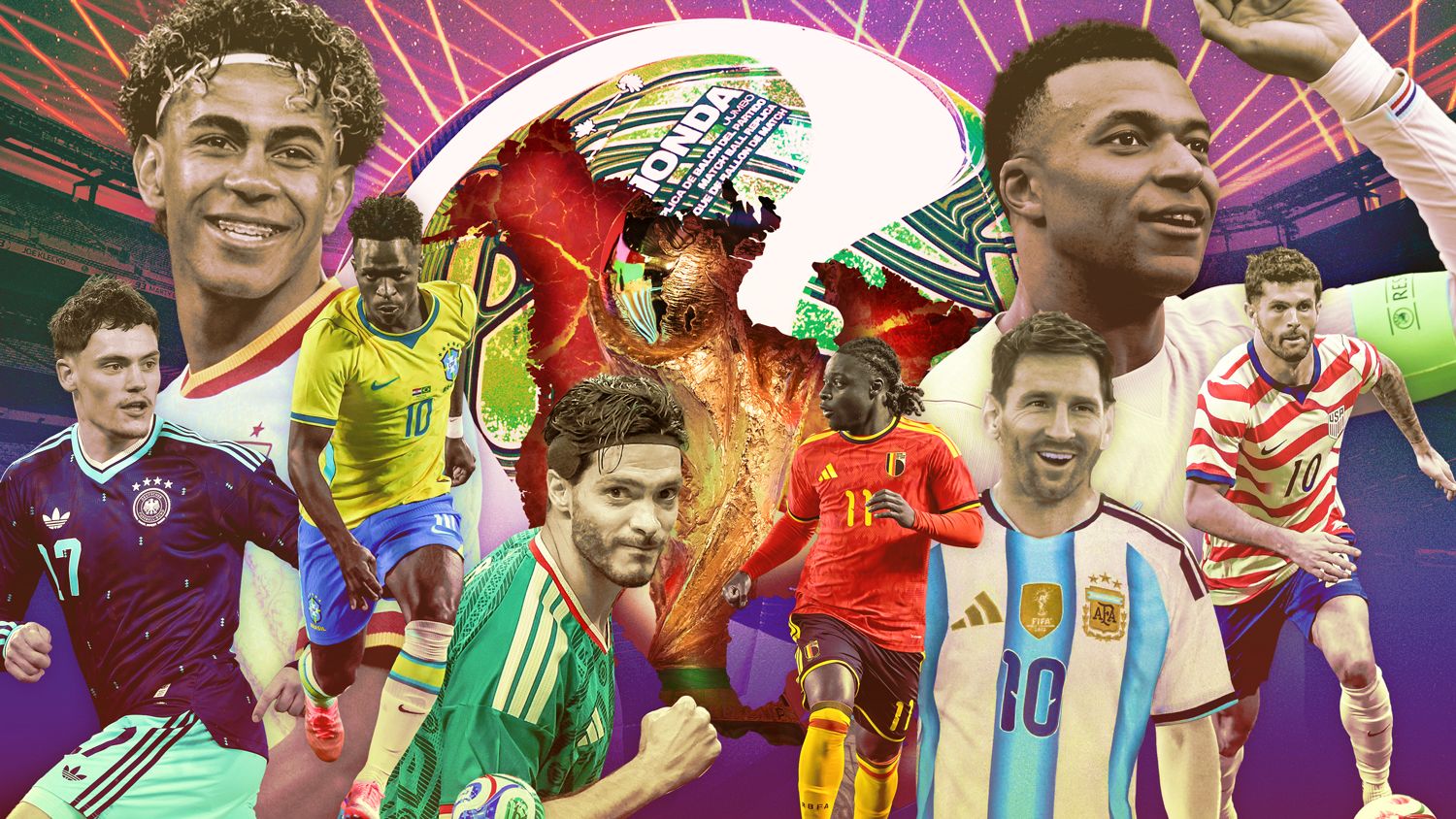
Image: courtesy of ESPN
The 104-Match Marathon: Inside the Logistical and Financial Gamble of the 2026 World Cup
In less than a week, the most geographically bloated, expensive, and logistically complex sporting event in human history will kick off. On June 11, 2026, Mexico's Estadio Azteca will host the opening match of a newly expanded, 48-team FIFA World Cup. This tournament is no longer just a soccer competition. It is a massive, multi-national infrastructure test stretching across three countries, four time zones, and 16 host cities. By expanding the tournament from 32 to 48 teams, FIFA has created a 104-match marathon designed to shatter financial records. Yet, beneath the corporate excitement lies a fragile web of travel logistics, security challenges, and fan skepticism that will test the limits of North American transit and hospitality.
What to Expect
Fans and teams are preparing for a tournament of unprecedented physical scale. The expansion from 32 to 48 teams means the match schedule has ballooned from 64 to 104 games. Instead of the compact footprint seen in Qatar in 2022, where stadiums were within driving distance of one another, teams in 2026 will traverse the entire North American continent. A team could easily play a group-stage match in Vancouver, fly to Houston for the round of 32, and then head to New York for the quarterfinals.
This geographical sprawl introduces severe physiological challenges for players already exhausted from grueling European club seasons. How will sports science staff manage recovery times when flights last five hours and cross multiple time zones? The answer lies in highly localized regional clusters for the group stages, but once the knockout rounds begin on June 28, 2026, those neat regional boundaries will dissolve. Fans will face even greater hurdles. North America lacks a cohesive high-speed rail network, forcing millions of traveling supporters to rely on expensive domestic flights and rental cars. Cities like Kansas City, Boston, and Miami are bracing for an influx of international visitors who may not realize how far apart these venues actually are.
Key Context
The driving force behind this massive expansion is not athletic merit; it is capital allocation. FIFA projects that the 2026 tournament cycle will bring in historic revenues, with a target of over $11 billion. By playing in massive NFL stadiums in the United States, FIFA is tapping into the most lucrative corporate hospitality market in the world. Venues like MetLife Stadium in New Jersey, SoFi Stadium in Los Angeles, and AT&T Stadium in Dallas possess luxury suites and premium seating capacities that European and South American stadiums simply cannot match.
However, this commercial ambition has created friction between FIFA headquarters in Zurich and local organizing committees. In cities like Seattle and Boston, transit authorities are scrambling to upgrade public transport routes to handle match-day crowds. Security is another point of contention. The United States, Canada, and Mexico operate under vastly different border control and policing frameworks. Coordinating visa entries for millions of fans, especially with the political sensitivities surrounding the US-Mexico border, has required years of delicate diplomatic negotiation. The success of this tournament relies entirely on whether these three distinct bureaucratic systems can function as a single, seamless host.
Historical Patterns
History shows that expanding the World Cup always invites skepticism before eventually becoming the new normal. When FIFA expanded the tournament from 24 to 32 teams ahead of France 1998, critics warned of watered-down competition and uncompetitive group matches. While those fears were partially realized in early low-scoring draws, the tournament ultimately succeeded in bringing new nations into the global spotlight. The 2026 expansion is even more drastic, adding 16 teams in one go.
We can also look to the 1994 World Cup in the United States for historical clues. Despite soccer lacking mainstream popularity in America at the time, that tournament still holds the record for the highest average attendance per match in World Cup history, with nearly 69,000 fans per game. The 2026 tournament will easily shatter the total attendance record simply due to the sheer volume of games. The closest modern comparison for a multi-nation tournament is Euro 2020, which was held across 11 different European countries. That tournament was widely criticized by players and fans for the unfair travel advantages given to certain teams, a warning sign that FIFA has tried to heed by grouping early matches regionally.
This tournament represents a critical crossroads for the business of global sports. If North America successfully pulls off a 48-team tournament across an entire continent, it will permanently change how mega-events are hosted, paving the way for more multi-country bids in the future. It is also the ultimate test of soccer's commercial ceiling in the United States. For decades, soccer advocates have predicted that the sport would finally conquer the American market. With matches taking place in the country's largest media markets, this is the best opportunity yet to convert casual viewers into lifelong fans. Conversely, if the tournament is marred by logistical gridlock, empty corporate suites, or security failures, it could cool the enthusiasm of major brands and cities for hosting future international sporting events, including the upcoming 2028 Los Angeles Olympics.
Potential Outcomes
AnalysisSeveral distinct scenarios could unfold as the tournament progresses. First, the regional grouping strategy might successfully prevent fan and player burnout during the group stage, only for the knockout rounds to trigger a logistical crisis. As unexpected teams qualify and fans rush to buy last-minute flights and hotel rooms, domestic airfares and lodging prices in host cities could spike to unprecedented levels, pricing out traditional supporters and leaving stadiums filled primarily by wealthy corporate guests.
Second, the tournament could trigger a massive, long-term economic boom for soccer in North America. By exposing millions of local fans to elite international competition, Major League Soccer and Liga MX could see a sustained surge in attendance and broadcast viewership. This outcome would justify FIFA's commercial gamble and cement the United States as the financial epicenter of the global game for the next decade.
Third, the sheer volume of matches could lead to widespread competitive dilution. With several lower-ranked nations qualifying due to the expanded field, the group stage might feature a high number of lopsided, low-intensity games. This could lead to television viewer fatigue in major European and South American markets, harming broadcast ratings during the first two weeks of the tournament before the elite teams finally meet in the later rounds.
Timeline
Frequently Asked Questions
Discussion
Be the first to share your thoughts.