
The immediate future for Tottenham will involve a critical period of team integration and cultural adjustment under Roberto De Zerbi. Fans and pundits will closely watch how quickly the new manager can forge a cohesive unit from a collection of expensive individual talents. The next few weeks, starting with their League Cup clash against Charlton Athletic, will test De Zerbi’s ability to instill the tactical discipline and psychological resilience he believes the squad currently lacks. Expect intense scrutiny on player performances, particularly those of the new signings, and on De Zerbi's tactical adjustments, as the club aims to translate its substantial financial investment into on-field results.
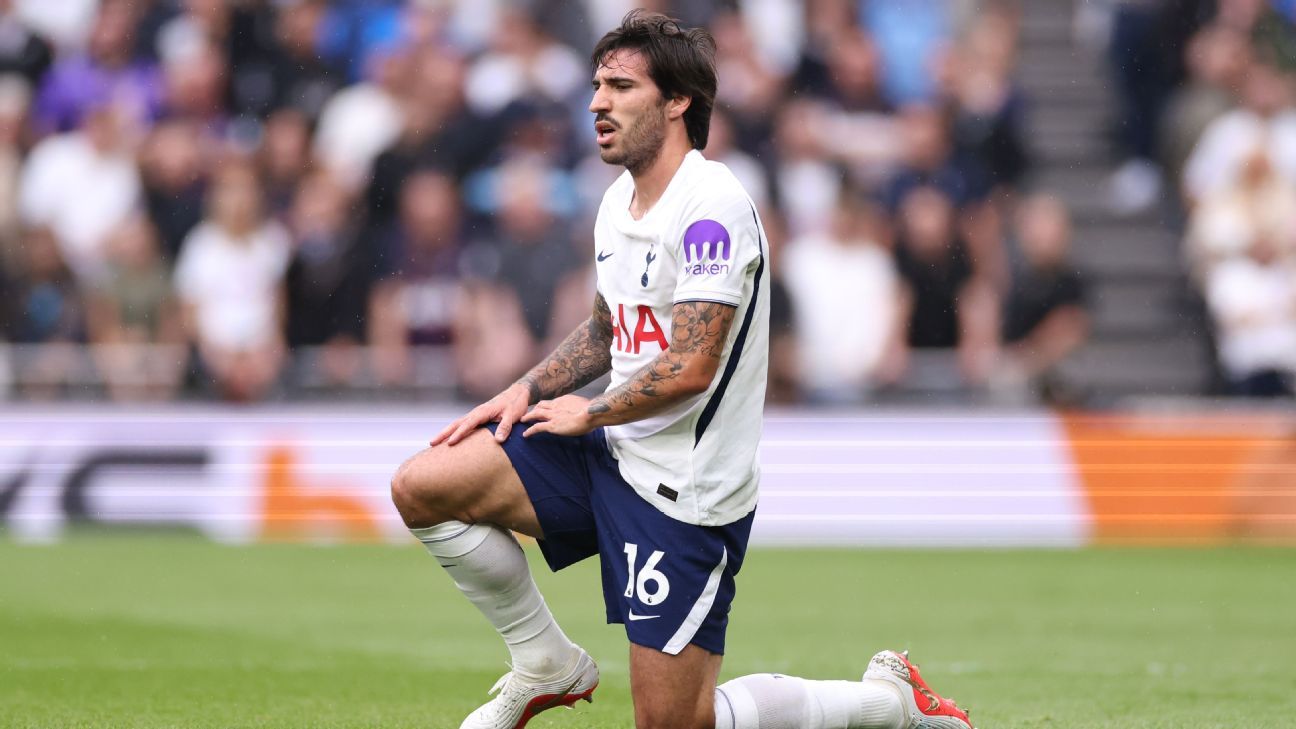
Image: courtesy of ESPN
Tottenham's £380 Million Question: Can Money Buy Mentality?
Tottenham Hotspur embarked on an unprecedented £380 million spending spree this summer, bringing in a host of new talent under manager Roberto De Zerbi. Yet, the initial returns have been stark: a disappointing 3-0 defeat to Brentford in their Premier League opener. De Zerbi himself has acknowledged the new-look squad is 'not a team yet,' pointing to the elusive 'winning mentality' as the real challenge, rather than the transfer budget itself.
Outlook
Background
Tottenham Hotspur, a club often criticized for falling short of its potential, made a definitive statement of intent in the summer transfer window of 2026. The club sanctioned an extraordinary £380 million in spending, bringing in six new players to reshape the squad. This aggressive recruitment drive was meant to provide new manager Roberto De Zerbi with the tools to implement his vision and lift Spurs from their recent struggles, which saw them narrowly avoid Premier League relegation in May 2026 with a final-day victory over Everton.
However, the immediate aftermath of this significant outlay has been less than stellar. On August 29, Tottenham suffered a comprehensive 3-0 defeat away to Brentford in their opening Premier League fixture. Five of the six new signings featured in that match, suggesting De Zerbi was quick to integrate his new acquisitions into the starting lineup.
Following the humbling loss, De Zerbi offered a candid assessment of his team's state. He admitted, 'we're not a team yet,' a frank acknowledgment that the financial investment has not instantly created a cohesive unit. He further elaborated that the primary challenge for Tottenham is not a lack of funds or talent, but rather the development of a 'winning mentality.' This suggests a deeper, more psychological hurdle than simply acquiring high-calibre players. De Zerbi, while defending the club's spending, has made it clear his 'big ambitions' for the team hinge on cultivating this crucial, intangible quality.
See also
Precedents
The history of top-flight football is replete with examples where substantial transfer spending does not immediately, or even eventually, translate into success. Clubs frequently invest heavily in new players, only to find that individual talent does not automatically create team chemistry or a winning culture. The integration of multiple new signings often requires a significant period of adjustment, both tactically and socially, as players adapt to new systems, teammates, and a different club environment. It is not uncommon for squads to take half a season, or even longer, to truly 'gel.'
Moreover, the concept of 'mentality' in football is a recurring theme. Teams that consistently perform at the highest level often possess an underlying resilience, a collective belief, and an unshakeable determination that money alone cannot purchase. This intangible quality is typically built over time through shared experiences, strong leadership, and a clear tactical identity instilled by the manager. Managers like Sir Alex Ferguson at Manchester United or Jürgen Klopp at Liverpool famously spent years cultivating such a mentality, often starting with less star-studded squads before adding top talent. Conversely, teams that have spent lavishly but lacked this core mental fortitude have often underperformed relative to their financial investment.
Tottenham itself has a history of high expectations followed by periods of frustration, often struggling to consistently compete for major trophies despite having talented squads. This pattern suggests that the challenge De Zerbi faces extends beyond simply improving the roster; it involves addressing deeply ingrained institutional and psychological factors that influence performance.
This situation at Tottenham Hotspur carries significant implications, not just for the club but for the broader Premier League and the financial model of modern football. For Tottenham, the £380 million outlay represents a monumental financial commitment. Failing to translate this into immediate, tangible improvements — particularly in terms of a top-four finish and consistent European qualification — would raise serious questions about the effectiveness of such aggressive spending and De Zerbi's long-term suitability. The club's ownership, the Lewis family, made 'actions' a promise after last season's near-relegation scare, and they will expect a return on their investment.
For De Zerbi, this is an early and crucial test of his managerial philosophy. His ability to articulate and then instill a 'winning mentality' will define his tenure. If he can turn a group of expensive players into a cohesive, mentally tough team, it would validate his approach and potentially establish a new era for Spurs. However, if the struggles persist, the pressure will mount quickly, given the club's financial commitment and the high expectations that accompany it.
More broadly, the situation highlights a fundamental tension in modern football: the belief that success can be bought versus the enduring value of intangible qualities like team spirit, cohesion, and mental fortitude. If Tottenham's spending fails to yield results, it could serve as a cautionary tale, reinforcing the idea that while money can buy talent, it cannot guarantee the complex alchemy required to build a true championship contender.
Scenarios
Analysis1. De Zerbi Successfully Forges a Cohesive Unit: Roberto De Zerbi, leveraging his tactical acumen and the sheer talent now at his disposal, could overcome the initial setback. By focusing on team building and psychological development, he might successfully instill the 'winning mentality' he seeks. This could lead to a gradual but noticeable improvement in performances, with the new signings gelling and Spurs becoming a more consistent and formidable force in the Premier League. This outcome would validate the club's significant investment and establish De Zerbi as a manager capable of building both a squad and a culture.
2. Continued Inconsistency and Mounting Pressure: Despite the investment, the team may struggle to find consistency. The individual talents might fail to integrate effectively, and the 'mentality' issues could persist, leading to a continuation of the poor home form and inconsistent results that plagued the club previously. This would put immense pressure on De Zerbi, especially given the high expectations tied to the £380 million spending. The club's ambitious targets for the season, such as European qualification, could become increasingly difficult to achieve, potentially leading to questions about De Zerbi's long-term future.
3. Tactical Adjustments and a Mid-Table Consolidation: De Zerbi might make significant tactical adjustments in response to the early struggles, leading to a more stable but perhaps less exciting period of consolidation. While the team might improve its defensive solidity and avoid the kind of heavy defeats seen against Brentford, it could still lack the attacking fluency and ruthless edge needed to challenge for top honors. This outcome would represent a partial success in stabilizing the squad but would fall short of the 'big ambitions' De Zerbi has articulated, suggesting that even immense spending cannot immediately bridge the gap to the league's elite.
Timeline
2026-05-28
Premier League Survival Secured
Tottenham Hotspur narrowly avoided Premier League relegation with a final-day victory over Everton, concluding a challenging season.
2026-06-01
Summer Transfer Window Opens
The official start of the summer transfer window, allowing clubs to begin player acquisitions. Tottenham would go on to spend £380 million.
2026-08-29
Opening Premier League Defeat
Tottenham Hotspur lost their opening Premier League match of the season 3-0 to Brentford, with five of their six new summer signings featuring in the game.
2026-08-29
De Zerbi's Post-Match Assessment
Following the Brentford loss, manager Roberto De Zerbi admitted his new-look team was 'not a team yet' and highlighted the need to develop a 'winning mentality'.
2026-09-02
League Cup Second Round Match
Tottenham Hotspur is scheduled to face Charlton Athletic in a League Cup second-round clash, providing an early opportunity for De Zerbi's side to bounce back.
Frequently Asked Questions
Tottenham Hotspur spent a confirmed £380 million in the summer transfer window of 2026, making it one of the largest outlays in the club's history.
Discussion
Be the first to share your thoughts.