
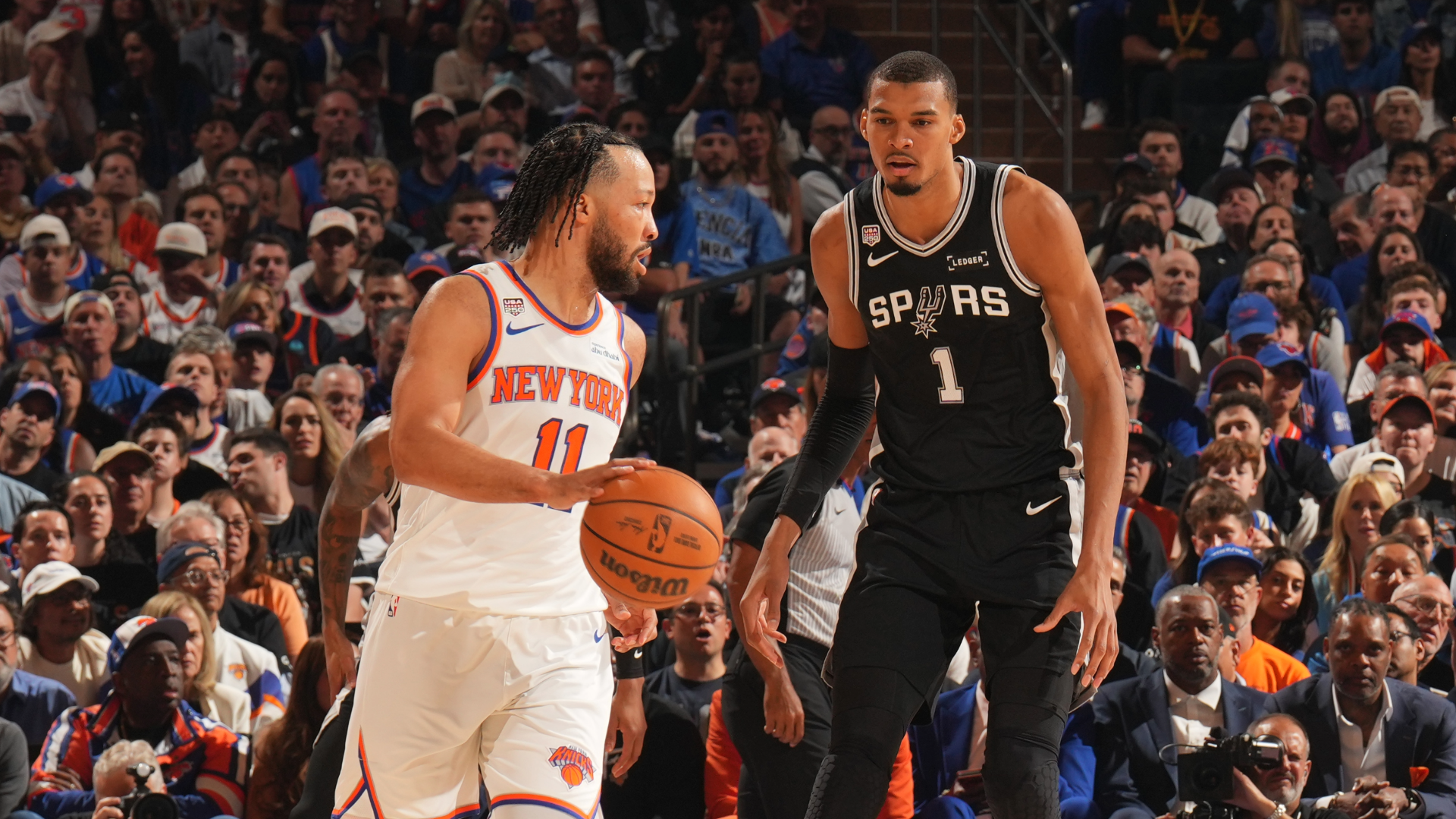
Image: courtesy of Cbs Sports
The Shove That Shook the Playoffs: Why the NBA’s Quiet Admission on Victor Wembanyama Changes Nothing and Everything
A major officiating error in the final seconds of Game 3 has thrown the NBA playoffs into intense debate. The league officially admitted that San Antonio Spurs star Victor Wembanyama should have been called for a foul after shoving New York Knicks guard Jalen Brunson. Despite this admission, the league confirmed the play will not be upgraded to a flagrant foul. This decision leaves the Knicks with a painful loss that cannot be undone, while the Spurs escape any further punishment. The incident highlights the difficult job referees face in real-time, the limits of the league's review system, and the massive impact that a single whistle—or lack of one—can have on a championship series. This article breaks down the details of the play, the league's official report, and what this means for the future of both teams and the sport itself.
What to Expect
In the coming days, the focus will turn entirely to how the referees handle the next game of this intense series. Officiating crews do not like being in the spotlight for making mistakes, and the league's public announcement puts a massive amount of pressure on whoever blows the whistle in Game 4. You can expect the referees in the next game to watch Victor Wembanyama extremely closely, especially when he is defending smaller players like Jalen Brunson. This might lead to a game that is called much more strictly, with early whistles that could disrupt the flow of play and put key players in early foul trouble. It is highly likely that both coaching staffs will spend their pre-game meetings discussing how to adapt to this expected change in how the game is policed.
For the players themselves, the mental battle will be just as important as the physical one. Jalen Brunson has shown throughout his career that he does not let tough situations break his focus, but his teammates and coaches will undoubtedly feel a sense of frustration that they must channel into energy. On the other side, Wembanyama will have to show great maturity. He must remain a dominant defensive force without being so physical that he invites the referees to make quick calls. The coaches will also have to adjust their strategies, knowing that the style of play allowed in Game 3 might not be tolerated in Game 4. This creates a fascinating chess match where the team that adapts quickest to the officiating style will have a massive advantage.
Key Context
To understand why this moment is so significant, you have to look at the two players at the center of the drama. Victor Wembanyama is a unique athlete in the history of basketball, standing over seven feet tall with an incredible ability to block shots and guard multiple positions. His arrival in the league has been met with massive excitement, and he is already seen as the future of the sport. Jalen Brunson, on the other hand, is a much smaller guard who has earned his star status through years of hard work, clever moves, and a refusal to back down from bigger opponents. When these two players collided in the final seconds, it was a classic battle of size versus speed.
The NBA's Last Two Minute report is a tool designed to bring honesty to the game, but it often causes more arguments than it solves. The report for Game 3 clearly stated that Wembanyama made illegal contact with Brunson, which should have resulted in free throws that could have changed the outcome of the game. However, the league's decision not to upgrade the play to a flagrant foul shows how high the bar is for such a ruling. A flagrant foul is defined as contact that is unnecessary or dangerous, and the league decided that Wembanyama's push, while a foul, was simply a physical play made in the heat of a close game rather than an attempt to hurt his opponent. This distinction is crucial, as a flagrant foul would have carried much heavier penalties, including potential suspensions or fines.
Historical Patterns
The history of the NBA playoffs is filled with moments where a missed call in the final seconds changed the course of sports history. For decades, there has been an unwritten rule among many referees that they should let the players decide the game in the final seconds. This means that physical contact that would be called a foul in the first quarter is often ignored in the final seconds of the fourth quarter. While some fans prefer this style because it allows the game to end without interruption, others argue that a foul in the first minute is the same as a foul in the last minute and should be called the same way. This ongoing debate has never been fully resolved, and each playoff year brings new examples that feed the fire.
When the NBA introduced the Last Two Minute report in 2015, the goal was to make the officiating process more open and trusted. Instead, it has created a pattern where teams receive official apologies for losses they can never get back. There is no historical precedent for the league changing the result of a game after it has ended due to a missed call, meaning these reports serve only as historical records. For teams that lose close games due to these errors, the reports can feel like an empty gesture that does nothing to help them in their quest for a championship. Over time, this has led to growing calls from fans and team executives for a more active review system that can correct mistakes while the game is still happening.
The True Cost of a Missed Whistle
This situation highlights a fundamental problem in professional sports: how do you balance the human element of officiating with the need for perfect accuracy? In an era where sports are watched by millions on high-definition screens and analyzed from every angle in slow motion, referee mistakes are more obvious than ever before. This creates a difficult environment for the league, which must protect the integrity of its games while supporting the referees who have to make split-second decisions in front of screaming crowds. The tension between wanting a fast-flowing game and wanting a perfectly called game is a challenge that the league has yet to solve.
The decision also touches on the delicate balance of superstar status in the NBA. Throughout history, there have been complaints that the league's biggest stars receive special treatment from referees, both in terms of getting calls in their favor and avoiding fouls when they play physically. Whether this is true or not, incidents like the Wembanyama non-call feed into the belief that certain players are protected by the league. For the sport to maintain its credibility with fans and players alike, the rules must be applied equally to everyone, regardless of their size, fame, or potential to be the future face of the league. When the league admits a mistake but offers no real remedy, it can leave a lingering sense of unfairness that hangs over the entire postseason.
Potential Outcomes
AnalysisOne major outcome of this controversy will be a serious discussion within the NBA's competition committee during the upcoming off-season. The league is constantly looking for ways to improve officiating and reduce the number of high-profile mistakes that overshadow great games. We could see a proposal to give coaches more power to challenge calls in the final seconds of a game, or even the introduction of a system where a central replay center in New Jersey can automatically correct clear errors in the final minute without waiting for a coach's challenge. This would represent a major shift in how games are finished, prioritizing accuracy over speed.
Another outcome is the immediate impact on the players' approach to physical defense. Coaches around the league will use this incident as a teaching tool, showing their players exactly what they can and cannot get away with in the final seconds of a game. For Wembanyama, this moment will serve as a valuable lesson in how his physical presence is viewed by the league. He will likely learn to be more careful with his positioning, finding ways to use his incredible height and wingspan to contest shots without using his hands or body to push opponents, which will make him an even more effective and disciplined defender in the future. Meanwhile, guards like Brunson may become even more aggressive in seeking contact, knowing that the league is watching these matchups with heightened awareness.
Timeline
Frequently Asked Questions
Discussion
Be the first to share your thoughts.