
In the coming weeks, expect a war of attrition between public pressure and front-office patience. The Colts are projected to enter training camp in late July with one of the youngest secondary groups in the league, relying heavily on internal development from third-year players like JuJu Brents and Jaylon Jones, alongside safeties Nick Cross and Rodney Thomas II. While external analysts and fan bases clamor for the immediate signing of a decorated veteran like former Pro Bowl safety Justin Simmons or cornerback Stephon Gilmore, the Colts' executive suite is likely to maintain its posture of disciplined inaction until late July. If any move is made, it will not be a splashy multi-year commitment. Instead, expect a highly structured, incentive-laden one-year deal designed to protect the team's future cap health rather than appease immediate public anxiety. The coaching staff, led by Shane Steichen and defensive coordinator Gus Bradley, will spend the initial weeks of camp evaluating whether their young defensive backs can survive without a veteran safety valve. If the early practices in Westfield, Indiana, reveal the same coverage busts that plagued the unit in previous campaigns, Ballard will be forced to act, but only on his own financial terms.
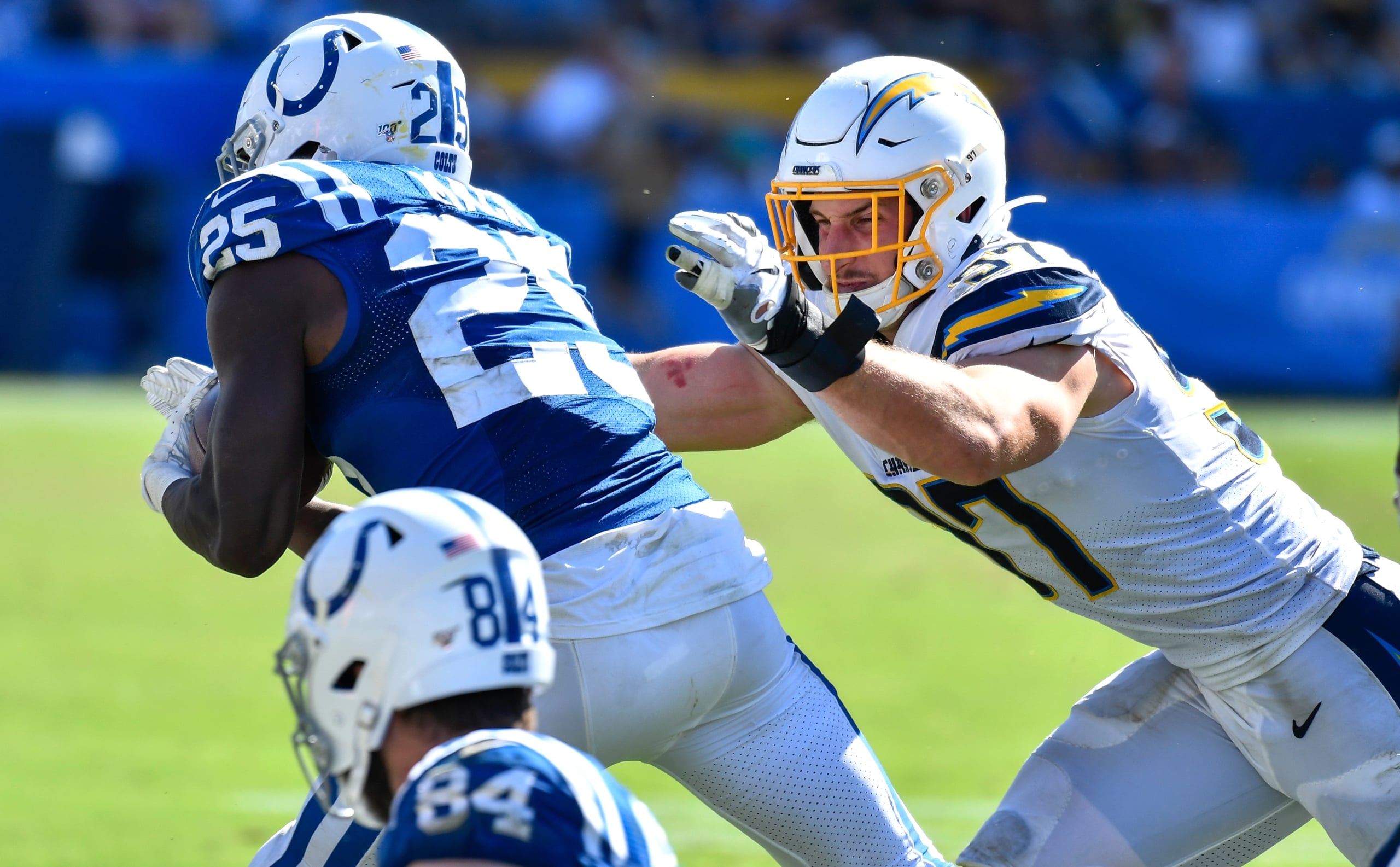
Image: courtesy of Sportsnaut
The Ballard Bottleneck: Why the Colts Resist the Offseason's Most Obvious Free Agent Fixes
As the NFL offseason transitions into its quietest stretch, the Indianapolis Colts find themselves under growing pressure to address a glaring vulnerability in their secondary. Despite possessing significant salary cap space and a young, unproven defensive backfield, general manager Chris Ballard continues to resist external veteran additions—a philosophical stance that is increasingly at odds with the team's competitive window under quarterback Anthony Richardson.
Outlook
Background
The debate surrounding the Colts' roster construction is not merely about a single position; it is an ongoing referendum on capital allocation in the modern NFL. Indianapolis entered June 2026 with roughly $18 million in available salary cap space, a sum that ranks in the upper tier of the league and provides ample flexibility to absorb a high-caliber veteran contract. Yet, this space remains largely untouched. The secondary has been a source of persistent instability since the departure of veteran leadership in recent seasons, leaving defensive coordinator Gus Bradley's Cover 3 scheme highly vulnerable to explosive passing plays. Bradley's system relies on disciplined, instinctual safety play to limit deep completions, a role that a veteran like Justin Simmons is uniquely qualified to fill. Instead, the Colts have opted to run back a young rotation that struggled with consistency, betting on physical traits and coaching rather than proven production. This approach has created a clear bottleneck: the front office is prioritizing long-term financial flexibility and draft-and-develop purity, while the coaching staff is tasked with winning immediately in a highly competitive AFC South where Trevor Lawrence, C.J. Stroud, and Will Levis present weekly vertical threats.
Precedents
To understand why the Colts are hesitant to pull the trigger on a veteran free agent in June, one must look at the historical patterns of general manager Chris Ballard's tenure, which began in 2017. Ballard has consistently ranked near the bottom of the league in active spending on external free agents, preferring to reward internal draft picks like Quenton Nelson, Jonathan Taylor, and Michael Pittman Jr. with lucrative extensions. When Ballard does dip into the veteran market, it is almost always on short-term, low-risk deals, or late in the summer when player leverage has evaporated. The signing of cornerback Stephon Gilmore in April 2022 stands as the rare exception to this rule—a two-year, $20 million contract that yielded strong individual play but did not alter the team's overall trajectory during a chaotic season. More typical of the Ballard doctrine are the late-summer additions of depth pieces who sign for near the league minimum. This conservative cash-to-cap ratio has insulated the Colts from the dead-cap crises that plague more aggressive franchises, but it has also left the roster perpetually one or two injuries away from a systemic collapse at key positions.
The Real Stakes: Protecting the Richardson Window
Scenarios
AnalysisAnalysis of the Colts' safety and cornerback situation suggests three distinct paths forward as training camp approaches.
In the first and most likely scenario, Chris Ballard holds his ground through the summer, refusing to pay the premium required to land a top-tier veteran like Justin Simmons. The Colts enter training camp with their current roster, betting that a healthy JuJu Brents and a more experienced Nick Cross can take the necessary developmental leaps to stabilize the secondary. This outcome preserves maximum cap rollover for 2027 but places an immense burden on Gus Bradley's coaching staff to design schemes that hide their defensive backs' inexperience.
In an alternative scenario, the Colts wait until the first fortnight of training camp to gauge their internal options. If the young secondary suffers an early injury or repeatedly falters in joint practices, Ballard executes a classic late-summer pivot, signing a second-tier veteran defender to a one-year, $3.5 million contract with heavy playing-time incentives. This approach allows the front office to maintain its financial discipline while providing a necessary safety net for the defense.
A third, less probable outcome involves a high-profile signing prior to the start of camp, driven by direct organizational pressure to maximize the current season. Under this path, the Colts sign a premier veteran defender to a front-loaded two-year deal, signaling a definitive shift in philosophy and an acknowledgement that the team's competitive window is open now.
Timeline
Frequently Asked Questions
Discussion
Be the first to share your thoughts.