
Veridact
TechSportsFinanceGaming🎯 PredictionsAbout
Sign InSign Up
Veridact

AI-powered anticipation analysis. We cover tech, sports, finance, and gaming events before they happen — with historical context, scenario modeling, and evolving coverage.

Stay ahead of the story

Analysis delivered before events unfold.

Coverage

  • Tech
  • Sports
  • Finance
  • Gaming

Company

  • About Us
  • Privacy Policy

© 2026 Veridact. AI-assisted analysis platform.

Analysis is AI-generated and not professional financial, legal, or medical advice.

Sports
Insider Reveals That Celtics May Be Forced to Trade Jaylen Brown—Giannis or No Giannis

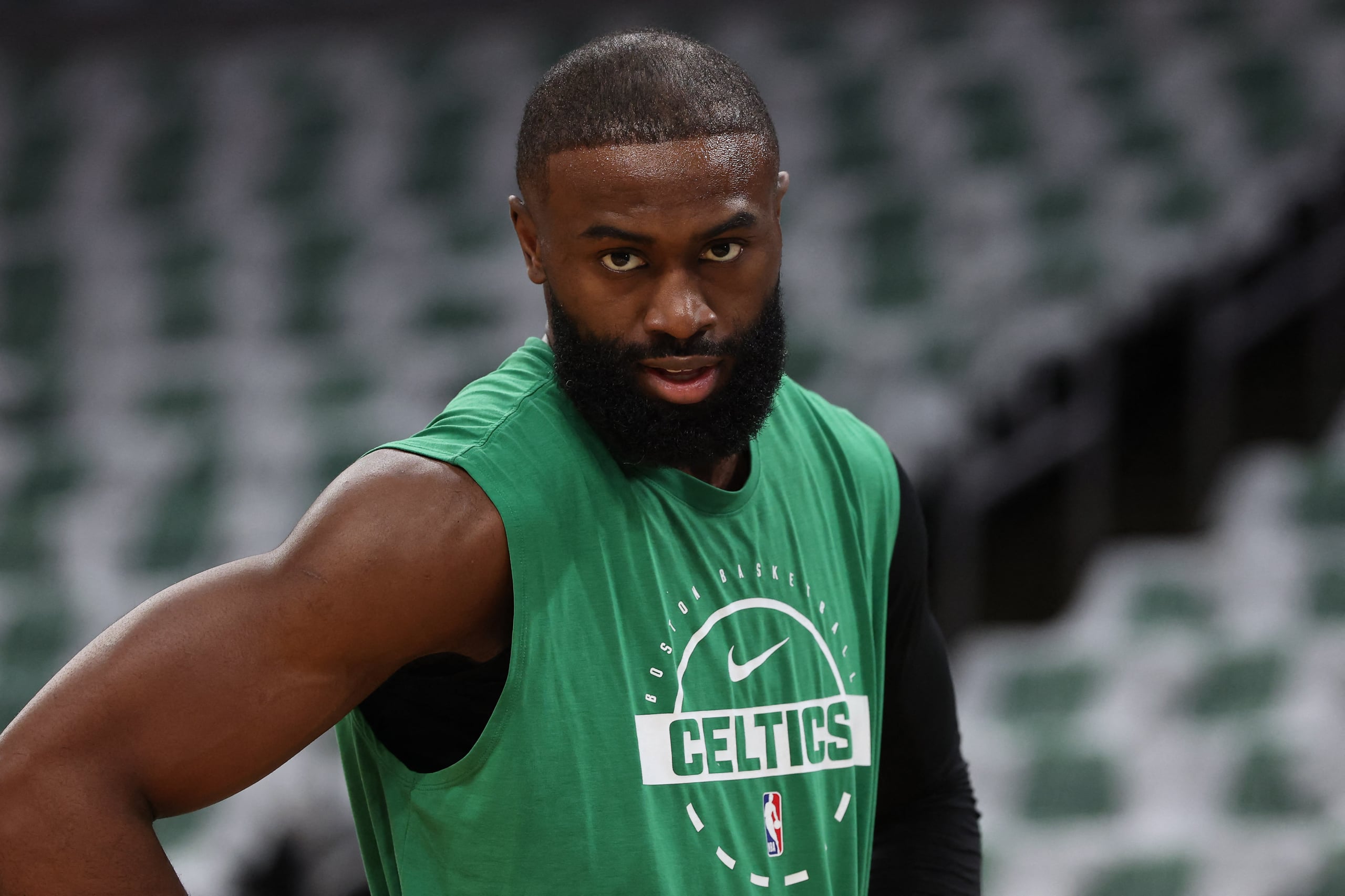
Image: courtesy of Sportsnaut

sportsJune 16, 2026By Veridact EditorialUpdated Jun 16

The Second Apron's Ultimate Victim: Why the Boston Celtics May Be Forced to Break Up Their Historic Core

An insider report reveals that the Boston Celtics are facing severe financial and operational pressures under the NBA's collective bargaining agreement, which could force them to trade finals MVP Jaylen Brown. Despite the team's historic on-court success, the compounding penalties of the second apron make maintaining their expensive starting five nearly impossible over the long term.

What to Expect

The central tension of modern NBA team building is about to play out in Boston. For the past two seasons, the Celtics have enjoyed the fruits of an incredibly deep, talented, and expensive roster. But as the calendar turns to the 2026 offseason, the bills are coming due.

According to recent league insider reports, the Celtics are reaching a financial tipping point that may compel them to trade superstar guard Jaylen Brown, regardless of their competitive standing or the threat of Eastern Conference rivals. The reality of the league’s collective bargaining agreement (CBA) is designed to do exactly this: dismantle super-teams by making them too expensive and too difficult to operate.

This is not a reflection of Brown’s play. Rather, it is the predictable outcome of a system designed to force parity. If the Celtics choose to keep their core intact, they face a luxury tax bill that could easily climb past $150 million, on top of a $200 million-plus payroll. More importantly, the non-financial penalties of staying above the second apron for consecutive years will strip the front office of its ability to make trades, sign buyout players, or even use its own first-round draft picks.

The question is no longer whether the Celtics want to keep Jaylen Brown. The question is whether any ownership group can justify the compounding restrictions of doing so. Analysts suggest that the front office, led by Brad Stevens, is already quietly weighing the long-term roster flexibility that a Brown trade would recover against the immediate drop in championship odds that losing an All-NBA wing would cause.

Key Context

To understand why the Celtics are in this position, one must look at the specific mechanics of the NBA’s salary cap. When the league ratified the current CBA, it introduced a tiered penalty system. The most punitive tier is the 'second apron,' set at roughly $29 million above the luxury tax threshold.

For the 2026-27 season, the salary cap is projected to land near $155 million, putting the second apron at approximately $208 million. The Celtics’ projected payroll for just five players—Jayson Tatum, Jaylen Brown, Jrue Holiday, Kristaps Porzingis, and Derrick White—already approaches $201 million. Once the remaining nine roster spots are filled, even with minimum-salary contracts, Boston will sail far past the second apron.

The penalties for crossing this line are draconian. First, there are the trade restrictions: teams above the second apron cannot aggregate salaries in trades, meaning they cannot send out two players making $10 million each to acquire one player making $20 million. They cannot send out cash in trades, and they cannot take back more salary than they send out. Second, their first-round draft pick seven years in the future is frozen, meaning it cannot be traded. If a team remains in the second apron for three out of five years, that frozen pick is automatically moved to the very end of the first round, regardless of the team's actual record.

Furthermore, the luxury tax is no longer a linear penalty. For repeat offenders—teams that pay the tax in three out of four years—the rates balloon dramatically. This repeater tax means that for every dollar the Celtics spend over the limit, they could be paying five or six dollars in penalties. For an ownership group, this turns a $210 million roster into a $400 million annual commitment. This suggests that the current ownership structure, which is currently undergoing a transition phase after the Grousbeck family announced plans to sell the team, will have to make a hard business decision before the new ownership group even takes full control.

Historical Patterns

We have seen this movie before, though never quite with a team this successful and this expensive. In previous eras, wealthy owners could simply write a check to bypass the luxury tax. The Golden State Warriors famously paid hundreds of millions in tax penalties to keep their championship core of Stephen Curry, Klay Thompson, and Draymond Green together. However, even the Warriors eventually blinked, letting Thompson walk in free agency and trading Jordan Poole to escape the repeater tax's crushing weight.

Similarly, the Los Angeles Clippers, backed by richest-owner-in-sports Steve Ballmer, eventually pivoted away from their expensive Paul George and Kawhi Leonard pairing. When George demanded a max contract in the summer of 2024, the Clippers let him walk to Philadelphia rather than lock themselves into second-apron hell for the foreseeable future.

The historical precedent indicates that no franchise, regardless of its owner's net worth, has been willing or able to sustain second-apron status for more than two consecutive seasons under the new CBA. The operational handcuffs are simply too tight. A front office with frozen draft picks and no trade flexibility eventually runs out of ways to replace aging role players, leading to a slow, inevitable decline. The Celtics are trying to avoid this slow death by considering a proactive strike—trading a premium asset like Jaylen Brown while his value is at an all-time high.

The real stakes of this situation extend far beyond the city of Boston. The entire NBA is watching how the Celtics handle this crisis because it represents the ultimate test of the new CBA's design. The league's governors wanted a system where no single team could hoard talent indefinitely. If Boston is forced to trade Jaylen Brown—a homegrown star who won a championship and a Finals MVP with the franchise—it will prove that the CBA is working exactly as the league intended.

This has profound implications for how front offices build rosters. If even a championship core is unsustainable, teams will become highly hesitant to sign multiple players to supermax contracts. We may see a shift toward 'one-and-a-half star' models, where a team has one supermax player, one sub-max co-star, and a rotating cast of cheap rookie-contract players and veteran-minimum signings.

For players, this means the middle class of the NBA could continue to shrink. Teams will either pay the absolute maximum to their top tier or the absolute minimum to their depth, with very little room left for the $15 million-to-$25 million mid-tier players who often bridge the gap. The Celtics’ dilemma is a warning sign to every other front office: the era of the stable, long-running core is over. Roster building has become a game of constant, forced transition.

Potential Outcomes

Analysis

Analysis of the Celtics' financial trajectory suggests three primary paths forward:

Scenario 1: The Summer of 2027 Blockbuster

In this scenario, Boston decides to absorb the massive tax hit for the 2026-27 season to make one final run at a championship with their current core. However, by the summer of 2027, the financial and trade penalties would become too severe to ignore. The team would be forced to trade Jaylen Brown at that point, potentially with less leverage as rival teams know Boston is desperate to shed salary. A team like the Houston Rockets or San Antonio Spurs could trade for Brown to anchor their young rosters.

Scenario 2: The Immediate 2026 Reset

Brad Stevens decides to move immediately in the summer of 2026. This would be a shockwave. If the Celtics fail to win the title in 2026, Stevens might decide that the current core has peaked and that paying the historic tax bill for a non-champion is unacceptable. Boston could target multiple high-quality role players on reasonable contracts and a war chest of draft picks from a team like the Orlando Magic or Oklahoma City Thunder.

Scenario 3: The Supporting Cast Sacrifice

Instead of trading Brown, the Celtics could attempt to stay under the second apron by gutting their supporting cast. This would mean trading Derrick White, Kristaps Porzingis, or Jrue Holiday for future draft picks or cheap rookie-contract players. While this keeps the Tatum-Brown duo intact, it severely damages the team's depth and defense—the very qualities that made them champions. Historically, teams that rely entirely on two stars and minimum-contract players struggle to survive the grueling postseason, making this a highly risky competitive strategy.

Timeline

July 2023
Brown Signs Supermax
Jaylen Brown signs a historic five-year, $304 million supermax extension with the Celtics, the richest contract in NBA history at the time.
July 2024
Tatum Signs Supermax
Jayson Tatum signs his own five-year, $314 million supermax extension, cementing the team's long-term financial commitments.
June 2026
Insider Reports Surface
Insiders report that the Celtics' front office is actively discussing the financial sustainability of the roster, with Jaylen Brown's name surfacing as a potential trade candidate due to second-apron pressures.
July 2026
Free Agency Begins
The NBA free agency period begins, forcing the Celtics to make immediate decisions on depth pieces and potential trades before the luxury tax calculations lock in for the upcoming season.
February 2027
NBA Trade Deadline
If the Celtics opt to start the season with their core, this represents the final opportunity to shed salary and avoid historic tax penalties for the fiscal year.

Frequently Asked Questions

Jayson Tatum is widely regarded as the franchise's cornerstone and a top-five player in the league. While Brown is an elite, All-NBA talent, Tatum's age, playmaking, and overall ceiling make him the player the front office is most committed to building around. If one of the two must be moved for financial reasons, it will almost certainly be Brown.

Discussion

0/100
0/1000

Be the first to share your thoughts.

Related Coverage

sports

Messi's Hat Trick Ties World Cup Goal Record, Argentina Advances

Jun 17
sports

Mbappe, Haaland World Cup Dominance Signals New Era for Global Football

Jun 17
sports

Chiefs Eyeing All-Pro Talent: How a Dynasty Stays Ahead in the NFL's Parity Playbook

Jun 17
sports

Crystal Palace Appoint Pierre Sage as Manager in Bold Premier League Move

Jun 16

Stay ahead of the story

AI analysis delivered before events unfold. No spam.

ⓘ

Disclosure: This article contains AI-assisted analysis based on publicly available information.