Veridact
TechSportsFinanceGaming🎯 PredictionsAbout
Sign InSign Up
Veridact

AI-powered anticipation analysis. We cover tech, sports, finance, and gaming events before they happen — with historical context, scenario modeling, and evolving coverage.

Stay ahead of the story

Analysis delivered before events unfold.

Coverage

  • Tech
  • Sports
  • Finance
  • Gaming

Company

  • About Us
  • Privacy Policy

© 2026 Veridact. AI-assisted analysis platform.

Analysis is AI-generated and not professional financial, legal, or medical advice.

Gaming
Sony has patented a controller with buttons that harden when you play with it

Image: courtesy of EuroGamer

gamingJune 17, 2026By Veridact EditorialUpdated Jun 17

Beyond Haptics: Sony Patents Controller Buttons That Change Feel Mid-Game

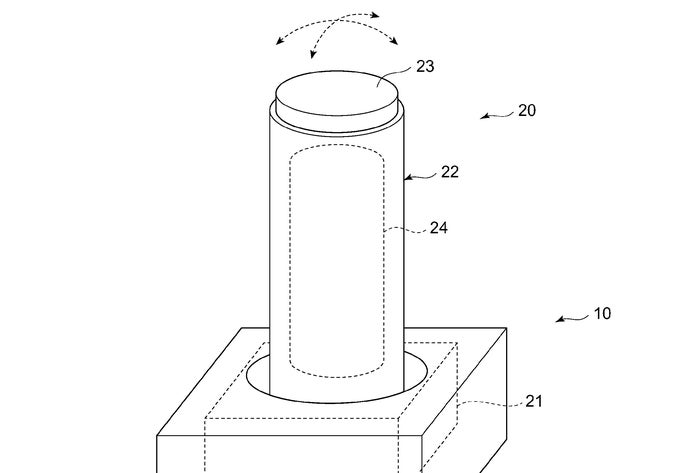
Sony has patented a new controller technology that would allow its buttons to dynamically change their tactile feel, including hardening or softening, based on in-game actions. This development, confirmed yesterday, represents a significant step beyond the haptic feedback and adaptive triggers found in the current DualSense controller, signaling Sony's continued commitment to deeper physical immersion in gaming.

What to Expect

The patent describes a system where controller buttons can actively adjust their resistance and physical sensation. Imagine pressing a button that feels soft and squishy for a light touch, but then becomes rigid and unyielding when performing a heavy attack in a game, or perhaps a trigger that tightens to simulate pulling a bowstring. The technology outlined in the patent involves materials that can alter their stiffness or shape through various means, such as internal fluid pressure, electromagnetic forces, or even temperature changes. This would move beyond simple vibration to provide a more nuanced and specific physical response directly from the button itself.

The core idea is to expand the range of feedback a player receives. While the DualSense offers sophisticated vibrations and trigger resistance, this patent suggests a more fundamental change to the buttons' physical properties. It implies that the interface itself could become a more active participant in the game world, responding to virtual stimuli with tangible, real-world changes that players can feel at their fingertips.

Key Context

Sony has a long history of pushing the boundaries of controller technology. From the original DualShock's rumble functionality to the motion sensing of the Sixaxis, and most recently, the sophisticated haptic feedback and adaptive triggers of the PlayStation 5's DualSense controller, the company has consistently sought to enhance player immersion through tactile experiences. The DualSense, launched with the PS5 in 2020, was widely lauded for its ability to convey subtle environmental textures, weapon recoil, and the tension of in-game actions through its advanced vibration motors and triggers that can vary their resistance.

This new patent indicates that Sony's research and development efforts are not slowing down. It suggests an ongoing strategic focus on sensory feedback as a core differentiator for the PlayStation platform. In a competitive gaming hardware market, where console specifications often converge, unique input methods and immersive technologies can be crucial in attracting and retaining players.

Developing such advanced haptics is not just a technical challenge; it also requires buy-in from game developers. For a feature like adaptive buttons to truly shine, it needs to be integrated thoughtfully into game design, moving beyond mere novelty to become an essential part of the gameplay experience. Sony's first-party studios often lead the way in showcasing new hardware capabilities, and any future controller incorporating this technology would likely see major titles built specifically to leverage its potential.

Historical Patterns

Patents, by their nature, offer a window into a company's long-term research and development priorities, but they are not guarantees of future products. Many patents never materialize into commercial devices, often due to high manufacturing costs, technical hurdles, or a lack of perceived market demand. However, a patent from a major hardware manufacturer like Sony in an area where it has already demonstrated significant investment (like controller haptics) is a stronger signal than a more abstract filing.

Historically, Sony has often used its first-party game studios to drive adoption of new controller features. The original DualShock's rumble was quickly integrated into titles like Gran Turismo. The DualSense's haptic feedback has been a standout feature in games like Astro's Playroom, Returnal, and Marvel's Spider-Man: Miles Morales, demonstrating how deeply it can enhance immersion. This pattern suggests that if adaptive buttons were to become a reality, Sony would likely invest heavily in showcasing their capabilities through its own exclusive titles.

Another pattern is the gradual evolution of controller technology. Major leaps are often followed by refinements over several console generations. The rumble feature, for instance, became standard. Motion controls, while initially met with mixed reception, found their niche in specific genres. Adaptive triggers and advanced haptics are still relatively new, and this patent represents a potential next-generation evolution of that same core principle: making the controller feel less like a generic input device and more like an extension of the game world. The challenge, as always, will be to make the technology compelling enough for both developers to integrate and consumers to embrace, without making the hardware prohibitively expensive.

This patent, while still theoretical, carries significant implications for the future of gaming. For players, it promises an even deeper level of immersion than currently possible. Imagine the subtle click of a safe dial, the impact of a sword hitting armor, or the distinct feel of different weapon types, all conveyed through the physical sensation of the buttons under your thumb. This could create a more visceral and believable connection to the virtual world, blurring the lines between player and avatar.

For game developers, this technology could unlock entirely new gameplay mechanics and narrative possibilities. Designers could use the adaptive buttons to communicate critical information, create unique puzzles, or enhance emotional storytelling. The physical resistance or texture of a button could become a core element of a game's challenge or artistic expression, moving beyond visual and audio cues alone. However, it also presents a new layer of complexity; integrating such features meaningfully requires careful consideration and dedicated development resources.

From an industry perspective, this patent intensifies the 'controller arms race.' Microsoft, Nintendo, and PC peripheral manufacturers are constantly looking for ways to innovate their input devices. If Sony successfully brings adaptive buttons to market, it could force competitors to accelerate their own research into similar advanced haptic or tactile technologies, potentially leading to a new era of highly specialized and immersive controllers across the entire gaming ecosystem.

There are also practical considerations. The cost of implementing such advanced technology in a mass-produced controller could impact console pricing. Durability and long-term reliability of dynamically changing materials would also be critical. But the underlying signal is clear: Sony sees physical sensation as a key battleground for the future of interactive entertainment.

Potential Outcomes

Analysis

The publication of this patent opens up several distinct possibilities for Sony and the broader gaming industry:

1. Integration into a Future PlayStation Controller (Inferred to Likely): The most probable outcome is that elements of this adaptive button technology, or a refined version of it, will be incorporated into a future iteration of the PlayStation controller. This could manifest as part of a mid-cycle console refresh, such as a 'PlayStation 5 Pro' equivalent, or more likely, as a foundational feature for the next-generation PlayStation console. This would represent a natural evolution of Sony's established haptics strategy, building on the success and player reception of the DualSense controller. The company has invested heavily in this area, and patents often precede commercialization in some form.

2. Limited or Niche Application (Speculative): It is also possible that the full scope of the patent proves too complex, costly, or challenging for mass production. In this scenario, Sony might integrate simplified versions of the technology into specialized peripherals, such as a premium 'pro' controller, or target specific first-party games that can uniquely leverage the feature. This would allow Sony to test the waters, gather feedback, and refine the technology before a broader rollout, or decide if the cost-benefit analysis justifies full-scale adoption.

3. Patent Remains Purely Theoretical (Speculative): Like many patents, this technology might never see the light of day in a consumer product. The technical hurdles, manufacturing costs, or even a lack of compelling gameplay applications could lead Sony to shelve the concept. Research and development involves exploring many avenues, and not all of them lead to commercial products. This outcome would simply mean the patent serves as an intellectual property placeholder, reflecting a direction Sony considered but ultimately did not pursue to completion.

4. Catalyst for Industry-Wide Innovation (Speculative): Regardless of whether Sony brings this specific patent to market, its existence could spur other companies to innovate in similar areas. Competitors like Microsoft, Nintendo, and even PC peripheral manufacturers are constantly researching ways to enhance controller immersion. This patent could act as a signal, pushing the entire industry to explore more advanced haptic and tactile feedback systems, leading to a new generation of controllers with diverse and innovative physical interfaces.

Timeline

1997
Original DualShock Controller Released
Sony introduces the DualShock controller for the PlayStation, featuring haptic feedback through two vibration motors, a pioneering feature for console controllers at the time.
2006
Sixaxis Controller for PlayStation 3
Sony releases the Sixaxis controller, introducing motion-sensing capabilities (tilt and orientation) to the PlayStation ecosystem.
2020
PlayStation 5 and DualSense Launch
Sony launches the PlayStation 5 console alongside the DualSense controller, which features advanced haptic feedback and adaptive triggers for nuanced tactile sensations.
2026-06-16
Sony's Adaptive Button Patent Published
Sony's patent application for a controller with buttons capable of dynamically changing their tactile properties, including hardening and softening, becomes publicly available.
2027-12-31
Potential Future Product Revelation
Analysis suggests Sony may reveal plans for a future controller or console incorporating elements of this adaptive button technology by the end of 2027.

Frequently Asked Questions

The patent describes buttons that can change their physical properties, such as their stiffness, resistance, or even texture. 'Hardening' is one specific example, meaning a button might become more rigid and less compressible, providing a distinct tactile response compared to a softer, more yielding state. This is achieved through internal mechanisms like fluid pressure, electromagnetic forces, or other material science applications.

Discussion

0/100
0/1000

Be the first to share your thoughts.

Related Coverage

gaming

Mark Hamill Joins 'Twisted Metal' Season 3, Deepening Its Game Roots

Jun 17
gaming

Lego's KPop Demon Hunters Set: A Bold Play for New Fanbases

Jun 17
gaming

Reports Suggest Microsoft Considering Closure of Xbox Studios Including Double Fine, Ninja Theory

Jun 17
gaming

Behind the $3.6 Billion Lifeline: How Close Bungie Came to the Brink Before Sony's Rescue

Jun 16

Stay ahead of the story

AI analysis delivered before events unfold. No spam.

ⓘ

Disclosure: This article contains AI-assisted analysis based on publicly available information.